Building the bridge: How robust infrastructure will anchor the JS-SEZ’s success
The seamless movement of goods, regulatory clarity and day-to-day reliability will determine the long-term success of the Johor-Singapore Special Economic Zone
MALAYSIA’S Economy Minister has announced that a full blueprint for the Johor-Singapore Special Economic Zone (JS-SEZ) will be released by end-2025. This marks a pivotal step forward, and naturally raises expectations. With businesses watching closely and geopolitical hedging on the rise, real progress will depend on what both sides deliver next.
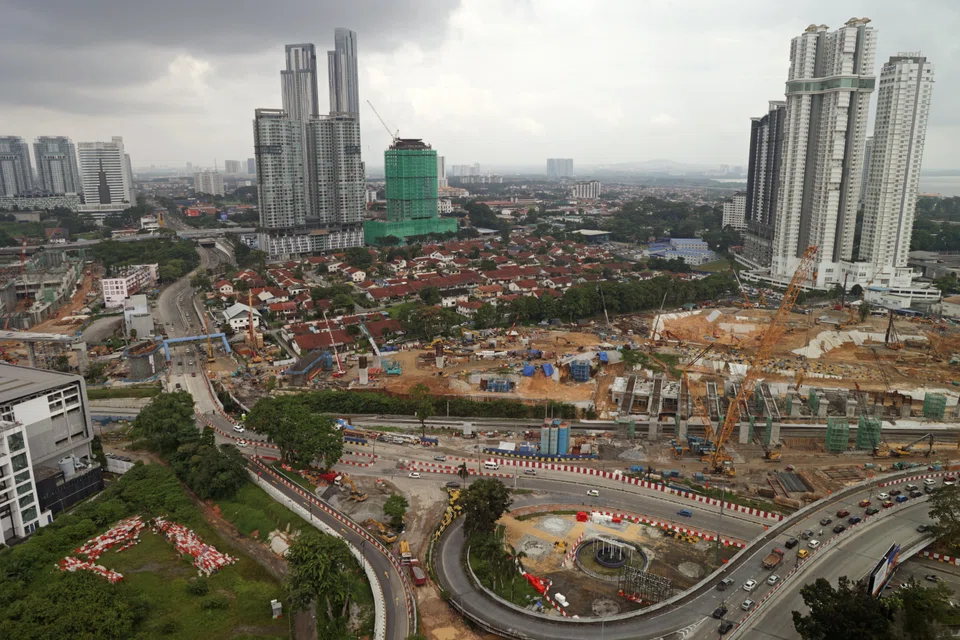
Some key steps are already underway. Digital customs have been upgraded, QR code clearance is live, investment facilitation centres are operating, and the Rapid Transit System (RTS) Link is set to cut Causeway travel time to just five minutes. These steps signal serious intent, and they provide a strong base to build upon.
But these are just first moves. Credibility now depends on momentum. The next phase should begin to address the harder, often trickier, aspects of infrastructure readiness. Without visible progress and closer collaboration on both sides, the JS-SEZ risks losing ground to business hesitation and global competition.
Fast tracks, not yet seamless
Few aspects of the next phase will matter more than the movement of goods. Commuters may soon ride the RTS Link to cross the Causeway in just five minutes – but trucks will not. Despite digital upgrades, cargo still faces congestion and red tape.
In a recent Singapore Business Federation (SBF) survey, nearly half the firms exploring the JS-SEZ flagged cargo movement as a key concern. This shows that logistics is no longer a passive facilitator; it now actively filters investment decisions. With such concerns rising, investors are watching closely, and continued delays may shift their calculus.
To address this, both sides could consider expanding their logistics toolkit. Dedicated truck lanes, enhanced ferry services, or even rail options could all be considered. Just as important is easing congestion in and around Johor Bahru and Woodlands, where delays can ripple across the entire supply chain.
Without seamless cargo movement on both sides of the Causeway, even the best-laid blueprint risks falling short. Malaysia and Singapore have already proven what’s possible for passenger flows. Now is the time to match that momentum for cargo, before credibility, and capital, move on.
From warehouses to world markets
Land-side upgrades are a start. Leveraging Johor’s seaports could further anchor the SEZ as a globally competitive logistics node.
Johor’s 1,214 hectares of warehousing are already a key asset. This space allows firms to set up quickly and manage inventory near major shipping lanes. But with surging demand from industrial tenants, capacity may soon be stretched. Expanding bonded zones and storage facilities, even if phased, could help consolidate early gains and keep momentum on track.
Further coordination with Singapore’s port system could unlock greater returns. Singapore is connected to more global top trade routes than any other South-east Asian port. The Tanjung Pelepas-Singapore corridor already ranks in the global top 50 in both directions, moving 135,000 tonnes of cargo daily between them. But for two major ports on one of the world’s busiest trade arteries, that still leaves plenty of room to grow. For perspective, the Shanghai-Ningbo route, which also links two nearby ports, moves over twice that volume.
This gap is not merely logistical. Unlike China’s unified system, Malaysia and Singapore must coordinate across sovereign lines, each with its own priorities, institutions, and political calculations. Unless bilateral collaboration gradually evolves in tandem with infrastructure ambition, the Tanjung Pelepas-Singapore corridor may take longer to realise its strategic potential.
Still, the stakes are increasingly clear. A truly competitive corridor will require both sides to pull in the same direction. Neither side can do this alone. With phased, pragmatic cooperation grounded in mutual interest, the JS-SEZ could become a high-performing trade platform, and a test case for bilateral supply chain collaboration in Asean.
Utilities cannot be an afterthought
Beyond logistics, power and water will be just as critical. High-demand sectors such as data centres are expanding fast in Johor, but their growth depends on reliable utilities. Right now, the system is already under strain.
Recent disruptions, such as the Sungai Johor water treatment plant shutdown, have already affected industrial areas and nearby data centres. On the energy side, the power grid is growing, but not fast enough. Nearly 30 per cent of new data centre proposals were deferred in late 2024 to avoid grid overload.
As investment interest grows, the predictability of utilities will become increasingly important. If planning lags behind demand, early gains could soon face headwinds. While the current “project-by-project” approach may appear cost-efficient, it can introduce uncertainty as demand rises. What seems prudent today may quietly become a constraint tomorrow.
Regional grid integration could be part of the solution. Asean’s pursuit of a multilateral power grid offers a way to balance demand and improve cross-border capacity planning. With Malaysia chairing Asean this year, the region is well-placed to build on its energy diplomacy – a momentum that, if sustained, could ease pressure on national systems and unlock broader gains, including for the SEZ.
Bridging hard and soft infrastructure
Hard infrastructure draws headlines, but it doesn’t close deals on its own. For firms exploring the JS-SEZ, how things work day-to-day matters just as much as what gets built. Some of these practical concerns are already surfacing in early investor feedback.
In the same SBF survey, more than half of firms flagged uncertainty around tax rules and labour shortages, concerns that often reflect operational complexity on the ground.
These are not easily resolved, nor are they unique to the JS-SEZ. But over time, small frictions can shape big decisions. That’s why even modest steps, taken early and properly executed, can count for more than waiting on the perfect plan. Firms don’t expect perfection, but they do notice momentum.
Ultimately, the JS-SEZ’s long-term success will be measured by its ability to deliver: in infrastructure, in regulatory clarity, and in day-to-day reliability. Sustained advantage will belong to those who turn ambition into execution, before opportunity moves elsewhere. Whether the JS-SEZ leads or lags in South-east Asia’s next growth chapter will depend on the choices and collaborations made by both sides today.
The writers are researchers at the Asia Competitiveness Institute, Lee Kuan Yew School of Public Policy