

Building a circular bioeconomy to address the growing risk of wildfires
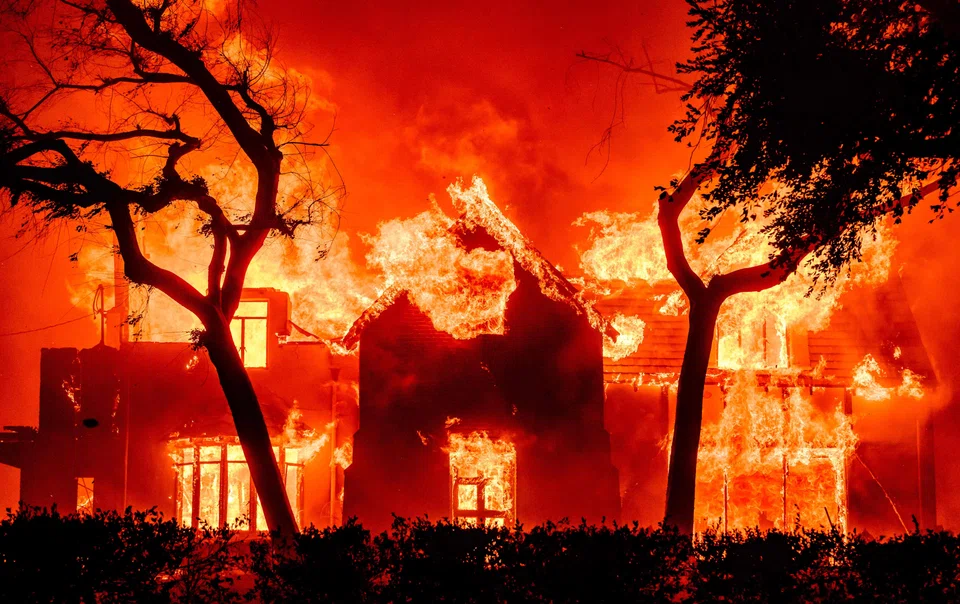
SINCE the evening of Jan 7, ferocious wildfires have raged across the Los Angeles area. Well over 100,000 people have been subject to mandatory evacuation orders, while early estimates have put the likely insured losses at US$20 billion and the potential overall economic loss as high as US$57 billion. Quantifying the human suffering and emotional loss is impossible.
While the cause of the fires is yet to be established, it is likely that last year’s heavy rains from the El Nino weather system fuelled vegetation growth, which has since dried during a recent prolonged dry spell. Combined with strong winds, this has created the ideal conditions for wildfires to spread.
The broader science is clear – climate change and today’s methods of landscape management are accelerating the wildfire risk globally.
A key challenge in California – as also in the Mediterranean, which too has seen a rising threat from wildfires in recent years – is the rural-urban interface where the town meets the countryside, with a disproportionate number of residences now located in high wildfire-risk areas.
As residential areas expand deeper into wilderness, the risk to homes and businesses rises. It is estimated that, globally, insurance claims due to wildfires have risen to US$10 billion annually, a figure that now looks set to be dwarfed in 2025. Indeed, many homeowners caught up in the LA fires are without home insurance, after insurers hiked costs or simply cancelled provision altogether in recent years due to the escalating wildfire risks.
In addition to urban spread, climate change and the way we plan and manage our landscapes are thought to be the key factors.
As temperatures rise, and droughts become more frequent, the tinderbox conditions that spark and spread wildfires are increasingly common.
Across the world, this new generation of wildfires are exceeding our capacity to suppress them. As we face mounting environmental, economic and social threats, we must move from tactical suppression to holistic mitigation-adaptation strategies, to minimise the risk of extreme fires breaking out, and create resilient landscapes that are capable of recovering quickly should a fire occur.
Recent years have seen substantial scientific and technical advances in how land management practices can integrate prevention-preparedness, detection-response, and restoration-adaptation.
Climate-smart forestry, for instance, which puts resilience and climate benefits at the forefront of forest management, is emerging as an effective tool for creating landscapes that are resilient to wildfires and other extreme weather events such as droughts and floods.
One major issue, however, is – how do we finance these strategies?
The key to achieving this goal is the growth of the circular bioeconomy – in essence, by replacing today’s extractive, fossil-based economy with an economy based on nature’s regenerative power, we can cut the emissions that lead to global heating and reduce the risk of extreme weather events while attracting the necessary investments to transform landscapes and businesses in an integrated manner. At the local level, the bioeconomy flourishes where nature thrives, meaning that economic growth goes hand in hand with the creation of healthy, biodiverse, climate- and fire-resilient landscapes.
Forests and agroforestry, with their multifunctional roles and wide range of ecosystem services, offer great opportunities to build this new economic model. New technologies are creating unprecedented opportunities to transform plant-based compounds into many of the fossil-based materials we use today, including construction materials, textiles, plastics, and chemicals. Managing forests to produce these resources regeneratively also enhances the ecosystem services that forests provide, improving carbon sequestration, soil health, and water retention, and reducing a forest’s susceptibility to fire.
The same can be said for agroforestry and regenerative farming, which provide us with food while enhancing ecosystem services.
This is not the case in conventional agriculture, which provides food while generating environmental externalities.
As the bioeconomy grows, so does the economic opportunity. In the Amazon alone, the bioeconomy could be worth up to US$4 trillion, while globally the bioeconomy is expected to be valued at US$7.7 trillion by 2030.
For investors, the growth of the circular bioeconomy is creating an opportunity for private finance and public-private partnerships to target returns while creating fire-resistant and resilient landscapes through nature-based solutions, such as regenerative agriculture, agroforestry and sustainable forestry, which can target better long-term economic profits and a rise in land values while enhancing biodiversity- and water-, soil- and climate-related ecosystem services.
Whether this is through companies that are turning monoculture coffee plantations into healthy agroforests, producing coffee that sells at a premium, grown on climate-resilient farms that sequester more carbon than they emit, or carbon and biodiversity credit markets that give investors the chance to target sustainable returns and diversify their portfolios, opportunities abound. However, to bring these and other mechanisms to scale, innovative financial tools will be needed.
From real asset strategies that deploy capital to transform degraded or non-adapted land assets to resilient and regenerative assets, to schemes such as the Australian Emissions Reduction Fund, and the USA’s Forest Resilience Bond – which allows private capital to play a role in public land management – such mechanisms must become the norm rather than the exception.
To do that, the finance industry needs to build a better understanding of the key role of nature as the true engine of our economy. Bringing scientific experts to the investment and finance industry needs to be the norm in the coming years.
In a world where losses from environmental disasters are growing – in total, climate disasters cost the global economy US$320 billion in 2024 – urgent action is needed, and investors have an essential role to play.
As we search for new ways to finance the fight against wildfires, we must take a multifaceted approach, integrating science, finance and policy to build a circular bioeconomy that addresses the root causes of extreme events.
In today’s era of climate change, we must take our lead from nature and build resilience from the ground up.
The writer is chief nature officer at Lombard Odier Investment Managers. He also leads the Circular Bioeconomy Alliance established in 2020 by King Charles III (formerly the Prince of Wales).
TRENDING NOW

Britain’s mansion tax shows the difficulty of targeting wealth

Once staunchly pro-China, Malaysian Chinese businesses are now distancing themselves from Beijing

The only common thing in S-E Asia is that we all eat rice: Cisco’s Asean president

Singapore data centre operator DayOne opts for US IPO at likely US$20 billion valuation

