

Building Singapore’s next-gen advanced manufacturing facility
SINGAPORE has committed a further S$3 billion to sustain research and development (R&D) initiatives in advanced manufacturing and other priority sectors – investments that are set to help the country move up the value chain and reinforce its competitive lead in manufacturing.
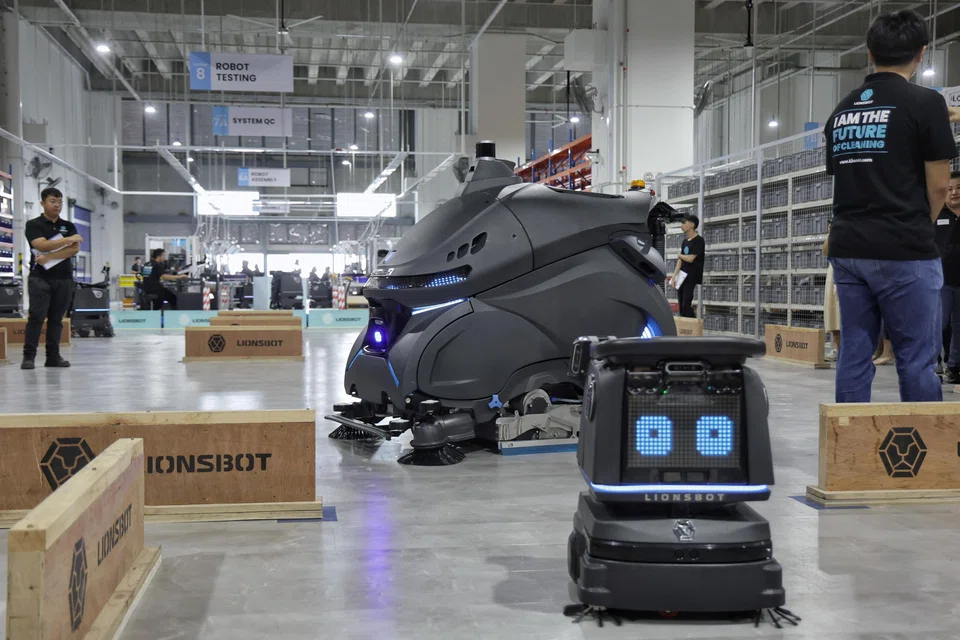
Much of the R&D will be put towards developing next-generation advanced manufacturing facilities in the city-state, of which Industry 4.0 solutions – notably robotics – will no doubt play a key role in driving productivity and cost-efficiency.
Critical cog
For the most part, manufacturing companies already recognise the immense value of robotics for its data collection and processing capabilities, which is an invaluable advantage for timely maintenance and facility upkeep. This is especially key in today’s macroeconomic environment, marked by complex demand-supply dynamics that requires manufacturers to be able to respond and adjust output quickly. This means that at any one time, companies need to ensure their production lines are fully operational and run uninterrupted.
Today, many manufacturing processes are automated via robots. Not only does deploying mobile robots significantly reduce the human hours required for the task, these machines can also deliver results with greater accuracy. They can be programmed to systematically gather data in precisely the same way and at the exact same time every day. Armed with this knowledge, robots can then help teams make informed decisions regarding equipment maintenance, swiftly addressing any defects and minimising downtime.
The industry’s openness to adopting robotics has helped Singapore’s manufacturing sector surge to become the world’s second-most robot-intensive industry, trailing only South Korea. As a thriving hub for high-value manufacturing today, the Republic has come a long way from the early years of labour-intensive, low-cost production.
In particular, the success of the semiconductor industry is testament to Singapore’s forward-looking policies. The city-state accounts for just over 10 per cent of the global chip market, and 20 per cent of chip equipment production in the world. The country’s laser-focus on productivity and upgrading of overall capabilities, through robotics for example, justify its relatively higher operating costs.
Robots as co-workers
As we consider the future of advanced manufacturing, achieving further growth demands a fresh emphasis and perspective on production efficiency. Beyond just putting robots on the factory floor to increase productivity, manufacturing companies must now consider how they can leverage robotics to alleviate a labour shortage across multiple industries and address existing efficiency gaps – which will only deepen as output demands increase. This is especially so for a country like Singapore, where a strong talent pipeline is critical to sustain the growth of the manufacturing industry.
In the short term, robots can reduce onsite manpower needs, especially for repetitive and laborious tasks within manufacturing facilities. Think of automated vehicles transporting large bulky containers from one place to another, or mobile robots deployed to autonomously navigate massive factories. An added benefit of putting robots on the job is that companies are able to greatly reduce the risk of work injuries associated with intensive manual labour.
With the help of robots, workers can then focus on higher value-added tasks and gain skills that make them more employable in today’s competitive landscape. While robots will not replace humans, they continually rewrite what skills are perceived as being “valuable”. In the long term, this paves the way for upskilling and reskilling of the existing workforce. Companies that train their workforce to adapt and work alongside these sophisticated machines are investing in and preparing for the future. This may require collaborating with the government to establish on-the-job training programmes for employees, or even forging partnerships with educational institutions to ensure their workforce is future-ready.
In fact, the success of implementing robotics will depend on how well manufacturers can equip human workers with the right expertise to complement their robot co-workers across various use-cases. These could range from simple quality control, or the capability to programme these very robots for innovative use-cases.
Industry 4.0 key to Manufacturing 2030
Going forward, as the use of robotics becomes more prevalent, the manufacturing sector will no doubt continue to embrace more Industry 4.0 solutions to reach the goals set out in Manufacturing 2030, which is the government’s 10-year plan to grow Singapore’s manufacturing sector.
For instance, manufacturers can leverage artificial intelligence and machine learning-powered technology for predictive capabilities that help to anticipate equipment failures, and plan ahead for maintenance. Elsewhere, augmented reality and virtual reality (VR) applications could help with standardising training for new employees, or making the onboarding process more engaging with VR-enabled learning.
To remain globally competitive, Singapore’s next-gen manufacturing facility must prioritise the human workforce, leverage the relentless efficiency of robots, and unlock the potential of other Industry 4.0 technologies yet to be explored.
The writer is vice-president and general manager, fab operations, at GlobalFoundries Singapore






