

The ‘business of business’ is changing
CONSERVATIVE thinker Milton Friedman famously declared in the 1970s that the “business of business is business”. By which he meant that the bottom line of the private sector should be making money for shareholders.
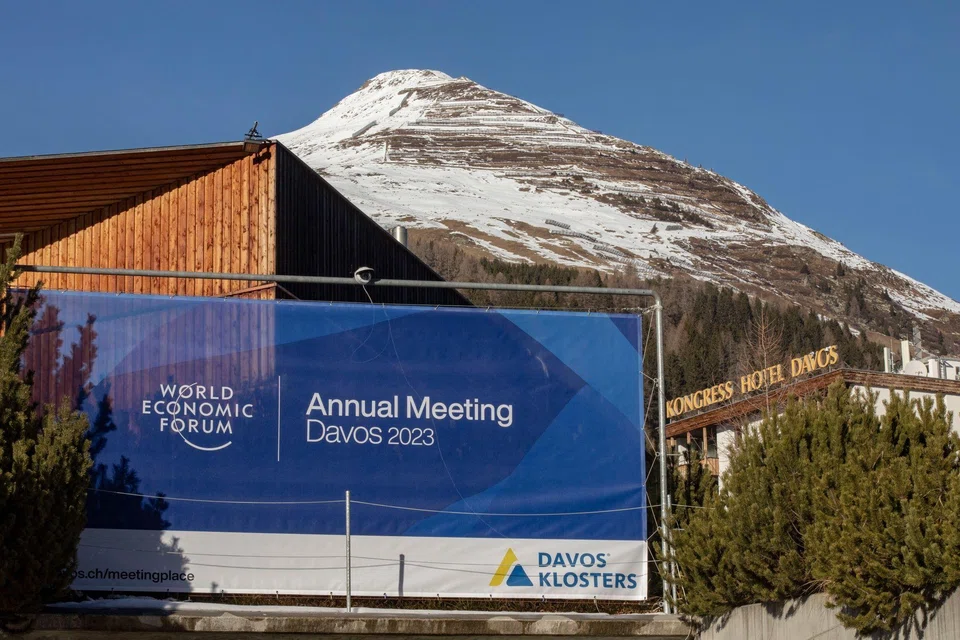
However, there has been a significant shift in the half century since then in how many corporate leaders view the social responsibility of corporations toward a broader group of stakeholders. Correspondingly, many major businesses today talk frequently about their organisational commitment to a wide range of philanthropic, social responsibility and related activities. This agenda is showcased at this week’s World Economic Forum (WEF) meeting in Davos. Here the agenda is centred around public-private partnerships and multi-stakeholder dialogues to promote cooperation to tackle the most pressing issues facing the world today, from income inequality to global warming.
This debate about the responsibility of business and elites to society was exemplified on Monday (Jan 16) with the release of an Oxfam report showing the extent of inequality in the contemporary landscape. The non-governmental organisation (NGO) asserts that almost two-thirds of all new wealth created between December 2019 and December 2021 went to the top 1 per cent of the income strata. It is not just NGOs that worry about this. WEF itself has also acknowledged this issue in its 2023 Global Risks Report which includes growing global income disparities on its key risks register for the first time in a decade.
The WEF has, of course, long been perceived by critics as a cosy club for the global elite. It will therefore be ironic, for some, that these issues are being discussed as Davos hosts one of the largest concentrations of billionaires in the world. Yet, legitimate scepticism about WEF aside, business elites at Davos can play an increasingly large role in delivering solutions to global challenges, and promoting a sustainable recovery post-pandemic. And this goes beyond longstanding measures such as creating good new jobs and boosting investment in the economy, while paying workers fair wages and benefits.
Poll data, including the 2023 Edelman Trust Barometer, also released at Davos this week, shows that – some 15 years after the global financial crisis – there is growing trust in business. This contrasts with the general view about many politicians today, and indeed also the private sector too in the immediate aftermath of the 2008 financial crisis. Declining confidence in firms was one of the key legacies of that crisis. And growing distrust in business was reflected not just in polls, but also by significant protests, including the ‘Occupy movement’.
The change in attitudes, since then, comes amidst a wider rebound in perceptions of the private sector, on measures including competence and ethics. Increasingly, people expect corporates to play a greater role in society, particularly to help tackle the range of big problems facing the world, including climate change and the obesity epidemic. This shifts the paradigm popularised by Friedman toward one favoured by Michael Porter. He argues that firms can secure competitive advantage by creating value for society as well as shareholders by capitalising on the connections between societal and economic progress, helping drive a new wave of sustainable growth for years to come.
Given the growing range of challenges facing the world, corporates must increasingly step up to the plate on this potentially innovative agenda. It is time to walk the walk, not just talk the talk, in the Swiss snowscape.
TRENDING NOW

CPIB hauls Multi-Chem CEO, COO in for questioning; stock hits ‘circuit breaker’

Fed hike throws Singapore banks a margin lifeline; UOB likely to benefit more

He built the Vingroup empire. Now South-east Asia’s richest man is handing some key roles to his sons

From Haidilao to Oriental Kopi: How some of Asia’s favourite F&B players are faring in 2026

