

Business in the era of Everything-as-a-Service
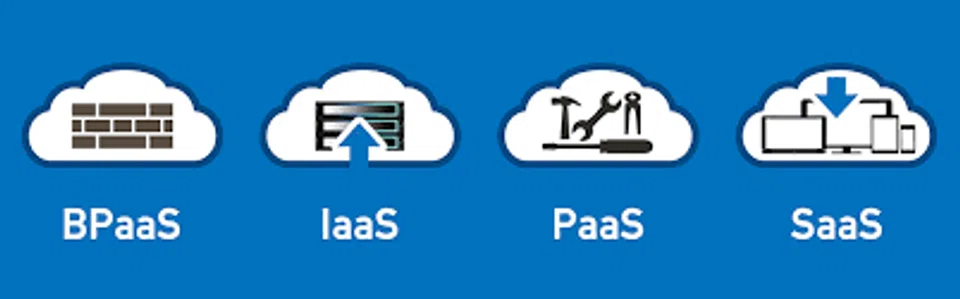
THE “as-a-service” model, whereby businesses can subscribe to a service or offering without the need to pay upfront, has revolutionised business-to-business (B2B) operations forever. It was initially introduced with Software-as-a-Service (SaaS), a pioneering business model for accessing software through the cloud. SaaS helped businesses offer a standard, distributed solution at a lower cost of entry. This new model also meant that customers no longer needed to worry about large installation and ongoing maintenance costs.
Two decades on from its mass introduction, and the SaaS model no longer exists solely within computing, but now touches every industry. While software industries have been spearheading the “as a service” model for decades, other industries such as print are in the earlier stages of applying such models to their own business offerings. The market is moving at pace, and it was the cloud that fully accelerated its widespread popularisation.
More recent adaptations of the “as-a-service” concept include Infrastructure-as-a-Service (IaaS), Platform-as-a-Service (PaaS), and more, that utilise the cloud-based model and offer businesses increased flexibility to scale up or down based on need. As the service is hosted in a shared environment, the service itself and updates can be rolled out instantaneously, and allows customers to outsource key business functions, revolutionising industry operations. Today, products, services, and experiences are all being swept up in the phenomenon of Everything-as-a-Service (XaaS) – remote and on-demand access to any business offering provided as a service.
The XaaS model
As early as 2018, it was predicted that the global XaaS market will surpass US$340 billion by 2024. The pandemic has only served to accelerate this trend as organisations have sought to adapt their business models to thrive in the new normal. In fact, 60 per cent of adopters believe they are gaining a competitive edge through their use of XaaS. Optimised running costs, freed up resources, faster implementation and providing customers with access to the most up-to-date technology are all benefits too great to ignore.
The rise of the “on-demand” economy has created a shift in consumer behaviour, where more is expected from businesses than ever before. The XaaS model uses “servitisation”, where the focus goes beyond merely selling products to also delivering services, to meet these increased demands. This creates an opportunity for businesses to deepen customer relations through engagement, and that collaboration is key to the success of an XaaS offering.
Beyond implementation to creating real customer value
Many companies have been using customer delivery techniques for years to analyse how customers are using products and rolling out updates accordingly based on feedback. However, the cloud has advanced this trend by making it easier for businesses to gain real-time insights, facilitating a deeper understanding of the customer journey.
It is now not enough for businesses to simply provide an “as-a-service” offering as a tick box. Investment in the model is key to creating a service that the customer sees true value in. Only by leveraging the cloud to engage and collaborate with customers, monitor their usage and make improvements to the product or service, can you keep your business truly competitive.
Businesses can measure how customers are using a product, service or function through usage metrics such as adoption, what functions are being used, and how quickly an action is completed. This gives them insight to identify and proactively fix any problems that could arise before they impact a customer’s experience. The XaaS model also presents companies with a space to evolve their service or test new strategies in an agile way.
The XaaS model naturally lends itself to a customer and provider collaborating, to ensure that a user gets the best from what they bought. In the old world of purchase and use, solution providers were not so connected to whether a customer managed to extract a purchase’s full value. However, flexibility and scalability has changed this dynamic.


Today, an ongoing collaboration between a customer and XaaS provider is key for long-term investment. The nature of the model means the buyer makes a repurchase decision every subscription term, reconsidering the value of the service more frequently than ever before. In fact, 80 per cent of adopters agree that XaaS has led their organisation to reinvent business processes and even change how they sell to customers. The XaaS model has ushered in a new era, one in which we “pay by outcome”. This payment model holds businesses accountable for bolstering product value on a consistent basis.
The uptake of XaaS is quickly becoming an essential building block for business growth. A true XaaS proposition must offer real engagement, close monitoring of a product in use, and a commitment to continuous improvement to meet today’s evolving customer demands. As more and more businesses implement an XaaS proposition, it is increasingly difficult to stay competitive just by adding a digital connection and subscription model to current offerings. Customers are now looking for true value in what they consume, and the “as-a-service” model is no exception.
The writer is B2B sales and marketing director, Canon Central and North Africa.
Decoding Asia newsletter: your guide to navigating Asia in a new global order. Sign up here to get Decoding Asia newsletter. Delivered to your inbox. Free.
Share with us your feedback on BT's products and services
TRENDING NOW

World’s largest offshore wind platform by Seatrium consortium on track to be completed by 2028

Is stamp collecting enjoying an analogue revival or are its best days over?

GovTech retrenches another 38 staff in second round of layoffs

MBS adjusted property Ebitda falls 20.6% in Q3 with fewer high-roller visits, weaker hold

