Business-as-usual won’t get us to net zero, especially in emerging markets
The journey to net zero demands ambition but also robust financial frameworks to bridge the gap between current practices and sustainable development
SOUTH-EAST Asia has reached a critical juncture in its energy and economic journey.
Over the past two decades, energy demand in the region has climbed 3 per cent a year on average and International Energy Association (IEA) projections see that pace continuing to the end of the decade.
Those demand figures, however, may not account for the region’s robust digital economy, which could hit US$1 trillion in gross merchandise value by 2030. That will likely boost electricity needs even further as demand for power-hungry data centres rises along with positive economic metrics.
But even baseline forecasts that show South-east Asia’s regional GDP expanding by about 5 per cent annually already imply a near 35 per cent spike in CO2 emissions if we continue to rely on fossil fuels to satisfy our power demands.
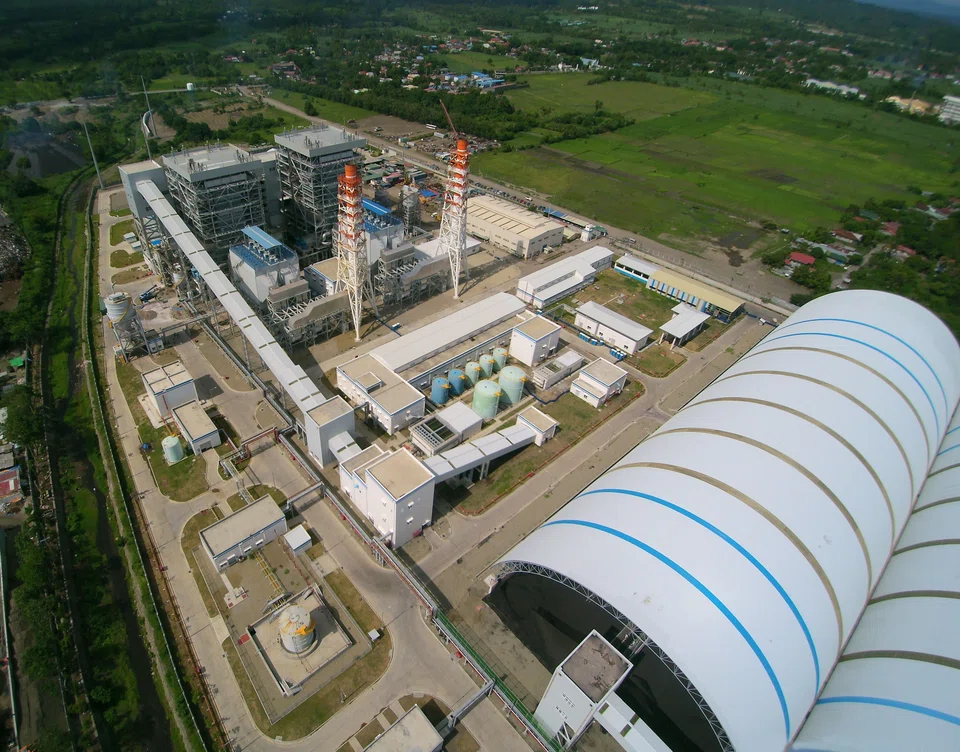
Fossil fuel reliance is especially pronounced in the Philippines, where coal – the most carbon-intensive option – fires about 62 per cent of electricity generation.
Meeting the region’s steadily rising energy demand, while simultaneously reducing fossil-fuel dependence, requires substantial manoeuvring to hit the target. A business-as-usual stance won’t work.
We need new ways of thinking because there’s still a wide gap between what’s needed and what’s currently on the table for the region.
Coal cutting
Coal is the backbone of some of the world’s most advanced economies. From the first steam engine all the way up to the first semiconductor, coal power has been fundamental. But if the rest of the world follows that blueprint, coal’s persistence across the globe will exacerbate the climate crisis.
With Asia hosting 99 of the 100 most climate-threatened cities of the world, that’s not a deal the region can afford to take.
Energy transition is not a lofty ideal for us; it is a pressing necessity. But transitioning to a sustainable future is a decades-long task, requiring combined efforts from governments, private and institutional investors, and potentially even multilateral organisations and philanthropic entities.
Since 2005, about 130 gigawatts (GW) of coal-fired capacity has already been retired in the US. Another 95 GW has been announced to retire by 2030. There is more coal capacity in the country beyond that but there is now a clear pathway for a full coal phase-out in the US by 2030.
South-east Asia, though, has been going the other way to keep up with our expanding economies. Keisuke Sadamori, director of energy markets at the IEA, has singled out Asean as the only region in the world where coal is expected to increase its share of the energy mix.
Yet phasing out current coal power and replacing it with renewable sources could reduce carbon emissions across all of Asia-Pacific by about three-quarters by 2040, according to the MSCI Sustainability Institute. That would be a big leap towards net zero.
As the CEO of a solar energy firm in the Philippines, I witness daily the profound challenges and opportunities that South-east Asia – and emerging markets more broadly – face in the pursuit of that target. And what I see is that we’re missing some key incentive and funding elements.
The disparity between developed and emerging markets in this context is stark. Companies in developed markets can “offshore” carbon-intensive operations to emerging markets, effectively shrinking their carbon footprint, but that practice expands our footprint. And there is nowhere for us to offshore to – we’re left holding the carbon bag.
Meanwhile, developed markets have always had better access to finance, further widening the gap that we have to cross.
Governments in the region are aware of the challenges and eight countries in the region have set net-zero emissions and carbon neutrality targets. But achieving their goals requires a phase-out of fossil fuel subsidies along with coal, while simultaneously deploying new energy efficiencies and clean energy technologies, like solar power, at a rapid pace.
According to the IEA, South-east Asia will need to add 21 GW of renewable capacity on average each year to 2030 to reach its net-zero goals. That’s treble the pace of recent years.
But it can be done. The deal to retire the South Luzon Thermal Energy Corporation (SLTEC) coal-fired plant in the Philippines 10 years ahead of schedule and replace it with clean energy is a prime example.
But this early retirement also highlights the critical roles of funding and new thinking to bridge net-zero gaps.
Reach across gaps with partnerships
Despite abundant wind and solar resources, South-east Asia’s energy balance still leans towards fossil fuels.
The reasons are systemic, ranging from populations still living without electricity to siloed financial systems spread across literal islands, rather than being packed-in-tight on a single continent as in Europe.
In the Philippines, for example, we still face baseline financing costs with minimal incentives for green projects. From experience at my company, where we have issued a green bond, deployed mezzanine financing, and embarked on dedicated project financing, we rarely see any preferential loan rates for green-themed projects.
As long as business-as-usual is the only path open to funding, that’s what we’ll get. But it’s not what the world needs.
What we do need is a concerted effort that blends partnerships, innovation, and strategic investments. Public-private partnerships and collaborations with governments, non-governmental organisations, and international bodies play a pivotal role. The SLTEC phaseout, which involves potential deployment of transition credits and multiple public and private entities, is one example.
Emerging market companies focused on building a sustainable future should also seek to partner the region’s incumbent and well-known entities to roll out projects that can attract broader investor interest. My company may not be known in foreign markets but a firm like San Miguel will be. We partnered San Miguel Light and Power to jointly develop a 153.5 megawatt (MW) solar power plant and expect construction to start before the year ends. Finding like-minded partners will always be essential to bringing innovative projects (not business-as-usual) to light.
Partnerships with communities at the local level are equally crucial. Companies operating in emerging markets should try to meet the unique needs of the populations in areas where they operate. As an example, my company started an initiative to integrate solar energy development with the agricultural practices of smallhold farmers, thereby providing energy while supporting local livelihoods.
The most critical partnerships, however, will still be with governments and multinational banks. Companies must work with both to help craft incentives that make it easier for emerging market businesses to launch sustainable projects. Whether through tax breaks, preferential loan rates or other financial mechanisms, these incentives can help bridge the gap between the high costs of green projects and the long-term benefits they promise.
At my company, we collaborated with the Philippine Department of Energy (DOE) and a Singapore debt financing firm, Pentagreen Capital, to scale up solar projects while navigating the kind of complex regulatory landscape that often hinders sustainable development in emerging markets.
By fostering partnerships, innovation, and strategic investments at all levels – from governments to international organisations to local communities – emerging economies can build a future where we are not just participants in the global energy transition, but leaders.
The writer is chief executive officer at Citicore Renewable Energy Corporation