

BYD and peers make strides in every market but their own
Beijing is switching its attention to newer sectors such as AI and robotics
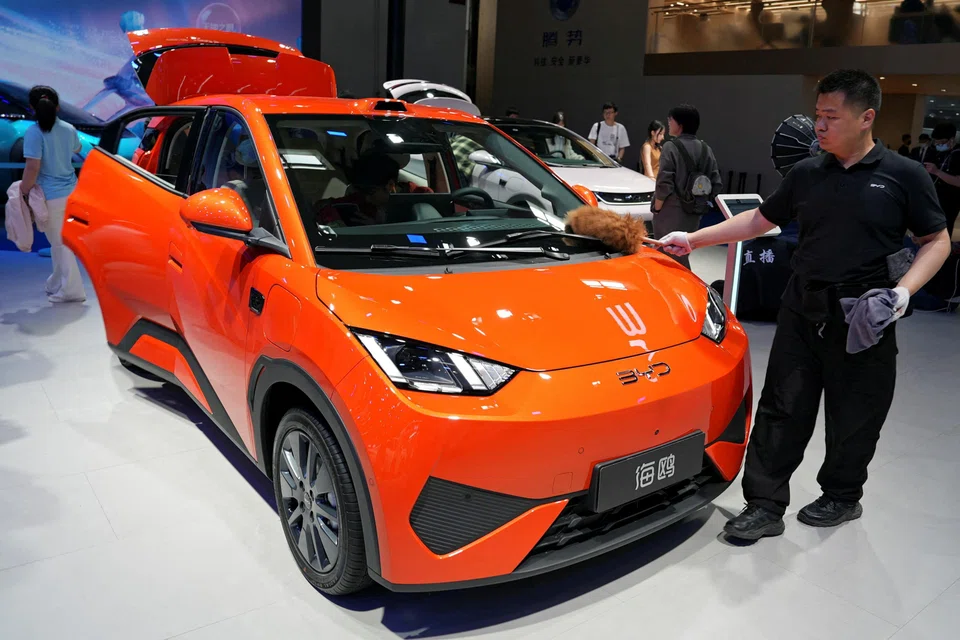
SOMETIMES the world’s biggest car market is not enough. Struggling with ferocious competition at home, China’s big electric-vehicle makers, led by BYD, have turned to growth abroad.
New horizons though, can’t hide the fact that the industry’s growth is shifting down a gear, and racy valuations are increasingly only seen in rear-view mirrors.
From the BYD Dolphin to the MG4, made by SAIC-owned MG Motor, Chinese cars have become commonplace in the driveways of Europe, Australia and swathes of Latin America. China’s EV exports doubled in 2025 to 2.6 million units. Of those, just under half were produced overseas in one of the 16 countries in which BYD and rivals have, or are planning, plants.
By 2030, their overseas operations will produce about 3.4 million cars, AlixPartners estimates.
China Inc’s total overseas sales still pale next to the estimated 3.5 million vehicles BYD alone sold at home in 2025, but a chill in their backyard is what fuels their race around the world.
Government policy helped boost EVs to roughly half of new car sales in the biggest Chinese cities, but Beijing is switching its attention – and subsidies – to newer sectors such as artificial intelligence and robotics.
Chinese brands are making up for the removal of rebates and tax incentives with profit-crimping concessions of their own. A price war rages among 130-plus brands in a market that insiders reckon should have 20 at most. For BYD, net profit per car has slipped about a third from a peak in late 2023, estimate Nomura analysts.
Overseas markets aren’t offering a smooth ride either.
Despite a small win on tariffs in Canada, the biggest goal is still the US, so far impossible to crack due to a mix of trade levies and national security concerns. Fears that US President Donald Trump might agree to some form of access this week while in Beijing have produced a fresh round of dire warnings from the US industry and its supporters.
Brussels, despite Europe’s enthusiasm for transitioning from petrol-powered cars, has also thrown up obstacles. In 2024, the EU imposed additional tariffs, claiming Chinese cars’ lower prices were the result of state support.
BYD isn’t idling while geopolitics and local policies swirl. In March this year, it unveiled a battery that can amass a 70 per cent charge within five minutes.
Investors, though, are counting the cost of rolling out the new technology on top of already-squeezed profitability. Sales grew half the pace of costs last year, slicing a fifth off BYD’s earnings and prompting a dividend cut.
At the end of the last decade, BYD’s shares were trading at roughly 40 times forecast earnings; after a one-fifth fall in the past year, they trade at half that.
Global carmakers such as Ford and Toyota would still be grateful for that kind of multiple; but for the world’s biggest EV maker, it’s a significant shift down in gear. FINANCIAL TIMES
TRENDING NOW

LTA proposes combining car COE categories, adding rebate-surcharge system

StarHub to acquire MyRepublic’s mobile business amid ongoing telco consolidation

DBS, OCBC, UOB rout lops billions off STI as inflation, rate concerns spook investors

Grab CEO’s wife Chloe Tong on life with Anthony Tan and finding her purpose

