

Can the EU withstand the pushback against its carbon levy?
Brussels must defend its climate goals and prove its policy is the future of trade
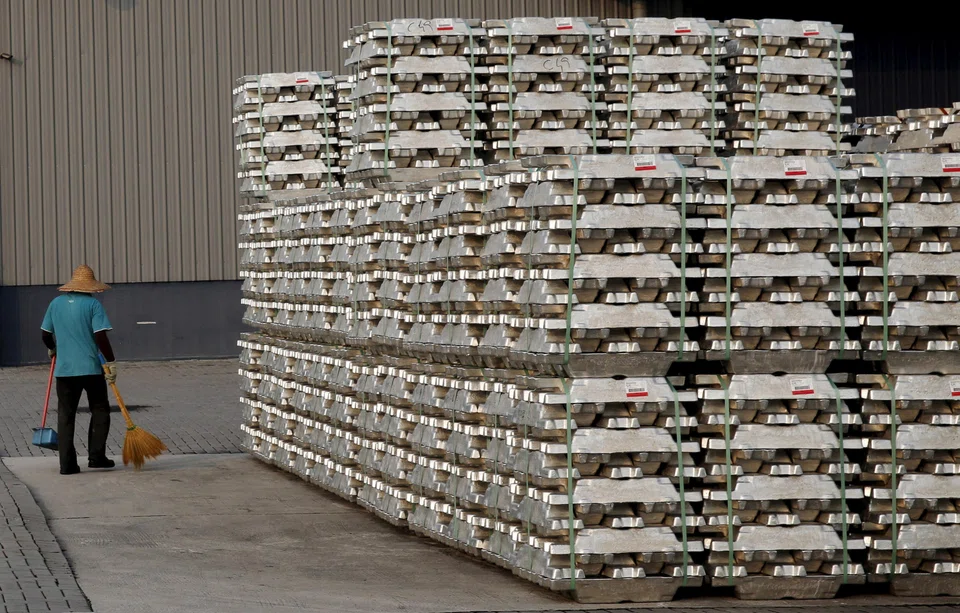
THE European Union’s Carbon Border Adjustment Mechanism (CBAM), which entered into force on Jan 1, has sparked widespread international controversy. While critique of the carbon tariff framework extends across the industrialised world, including the US, tensions are most prominent with emerging markets.
China has criticised CBAM as unfair, discriminatory and incompatible with World Trade Organization rules. Beijing argues the EU’s default emissions values overestimate the carbon intensity of Chinese products and disregard progress made in green and low-carbon production.
China also condemned the EU’s recent decision to extend CBAM to around 180 additional downstream steel and aluminium products, calling it unilateral trade protectionism.
Some of this critique is understandable. CBAM could have been implemented more smoothly, and crafted differently to the blunt tool it is occasionally portrayed as.
However, assertions that the fundamental motivation is undisguised green protectionism are a harder punch to land. The EU is striving to become the first continent to deliver net zero by 2050, and is determined to remain a global leader on this agenda, despite the multiple challenges.
Initial CBAM data
The European Commission last week published initial operational figures. By Jan 7, more than 12,000 operators had applied for CBAM authorisation, with around 4,100 already granted authorised declarant status.
Meanwhile, over 10,000 CBAM-related import customs declarations were validated automatically through integrated systems. Between Jan 1 and 6, CBAM covered 1.66 million tonnes of imports, 98 per cent of which were iron and steel, mainly originating from China, India and Turkey.
This underlines that exporters of high-carbon industrial products such as steel, iron, aluminium, cement and fertilisers will be most affected. The EU asserts it is committed to supporting developing countries in implementing CBAM, greening their industries and transitioning to renewable energy sources. However, it is not only China and India that have slammed Brussels.
Asean reactions
In South-east Asia, Malaysia and Thailand have highlighted the challenge for a region projected to experience a substantial increase in greenhouse-gas emissions. The 7th Asean Energy Outlook study forecasts that the region will reach 6,704 million tonnes of carbon dioxide equivalent (Mt CO2-eq) by 2050, up from about 1,815 Mt CO2-eq in 2020.
However, regional reactions have been mixed. Singapore, Vietnam and Indonesia, which each have trade agreements with the EU, appear to be cautiously adjusting to the regulatory landscape. This includes more investment in low carbon technology and greater participation in and implementation of carbon pricing mechanisms. For instance, Indonesia launched a carbon exchange, IDX Carbon, in 2023.
In this context, one key positive step for the region would be to establish more strategic partnerships with the EU, including an EU-Asean trade deal. The two blocs account for more than 15 per cent of global trade, with forecasts of significant growth into the 2030s.
Such trade talks began around two decades ago, but have stalled since around 2009. Instead, there has been a push towards agreements between individual Asean nations and the EU.
The benefits of a bigger Asean-EU deal could include more green finance, greater alignment of environmental standards, increased assistance for carbon auditing, and stronger, mutual recognition of emissions reporting. It could also spur collaboration in key areas such as green hydrogen and clean steel.
Border carbon adjustment policies proliferate
Following the EU’s CBAM pilot phase from 2023 to end-2025, numerous other powers are exploring their own border carbon adjustment policies (BCAs). The EU, far from being a global outlier, may help lead an emerging global trend.
The scope is large given that dozens of carbon trading systems are now in force globally, covering almost a fifth of global emissions, according to the International Emissions Trading Association.
For non-EU countries to be exempt from CBAM, they need to adopt the EU Emissions Trading System (ETS) or fully link their own systems to the EU’s. This requires mutual recognition of emission allowances, system connectivity and data compatibility.
Norway, Iceland and Liechtenstein have chosen the former, while Switzerland has opted to fully link their own ETS to the EU’s. Meanwhile, the UK plans to introduce its own CBAM by 2027, which is expected to be linked with the EU scheme.
Outside Europe, New Zealand, South Korea, Canada, Australia and Japan are also moving forward with this agenda. China, having introduced a nationwide ETS in 2021, is well-positioned to align with international carbon-pricing trends, despite its criticisms of CBAM.
Beijing, like other powers, may eventually try to link its ETS with that of the EU, but a CBAM exemption may be complicated by wider bilateral tensions.
Trump tensions
US President Donald Trump has long been a critic of CBAM. The tariff deal he negotiated in July 2025 with European Commission president Ursula von der Leyen has yet to be ratified.
The agreement is currently suspended following Trump’s threat on Jan 17 to impose new US tariffs against eight European countries on Feb 1 unless a deal is reached for the “complete and total US purchase of Greenland”. These nations face what appears to be an additional 10 per cent tariff, rising to 25 per cent in June.
The US-EU tariff framework includes a pledge that the EU will “work to provide additional flexibilities” on the CBAM. On Dec 17, 2025, Brussels announced some leeway for international partners, including the concept of equivalence in carbon tax or price deduction, and provisions enabling negotiated trade-facilitation arrangements, such as mutual recognition of trusted accreditation bodies.
Trump has yet to give a final response. However, there is a significant possibility the concessions will not fully satisfy the administration.
During the first Trump presidency, the US imposed additional tariffs on steel and aluminium from the EU. Although former president Joe Biden sought to abolish these in exchange for a CBAM exemption, this was not finalised.
Instead, Biden and Dr von der Leyen agreed to lower barriers on steel and aluminium trade and announced a framework to negotiate a Global Arrangement on Sustainable Steel and Aluminium, with the aim of lowering the carbon intensity of metals production.
A breakthrough was not found during Biden’s term, and this challenge now lies in Trump’s in-tray. The key logjam is that, for the EU to grant major CBAM exceptions under the conditions Washington wants would fundamentally undermine the scheme’s global environmental goals.
Taken together, US-EU CBAM tensions are a microcosm of continuing global disagreements. These problems may only become more vexed, from the Americas to Asia, despite the proliferation of similar BCAs.
The writer is an associate at LSE Ideas at the London School of Economics






