

Can India become a developed economy by mid-century?
Policymakers should resume key structural reforms and streamline regulations that stifle business activity
AT AN economics conference in the early 1960s, one speaker began his presentation on development by citing India as an example. Before he could continue, an economist interrupted and asked: “What other country in the world is like India?” The room fell silent. To this day, this question remains unanswered.
Earlier this year, Prime Minister Narendra Modi announced that India aims to achieve developed-country status by 2047, the centenary of its independence from the British Empire. This ambitious goal, which could transform the Indian economy and reshape the global economic landscape, has generated widespread excitement.
But reaching this milestone is no small feat. Conservative estimates suggest that India’s per capita income growth would need to outpace China’s by 3.5 percentage points each year to meet Modi’s 2047 target.
While India has experienced strong annual growth of 6 to 8 per cent in recent years, the economy is already showing signs of slowing. Moreover, even if a slowdown can be averted, sustaining this growth momentum over the next two decades will be challenging.
India is a country of extremes. It has a thriving software industry, and its biometric identification system, Aadhaar, has enabled the government to coordinate public services for the world’s largest population. And India is home to world-class universities, particularly the Indian Institutes of Technology and Indian Institutes of Management.
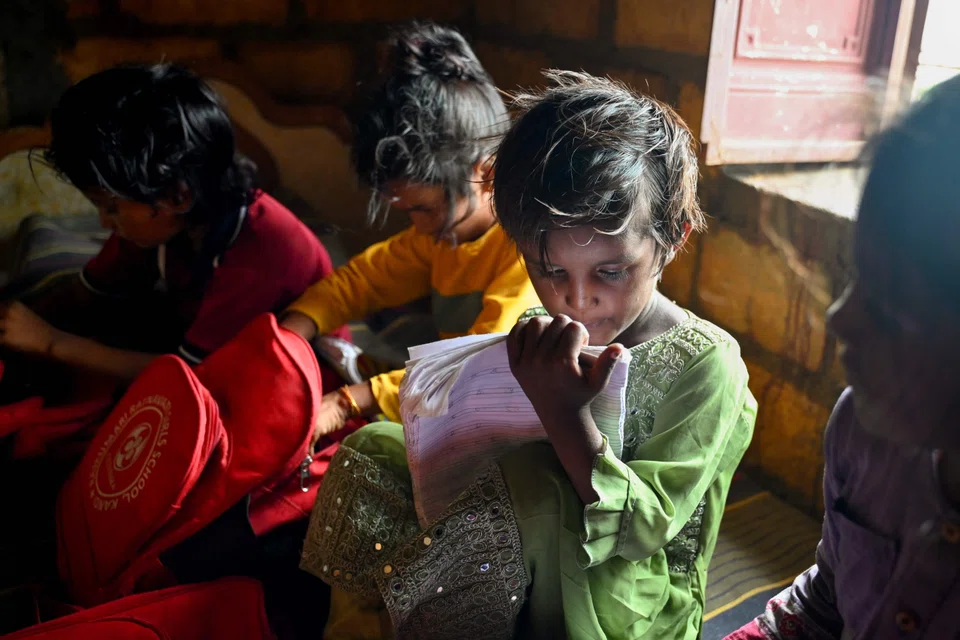
But India’s shift from rural to urban employment has lagged behind most developing countries, exacerbating inequality. While the country has 167 billionaires, more than 129 million people still live below the poverty line. These disparities extend to the education system, where over half of the country’s fifth-grade students struggle to read at a second-grade level.
At the end of World War II, China and India were both impoverished countries with large populations. As recently as the 1980s, their living standards were nearly identical. China’s command-and-control system relied on state ownership of virtually all means of production, while India’s model combined private ownership with government control over key industries.
Neither system produced positive outcomes. In the early 1980s, China began implementing sweeping economic reforms, ushering in an era of spectacular growth. India, prompted by a foreign-exchange crisis, followed a decade later.
But although the country’s gross domestic product growth accelerated, it never matched the rapid pace of China’s economic rise. In its latest World Economic Outlook, the International Monetary Fund estimated India’s per capita income at US$2,730, compared with China’s US$13,140.
Despite China’s current economic challenges, most analysts expect it to achieve developed-country status by the 2040s. For India to do the same, it must address several glaring economic weaknesses. But given that the pace of reforms has slowed over the past decade, it is unclear whether it can muster the political will to pursue the changes needed to meet the 2047 target.
Four areas require urgent attention: labour, education, trade, and regulation. India’s restrictive labour laws, which make it extremely difficult to fire workers, present a particularly serious policy challenge. Industrial growth has been relatively slow, leaving much of the labour force stuck in low-productivity rural jobs. Consequently, while 46 per cent of India’s labour force works in agriculture, the share of manufacturing workers declined from 12 per cent to 11 per cent between 2023 and 2024.
Moreover, India’s stringent regulations on overtime pay, apprenticeships, healthcare, and other benefits significantly increase employer costs. Powerful labour unions further deter businesses from hiring unskilled workers, causing employers to invest in capital equipment rather than expanding their workforce.
To meet the demands of today’s global economy, India must overhaul its education system. Although it has significantly increased school-enrollment rates, the quality of education – especially at the primary and secondary levels – is not sufficient to build a productive labour force.
One major driver of India’s earlier economic reforms was the loosening of tight controls on foreign trade and capital flows. But under Modi’s “Made in India” policies, the country has reverted toward protectionism, imposing tariffs and erecting other import barriers while subsidising the domestic production of essential goods.
This protectionist turn casts a shadow over India’s growth prospects. Without a rapid expansion of labour-intensive industries and exports, it is doubtful that the country can maintain the growth rate needed to achieve developed-country status by 2047.
Another major concern is bureaucratic red tape and onerous licensing requirements, which increasingly hamper economic activity. Previous efforts to streamline regulations have led to significant improvements and spurred growth, but achieving Modi’s ambitious goals will require a new wave of bold structural reforms.
The state of the global economy in 2050 will partly depend on how quickly and effectively India implements these changes. Given the right policies, the country could reach high-income status by 2047. Otherwise, it risks remaining a middle-income country plagued by low productivity and sluggish growth.
The writer, a former World Bank chief economist and former first deputy managing director of the International Monetary Fund, is senior research professor of international economics at the Johns Hopkins University School of Advanced International Studies and senior fellow at the Center for International Development at Stanford University






