Can Northern Ireland become Europe’s Hong Kong?
For the UK constituent region to realise its economic potential, political hurdles need to be cleared
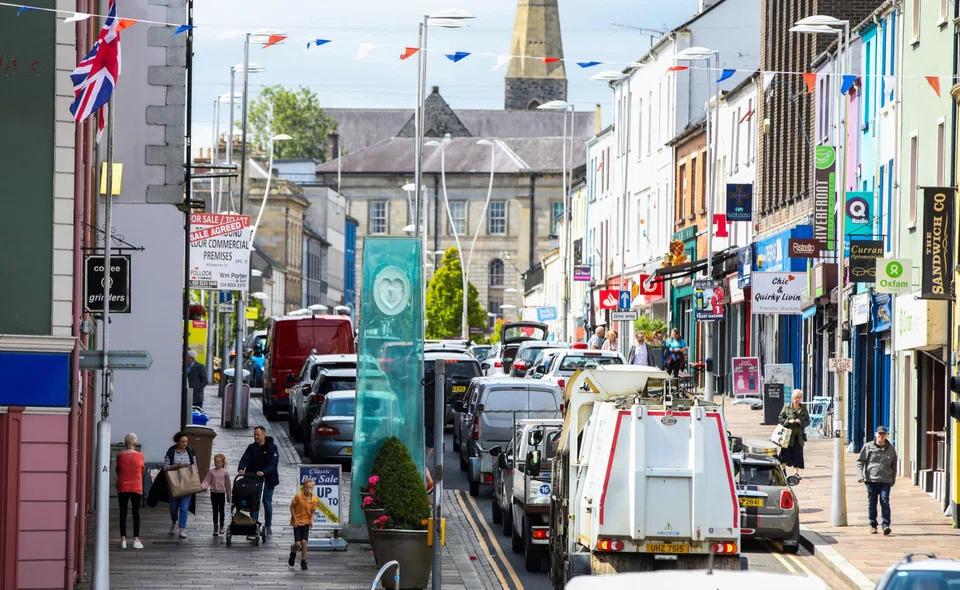
THE distance between Northern Ireland and Hong Kong is more than 9,600 km. Yet the UK government hopes that the former could become a modern-day version of the latter, post-Brexit.
In a keynote address on Sep 13, during last week’s Northern Ireland international investment conference in Belfast, UK minister Michael Gove asserted that Northern Ireland can become for the UK and the European Union (EU) what Hong Kong has been for East Asia.
It is an interesting vision that stems, in large part, from the unique position of Northern Ireland post-Brexit.
Gove said: “Northern Ireland is on the cusp of one of the most exciting periods in its history. Nowhere else in Europe has unfettered access to the UK’s own internal market and the EU’s single market as well. Nowhere else has that potential for growth.”
He was alluding to how all the UK nations – England, Scotland, Wales and Northern Ireland – previously enjoyed unfettered access to the European single market, but now Northern Ireland is the only one which does post-Brexit, even as it stays open to the rest of the UK.
This now unique trading position is enshrined under the EU-UK Windsor Framework, offering Northern Ireland a potentially significant competitive advantage vis-a-vis European nations.
Attracting investors
This economic position may prove enticing to a significant number of international businesses, not just those in Europe. Around 200 investors from across the world – including the United States, the Middle East and the Asia-Pacific – attended last week’s summit, which aims to turbocharge inward investment into Northern Ireland.
This includes the Biden administration’s Northern Ireland envoy, Joe Kennedy III, who also plans to lead a US trade delegation to Northern Ireland next month.
The US is one of the largest sources of foreign investment into Northern Ireland, putting £1.5 billion (S$2.5 billion) into its economy over the last decade and creating 13,000 jobs. Around 1,000 US-owned businesses operate there, and in 2022, Northern Ireland exported goods worth more than £1 billion to the US.
Whether or not Northern Ireland can actually become a European version of Hong Kong, this vision may seem attractive to many. Hong Kong rose from its farming and fishing origins to become one of the world’s most significant financial centres and commercial ports, with a population of over seven million.
This economic transformation was fuelled by Hong Kong’s status as an entrepot in East Asia. As Hong Kong was too small to have an abundance of natural resources, acting as a trading centre and point of transshipment was a valuable economic strategy.
Northern Ireland’s backstory is different, of course. It was created more than a century ago when Ireland was partitioned, with a devolved government for the six north-eastern counties.
The economy of Northern Ireland was the most industrialised in Ireland at the time of partition, but then began to decline. Since the late 1990s, however, its economy has grown significantly.
This has been driven partly by a “peace dividend” since the 1998 Good Friday Agreement that ended most of the conflict between nationalists and unionists. This ushered in a significant increase in tourism, investment and business. Northern Irish unemployment was 17.2 per cent in 1986, but fell below 10 per cent in the 2010s.
Today, Northern Ireland is one of the most cost-competitive places to do business in Europe, with a high-quality education system also contributing to its success story.
In 2020, Northern Ireland received almost £20 billion in inward investment, with an increasing number of companies from around the world recognising its growth potential, talent and expertise. For instance, Belfast is the biggest UK hub – after London – for technology companies, with Northern Ireland being home to more than 100 cybersecurity companies.
Political questions
One of the biggest keys to Northern Ireland’s future economic success will be politics. But the EU-UK Windsor Framework is proving unpopular with the Northern Irish unionist community, which favours continued strong political bonds with the rest of the UK.
Indeed, this led to the collapse of Northern Ireland’s power-sharing administration last year. One of the biggest political parties, the Democratic Unionist Party (DUP), pulled out from the system in a protest against the Windsor Framework’s post-Brexit trade rules for Northern Ireland.
Thorny issues include physical controls and checks on trade to Northern Ireland from England, Scotland and Wales; the role of the European Court of Justice (ECJ) and the application of EU law; and the place of Northern Ireland in the UK’s internal market.
Under the framework, the majority of controls and checks will disappear on goods destined to remain in Northern Ireland. The role of the ECJ as the ultimate arbiter of disputes will be removed, and the EU will no longer have the right to automatically launch proceedings against so-called infractions of the protocol.
The framework also includes a new “Stormont brake” mechanism. Under this, assembly ministers in the devolved Stormont legislature get a say on EU laws, and can stop them from applying in Northern Ireland. Moreover, Northern Ireland ministers will be given sight of new EU laws as they are drafted.
The pro-Brexit DUP intends to keep blocking any revival of the power-sharing arrangement. This is partly as the Windsor deal still requires EU checks on some goods that are shipped from England, Scotland or Wales. The unionist party’s fear is that this will, over time, erode Northern Ireland’s ties with the UK.
For Northern Ireland to realise its significant economic potential, it needs the clarity of a long-term, stable approach – as was so successful after the Good Friday peace agreement a quarter of a century ago. If that can be put in place, its economic future could be bright.
The writer is an associate at LSE IDEAS at the London School of Economics