

Can quality of life be a superpower? Ask Finland
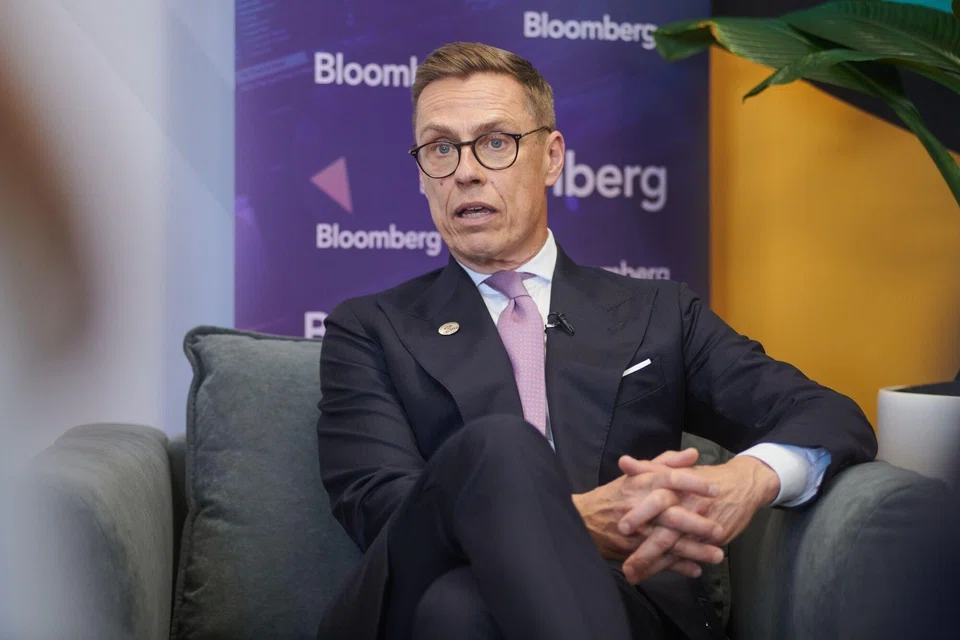
Bank of Finland governor Olli Rehn calls on all of Europe to ‘get its act together’
THE European Union does not have much to brag about these days. Its own officials admit its penchant for red tape looks more like a burden than a benefit. Yet if the old label of “regulatory superpower” is out, the moniker of “lifestyle superpower” is definitely in.
“Europe has created a lifestyle... It’s a superpower with the highest living and social standards in the world,” EU Commissioner for International Partnerships Jozef Sikela said in July.
This will no doubt prompt laughs from those who know so-called “europoors” moving to Dubai or San Francisco for less tax or better pay. But it is pretty accurate, as business school Insead’s latest ranking for attracting talent suggests.
Income inequality, social mobility and life expectancy in the EU all screen better than the US, even if gross domestic product does not. There is little in Europe that compares with the opioid crisis; cities are safer; infant mortality is lower. European living standards have a far smaller gap with Americans’ than GDP suggests, according to Copenhagen-based think tank Europa.
While New Yorkers aspire to send out baby boxes with essential items for new mothers, Finland, the world’s happiest country with a population of around 5.6 million, has pioneered them for almost a century, as the book Finntopia lays out.
The problem for Europe is channelling this into a “superpower” role. Quality of life is a strength, but power politics has upended the world economy and accentuated Europe’s weaknesses as a defence free rider, net energy importer and technology laggard.
Faltering economy
Happy Finland is sliding into recession and unemployment is near 10 per cent; its small, open economy shares a border with Russia and is exposed to Germany’s own economic weakness.
Pointing out the problems of the US – from inequality to crypto cronyism to reduced academic freedoms that are sending Americans to Switzerland – is no longer a comfort blanket; dire demographics and weak growth are making a European lifestyle harder to maintain.
“You’re losing,” JPMorgan Chase chief executive officer Jamie Dimon told European leaders this year.

Finns, to their credit, know that life will get less comfortable – and not just because some have gone 1,000 days without work. Last week, Bank of Finland governor Olli Rehn called on all of Europe to “get its act together” and unleash dynamism in the face of Russia’s war machine, China’s export juggernaut and US tariffs.
Pointing to Finland’s faltering economy, he said there would need to be a shared ambition to curb the country’s debt and surging deficit, while also focusing on strategic investments in defence, decarbonisation and human capital (especially if America is losing its magnetic appeal for talent.)
Instead of lifestyle, Rehn talked up the idea of resilience, calling for a culture that valued research and risk-taking to attract brains as well as capital.
His message should be heard loud and clear. Taking responsibility for defence, reducing fossil-fuel dependence and closing the productivity gap with the US should be Europe’s real lifestyle priorities.
Even as Rehn cautioned against stretched valuations in US tech – which might bring to mind Finland’s own bubbly past – he pointed to data centre investments and Nvidia’s US$1 billion stake in Nokia as signs of optimism.
And while Finland’s private sector feels the pressure to be more ambitious, the government is also looking at job market “flexicurity”, a model pioneered by Denmark, which allows employers to more easily hire and fire workers while also ensuring they have a safety net between jobs. A new Bocconi University working paper suggests this kind of model could boost disruptive innovation in Europe.
As Kristalina Georgieva, managing director of the International Monetary Fund, put it earlier this year: “In Europe, we enjoy being a lifestyle superpower. Unless we become more productive, we may lose this advantage.”
Finland’s advantage is that it has faced such struggles before. Even during deep depression in the 1990s, a time when former prime minister Sanna Marin recalls schoolchildren would cut erasers in half to share limited resources, it still maintained support for research.
And as President Alexander Stubb told Bloomberg’s Francine Lacqua in September, “resilience” is a part of Finnish DNA. Maybe this is the side of European living that deserves superpower status – along with those baby boxes. BLOOMBERG
Decoding Asia newsletter: your guide to navigating Asia in a new global order. Sign up here to get Decoding Asia newsletter. Delivered to your inbox. Free.
Share with us your feedback on BT's products and services
TRENDING NOW

Once staunchly pro-China, Malaysian Chinese businesses are now distancing themselves from Beijing

Looking beyond looming CEO succession, should UOB potentially pursue a transformative merger?

Could stablecoins be the future of money?

Grab CEO’s wife Chloe Tong on life with Anthony Tan and finding her purpose

