

Can Singapore balance its ambitious AI goals with sustainability?
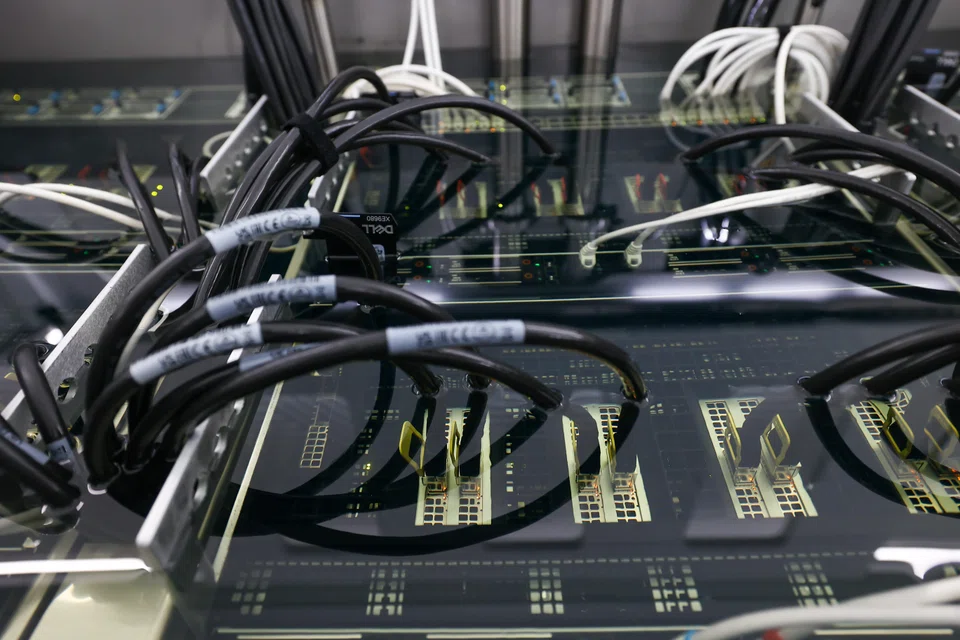
SINGAPORE stands at the crossroads of technological innovation and sustainability, setting a global standard for advancement intertwined with environmental stewardship. As the nation commits to providing at least 300 megawatts of energy for data centre growth, it faces the dual challenge of ensuring sustainable expansion while fostering its goal of becoming a global artificial intelligence (AI) hub.
The Green Data Centre Roadmap is Singapore’s strategic initiative aimed at expanding data centre capacity while pushing the frontiers of energy efficiency and green technology integration.
This initiative is crucial considering Singapore’s position as the leading data centre hub in South-east Asia, accounting for more than 60 per cent of the region’s data centre market.
As Singapore seeks to treble its data centre capacity, it must balance rapid expansion with high sustainability standards.
The challenge lies in ensuring that growth doesn’t compromise environmental integrity or lead to spiralling costs. In a compact urban environment, trade-offs are inevitable. Singapore must innovate within tight boundaries to meet its ambitious goals.
Competing priorities: AI’s infrastructure and energy demands
The success of Singapore’s AI potential hinges on data centres that can efficiently handle intense computational requirements. AI workloads, especially those involved in training large language models, demand unprecedented levels of processing power and energy consumption. Training a single large AI model can consume as much energy as powering several hundred households in a year, presenting a significant challenge to sustainability goals.
The landscape is rapidly evolving, with AI models becoming increasingly sophisticated and data-hungry. Singapore’s data centres must not only meet current needs but also be flexible and scalable enough to accommodate future advancements without compromising energy efficiency. This forward-thinking approach is essential for maintaining Singapore’s competitive edge in the global AI race.
Strategic importance of efficient data centres
Today’s capabilities for real-time visibility in power consumption for hybrid multicloud environments improve sustainability planning and energy-utilisation understanding. These advanced monitoring systems allow for precise adjustments and optimisations, ensuring that every watt of power is used effectively.
Hyperconverged infrastructure has helped organisations modernise their data centres to run more efficiently, consolidating computing, storage, and networking into a single, software-defined system. This consolidation not only simplifies management, but may also significantly reduce energy consumption and physical footprint, aligning perfectly with Singapore’s space and sustainability constraints.
Singapore’s government is fostering an environment conducive to innovation in sustainable technology through supportive policies.
The Energy Efficiency Grant, which helps enterprises switch to energy-efficient IT equipment, will be expanded to include the data centre sector. This initiative demonstrates the government’s commitment to balancing technological advancement with environmental responsibility, creating a ripple effect across industries.
By aligning with global best practices and setting new benchmarks, Singapore is leading the international discourse on sustainable data centre development. The nation is not just adopting existing solutions, but also actively contributing to the development of next-generation green technologies tailored for data centres in tropical climates.
With data centres that successfully integrate sustainability and high efficiency, Singapore will gain a competitive advantage in attracting global AI enterprises and startups. This advantage extends beyond mere technological capabilities; it positions Singapore as a forward-thinking nation that prioritises long-term sustainability alongside cutting-edge innovation.
The path forward requires a unified effort from all sectors. Sustained innovation, progressive policies, and robust investments are essential to maintain momentum and realise these ambitious goals. Partnerships between industry leaders, research institutions, and government bodies will be key to driving innovation in sustainable data centre technologies.
As Singapore expands its data centre capacity, there’s an opportunity to redesign and optimise the entire ecosystem. This could involve exploring new architectural designs, implementing cutting-edge power management systems, and developing novel heat dissipation methods suited to Singapore’s tropical climate. These innovations have the potential to set new international standards for sustainable data centre operations.
Singapore’s journey towards becoming a global AI hub while maintaining its commitment to sustainability showcases its continued innovative spirit. By successfully navigating the balance between rapid AI development and stringent sustainability standards, Singapore is setting a precedent that could reshape the global tech landscape. This approach not only bolsters Singapore’s position as a global AI hub, but also serves as a model for other smaller nations facing similar challenges, demonstrating that technological advancement and environmental stewardship can indeed coexist and thrive together.
The writer is vice-president, Southern Asia, at Nutanix






