Can Singapore help shape the future of the ocean?
The global seas are part of the infrastructure that underpins the country’s stability
DEBATES about ocean protection tend to focus on treaties, national policies and international agreements. Fisheries quotas are negotiated between governments. Shipping rules are set through global bodies. Marine conservation is often framed as a matter of state responsibility.
Yet many of the decisions that shape the ocean’s condition are made far from diplomatic forums. Ships refuel in ports. Cargo moves through urban terminals. Financial and regulatory systems based in cities influence how maritime industries operate.
Many of the decisions that shape the ocean are, in practice, made in cities.
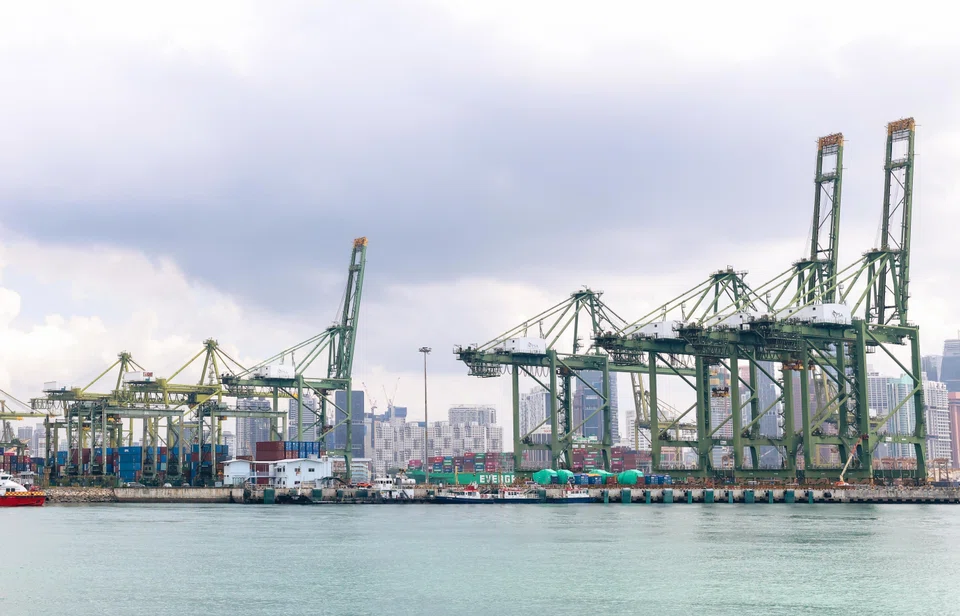
Few places illustrate this more clearly than Singapore. As both a city and a state, Singapore combines municipal and national levers in one place. Its geographic position at the entrance to the Strait of Malacca is often cited as the source of its maritime importance.
Geography alone, however, does not explain Singapore’s role. Over time, the country has built a dense network of infrastructure, services and institutions that make it a central node in global shipping.
Today, the Republic is the world’s largest bunkering hub and one of the busiest transhipment ports. Ships moving between the Indian and Pacific Oceans routinely stop here to refuel, transfer cargo and change crew.
The presence of a major international airport alongside port infrastructure reinforces this position, allowing operators to coordinate logistics in a single location.
This concentration of activity creates a form of influence that extends beyond the city-state’s territorial waters. When access to a port is commercially essential, the standards applied there begin to shape behaviour across entire fleets.
This is becoming more apparent as the shipping industry begins to decarbonise. Singapore has positioned itself as an early mover in alternative fuels, with trials in ammonia bunkering and growing infrastructure for methanol.
The country is also involved in developing green shipping corridors with other major ports. These efforts are partly about climate goals, but they also reflect a commercial imperative: maintaining relevance as the energy basis of shipping shifts.
In this context, the energy transition is tied as much to economic strategy as to environmental concern. Singapore’s limited domestic renewable capacity and reliance on imported energy make long-term energy security a central consideration.
Coastal protection
At the same time, the country faces direct exposure to climate risks. Much of Singapore lies close to sea level, and a significant share of its land has been reclaimed.
Coastal protection is therefore not an abstract policy question. It is a long-term national priority, with large investments already planned.
This combination of economic dependence on maritime activity and physical exposure to ocean change creates an unusual alignment. The ocean is not simply a domain of trade or conservation. It is part of the infrastructure that underpins Singapore’s stability.
The Republic’s influence also extends beyond its own coastline. As a financial and logistical hub for South-east Asia, it sits at the centre of regional supply chains that include fisheries, aquaculture and coastal development.
Standards applied in shipping, finance and trade can shape practices in neighbouring countries, even if indirectly.
Finance is one pathway. Singapore-based institutions have supported investments in areas such as mangrove restoration and the development of the blue economy across the region. These efforts reflect a growing recognition that coastal ecosystems provide economic value as natural infrastructure, helping to reduce risk while supporting livelihoods.
There are also signs of this convergence within Singapore itself.
The Global Centre for Maritime Decarbonisation, based in the city, brings together industry and finance to support new technologies and transition pathways. Its recent work on fuel efficiency and alternative propulsion illustrates how technical, financial and regulatory elements can align within a single hub.
A broader pattern emerges. Ports, fuel infrastructure, financial systems and data networks do not govern the open ocean directly. They shape how it is used.
Singapore is not alone in this. Other cities also influence maritime activity through port rules and market demand. What distinguishes the Republic is the degree to which these functions are concentrated in one place.
That concentration creates an opportunity, but also a constraint. Singapore has traditionally been cautious about positioning itself as a leader on environmental issues in the region. Its role has often been to facilitate rather than to direct, reflecting both political sensitivities and a preference for pragmatic cooperation.
That approach may prove effective in ocean governance. Changes in shipping practices, fuel systems and supply chains often depend less on declarations than on infrastructure and incentives. They require coordination across industries and borders, but they can begin with operational decisions in key locations.
Singapore’s influence is likely to remain indirect. It is less about controlling the seas than shaping the systems that interact with them.
The future of the oceans will still depend on national governments and international agreements. But as those processes move forward, the role of cities – especially those that sit at the centre of global trade – may become more visible.
Singapore already occupies that position. The question is how it chooses to use it.
Rhett Butler is founder and CEO of Mongabay. Thomas Knudsen is executive chair at Toll Group.
This piece is written in support of the Philanthropy Asia Summit (May 18 to 20), which will feature an “ocean track” that examines opportunities for stewarding and sustainably managing global seas