Carney, Trump and the power of a good speech
Leaders need not be the sole, or even the main author of their speeches, but they do need to be the guiding mind behind them
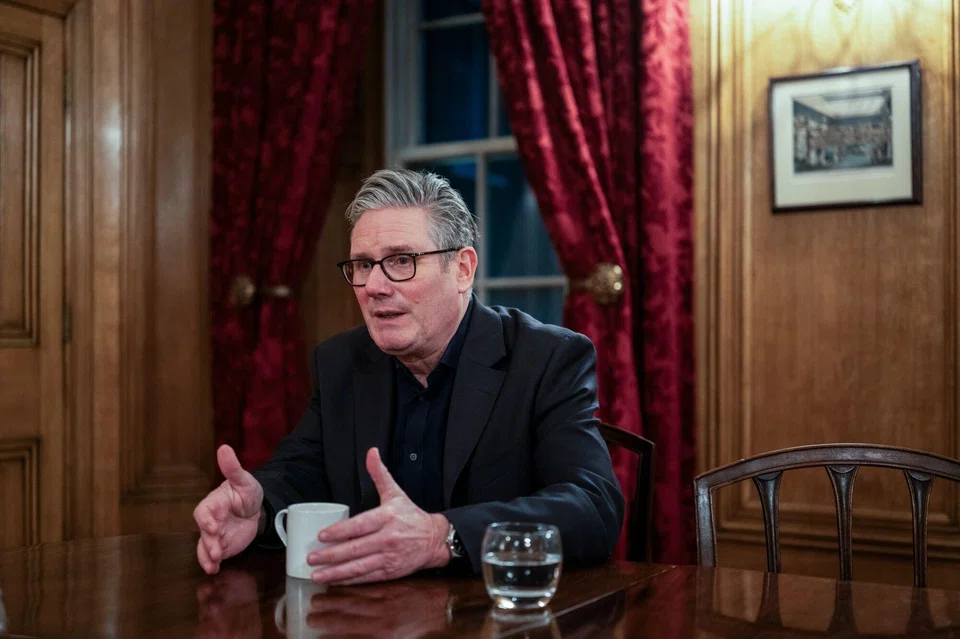
LEADERS don’t need to write every word themselves, but they do need to make sure it clearly represents their vision.
Does it matter that Mark Carney wrote his excellent speech to Davos himself?
In part, it matters because it is demoralising to me personally to learn that the list of jobs that I am worse at than Carney now includes not only central banker, political campaigner, prime minister, university ice hockey player but also writer.
But it matters, too, because it is a reminder of a neglected truth, that writing is a core part of providing effective leadership.
Or, more accurately, writing first drafts. Margaret Thatcher delivered many speeches that, like Carney’s, quoted philosophers and drew from history to make points.
Although she astutely presented herself as a no-nonsense figure, Thatcher was undoubtedly a first-class intellectual who took the time to engage similarly intellectual MPs, including discussing the work of Karl Popper with his biographer, the then Labour MP Bryan Magee. Her speeches reflected that.
Most of the actual writing was done by the playwright Ronald Millar, who built out her speeches from a rough skeleton of what she wanted to say.
Leaders need not be the sole, or even the main author of their speeches, but they do need to be the guiding mind behind them. That Keir Starmer is mostly a supporting role in the construction of his speeches is not incidental to why his government is directionless.
Collection of grudges and hatreds
US President Donald Trump’s chaotic, rambling speeches that are little more than a collection of grudges and hatreds in seemingly random order are a cause, not a consequence, of the fact he oversees a government that shares that character.
Anyone seeking his favour has to work towards their guesses about what he wants – and we all see the terrible results.
There are lessons here for anyone who leads a large organisation.
An underrated part of being a good leader is that you shouldn’t have to tell people what to do all the time. Instead, they should be able to anticipate what you want and what doing a good job looks like.
There are lots of ways to do this – leading by example is one – but the bigger and more complex the organisation you lead, the more important it is that people know what you want without having to ask.
The overwhelming majority of people who need to know what Carney thinks about foreign policy or what German Chancellor Friedrich Merz thinks about, say, transport policy, will never meet them.
But whether you are a business, a public official, a charity campaigner or something else entirely, your job is easier if you know what it is that a leader wants and what drives them. Speeches are one of the best tools in a politician’s locker to do that. They allow a leader’s aides to shape what messages they might send out.
Beyond being re-elected and surviving in office, what does Starmer want? It is almost always unclear.
He not only did not write the two biggest speeches of his first year in office – his “things will get worse” Rose Garden address and his “island of strangers” speech on migration – but has since disavowed them in conversation with his biographer.
In government, that is a recipe for confusion and backbiting, for the civil service to lapse not into governing but instead to focus on managing relationships between departments and stakeholders. No one can plan sensibly when the head of the government gives such mixed messages and confusing signals.
By a good speech I don’t mean one I agree with, but one that provides a clear argument and direction. I agreed with Carney’s speech, but what made it good wasn’t the precise content of his arguments but that he set them out clearly and lucidly in a way that anyone can follow and understand.
Plenty of speeches have good jokes or tickle the prejudices of their audience, but what truly makes a good speech is one that people can read and then go out into the world with a better understanding of what their leader expects them to do.
For the leader of an organisation, the internal communications are their speeches, sometimes literally, or sometimes metaphorically through global e-mails or updates on Slack.
Leaders who lack confidence in their writing skills should avail themselves of some kind of redrafting system, whether through an aide or by asking ChatGPT to spruce up their ideas.
But they shouldn’t fall into the Starmer trap of outsourcing the entire process. The first draft has to come from what the boss actually wants their organisation to do and what they want those working for and with it to understand.
Not every prime minister or CEO needs to be able to weave in classical philosophers, but they do need to be able to set out a vision and a direction that others can follow. FINANCIAL TIMES