Celebrating success beyond academic pedigrees
CELEBRATING success is an essential part of any society. However, the kudos and feting may tend to focus on the individual’s background and qualifications. We should honour success in Singapore by focusing not so much on pedigree and mainstream achievements, but embracing a culture where individuals can embark on different pathways to success.
Celebrating success or people from all backgrounds
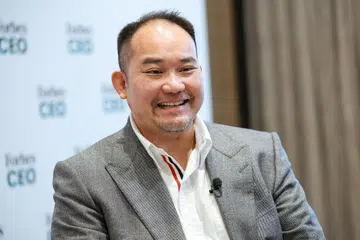
Educational pedigree, prestige and branding tend to dazzle the public. When TikTok chief executive officer Chew Shou Zi, a Singaporean, was grilled in a hostile congressional hearing, his background featured heavily in media reports: Hwa Chong alumnus, army officer, University College London graduate and Harvard MBA holder. Former Goldman Sachs banker.
Chew had a very difficult job defending his company against charges about its consumer privacy and data security practices, and impact on kids. Anyone in his shoes fielding the barrage of questions would have felt the intensity of the moment. But he held his own, and was praised by netizens for keeping his composure throughout the combative hearing that lasted over five hours.
While some may argue that Chew’s performance was no surprise given his background – Harvard degree and all – how he conducted himself in Congress could also cast a very different, but positive, narrative for Singapore.
It is a no secret that Singapore’s education system is highly regarded, and its students have consistently scored near the top in educational rankings such as the Programme for International Student Assessment (Pisa). But the Singapore school system has also drawn criticism. There are views, for instance, that the system here places too much emphasis on memorisation and rote learning, rather than fostering critical thinking and creativity. Therefore, students may struggle to apply knowledge in practical situations or think on their feet.
Chew’s performance in Washington, however, renders this notion completely untrue. He was calm, and did not need to rely on his prepared script. He kept his cool and retorted with charisma to difficult questions. He spoke largely Singapore English, with no pretentious accent. He did Singapore proud.
At the same time, there are also many Singaporeans who are accomplished and successful sans degree. They contribute to, and establish, the Singapore identity – the perception of Singapore vis-a-vis an international audience.
When it comes to university dropouts who made it, from entrepreneurs to billionaires, this culture is readily celebrated in the US. Famous examples would include Mark Zuckerberg and Bill Gates, who left Harvard during their undergraduate years to set up tech companies that go on to have a profound impact on society. Such a culture – celebrating those who walk the less trodden path – should also be encouraged in Singapore.
Entrepreneur Rachel Lim is a great example. The co-founder of Singaporean brand Love, Bonito dropped out of school to launch her fashion e-commerce business. In media interviews, she said that she would not recommend dropping out of university to run a business. It was a tough decision for her, as there were only eight months left before graduation.
She even had to borrow a five-figure sum from her mother to break a bond. It was reported last year that Love, Bonito has plans for an initial public offering, and is on target to open its first US physical store in 2023.
Another example would be Sam Goi, who dropped out of school after Secondary 4 to work in his father’s grocery store. He then entered the frozen foods business when he bought a struggling food unit. Today the “Popiah King”, as he is popularly known, is worth US$3.1 billion.
Ho Bee Land’s Chua Thian Poh is another entrepreneur of note. A high school dropout who started making hooks and spokes for the logging industry, Chua went on to become a luxury property developer who is now worth US$1.4 billion.
The list goes on. In the entertainment industry, we have filmmaker Royston Tan. The Temasek Polytechnic graduate has made a name for himself internationally, receiving numerous awards for his short films and music videos.
Different pathways to success
There are many different pathways to success, broadly defined. It may come in different forms and at different stages of life. Yet having a university degree remains a basic aspiration, not least in Singapore.
A 2021 study conducted by the Singapore University of Social Sciences (SUSS) and Great Eastern, which surveyed 2,500 Gen Z Singaporeans aged between 16 and 25 years old, revealed that most Singaporean youths believed it was necessary to attain a degree for better employment prospects.
During the Committee of Supply debate in March, Education Minister Chan Chun Sing announced plans to increase the “lifetime cohort participation rate” for publicly funded university degrees from 50 per cent to 60 per cent by 2025.
This means that there will be more places for fresh school-leavers and adult learners. More Singaporeans can obtain a degree from the autonomous universities (AUs) in Singapore.
Chan also explained that focus on the lifetime participation rate concept means there is no need to front-load education. The various pathways, such as continuing education and training (CET), would allow upgrading to be done later in life.
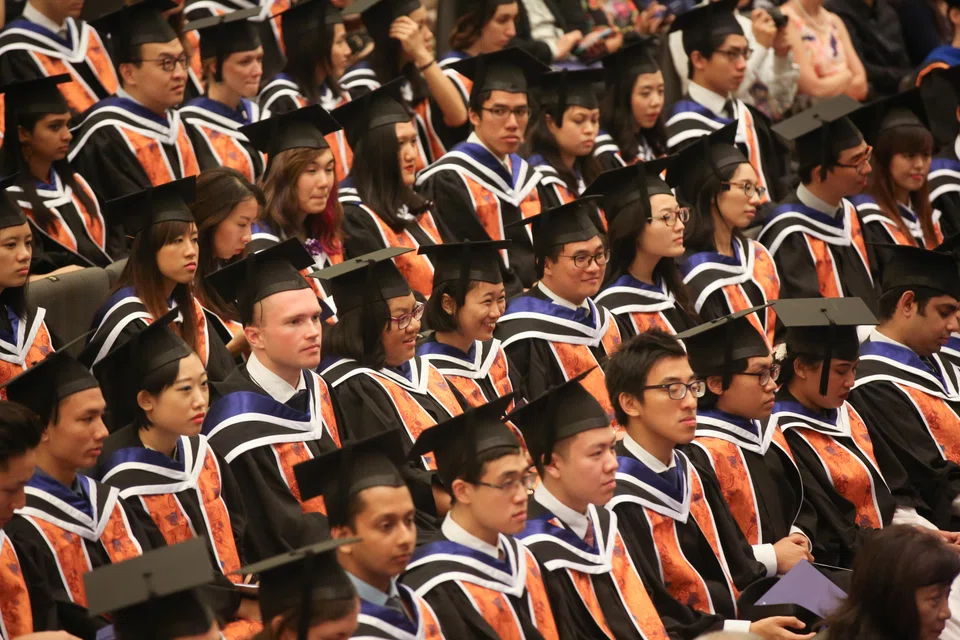
It is apparent enough that we hold in high regard those who graduate from an Ivy League or Oxbridge university. We also expect them to be successful. There is an expectation that with the privilege of pedigree, these individuals will likely do well in their careers.
But we should also celebrate those who graduate from our local AUs and other tertiary institutions – even outside the traditional school path. Chan’s view on not needing to front-load education means that individuals who are “late bloomers” can develop at their own pace but eventually “get there”, and achieve success, on their own terms.
Aristotle, the renowned Greek philosopher, did not completely devote himself to writing and philosophy until he was about 50 years old.
There are people who may not have studied in a “top 20” institution, but perhaps in the top 100. These diverse backgrounds and the different institutions they come from should not be held in disdain. They contribute to the Singapore identity when they perform well overseas.
The creation of the sixth autonomous university in Singapore, SUSS, allows adults with diverse abilities to find their own success. This unique university education through part-time modular studies and night classes allows students to work during the day. Such daytime work can also take the form of apprenticeship training. These students would then be able to enter the workplace with relevant practical experience when they graduate.
Foster a culture of inclusivity
American journalist Rich Karlgaard, author of Late Bloomers, argues that society’s obsession with early achievement discourages people from pursuing their passions. The Singapore education minister’s view on not needing to front-load education opens up various pathways for individuals to experiment with. This could help to promote a shift in mindset from early achievement to lifelong learning, and hopefully foster a culture of inclusiveness where different pathways to success are celebrated.
In the onslaught of generative artificial intelligence (AI), the days of being a specialist to perform repetitive, routine tasks may soon be over. For instance, a new Goldman Sachs report in March 2023 claimed that as many as 300 million jobs could be affected by generative AI. Thus, it is perhaps more important for one to acquire a wide breadth of skills and experiences, as it affords them the competitive advantage in today’s AI age.
It is important to celebrate success. But we must also recognise that apart from early academic achievements, there are many other pathways to success. We should not be fixated on front-loading education. We should instead be focused on celebrating different notions of, and pathways to, success.
Ben Chester Cheong is a lecturer of law at the Singapore University of Social Sciences and an of counsel at RHTLaw Asia.
TRENDING NOW
Three ex-employees of Envy group join Ng Yu Zhi in bankruptcy
He built the Vingroup empire. Now South-east Asia’s richest man is handing some key roles to his sons
Grab CEO’s wife Chloe Tong on life with Anthony Tan and finding her purpose
Incidence of civil servants buying property near unannounced MRT stations ‘a concern’, but may not establish misconduct: PSD