China is catching up with America in quantum technology
But its state-heavy innovation model comes with risks
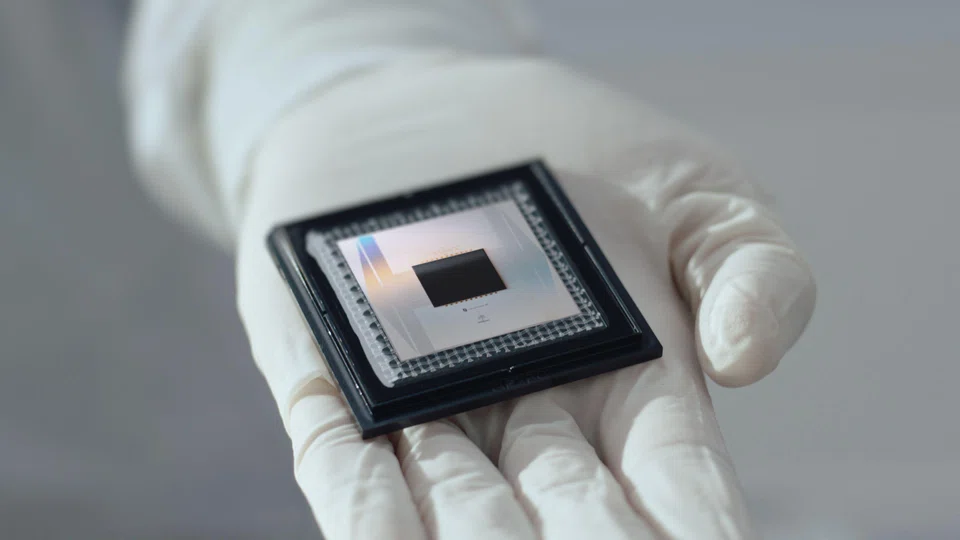
IN A SMALL shop in the eastern Chinese city of Hefei, one of the rarest pieces of technology in the world is on display. The quantum computer in the showroom of Origin, a Chinese startup, looks ready to be plucked from the shelf and fired up. Only 20 such devices are produced globally each year. It is unclear what in Origin’s showroom is for sale, but none of it is supposed to be seen by foreigners. During your correspondent’s visit, which was agreed on in advance, the company panicked at the sight of a foreigner, abruptly cancelled interviews and notified the police.
Few industries outside of weapons manufacturing are so sensitive. Quantum computers can conduct calculations in minutes that would take the world’s whizziest supercomputers billions of years or longer. Communications using quantum bits, or qubits, are ultra-secure. Although the commercial opportunities remain uncertain, militaries around the world have taken a keen interest in quantum technology.
This is why China closely guards its industry. Little is known about how its supply chain for components works, and the Chinese government restricts exports of some related technologies. America, too, is protective of its quantum secrets. In October, the Treasury Department imposed stringent restrictions on American investment in China’s quantum industry.
Both sides have developed areas of strength. China is the undisputed leader in quantum communications. In quantum sensing, another sub-field focused on detecting faint changes in magnetic fields, the two are neck and neck. But in quantum computing – the sub-field with the biggest potential – America holds a wide lead. Quantum computers made by its companies have far higher qubit counts than Chinese ones, an important metric for gauging their power. In December, Google made waves with a new quantum chip that can correct for many of the errors produced by the computers.
China, however, may be closing the gap. Although the country still relies on Western suppliers for many of the components needed to make quantum computers work, such as specialised lasers, that is changing. As Chinese companies get better at making the necessary equipment, Western suppliers are anticipating selling less of it there, says Jean-Francois Bobier of BCG, a consultancy.
One example of this is dilution refrigerators, which produce the ultra-low temperatures needed to operate quantum computers. During 2024, several Chinese companies and labs announced breakthroughs. In September, for example, a company called Zhileng Low Temperature Technology said it had created a refrigerator capable of hitting record-low temperatures that meets all the requirements for quantum computing.
Given all the secrecy, it is hard for outsiders to verify how Chinese-built dilution refrigerators perform and whether they are good enough to run quantum computers. If the claims are true, however, they mark an important milestone. Dilution refrigerators are a fixture of the quantum supply chain. For many years Bluefors, a Finnish company, has supplied most of the refrigerators used in the world’s quantum computers. In September, America introduced export controls on high-performance cooling systems, along with other quantum components.
China and America’s quantum rivalry pits two starkly different models of innovation against one another. In America, large tech companies – including Google, Intel, IBM and Microsoft – are the driving force behind innovation in quantum computing, alongside startups backed by venture capital. University research plays an important role, but government involvement is limited.
In China, by contrast, private-sector investment is modest but the state is omnipresent. Much of the research takes place in the labs of state-controlled universities; half of quantum publications are funded by the National Natural Science Foundation of China, a body tied to the central government. The most prominent quantum startups are all either controlled or supported by the state. The University of Science and Technology of China in Hefei is an investor in many of them, including Origin, and acts as a connector between labs, companies and policymakers. Meanwhile, Chinese tech giants including Alibaba and Baidu have given up their research in the field and handed over their equipment to the government.
China’s approach could have advantages. A recent survey of experts conducted by the Information Technology and Innovation Foundation (ITIF), a think tank based in Washington, suggests that reliable state investment might be more important than private-sector funding when it comes to developing quantum computing. Participants in the ITIF survey said that the fragmentation of funding sources in America leads to a lack of coordination and slows innovation.
Some American investors are anxious to start seeing returns from the money they have poured into quantum computing. There is also talk of reluctance among Western manufacturers of components to scale up production owing to limited demand and uncertain future prospects for the industry, notes Edward Parker of the Rand Corporation, a research-and-consulting firm based in California. He notes that the best gear is still made in the West, but adds that China’s top-down, government-led model may have benefits when it comes to developing a large-scale supply chain for a technology with unclear time horizons and payoffs.
Perhaps. But China’s model also has risks. The system has fostered less competition, with firms having little incentive to outdo each other. State coordination means resources are focused on the specific approaches to quantum technology that the government thinks will succeed. This could pay off in a big way for China’s rulers. But there is also a chance they are placing losing bets.
©2025 The Economist Newspaper Limited. All rights reserved