China: From consumer goods exporter to the ‘industrial mother machine’
The country’s relationship with the world economy is undergoing a profound restructuring
SINCE 2009, China has remained the world’s largest exporter of goods. Not only have exports provided sustained support for the country’s economic growth, they have also played an important role in stabilising global supply, containing inflation and improving consumer welfare.
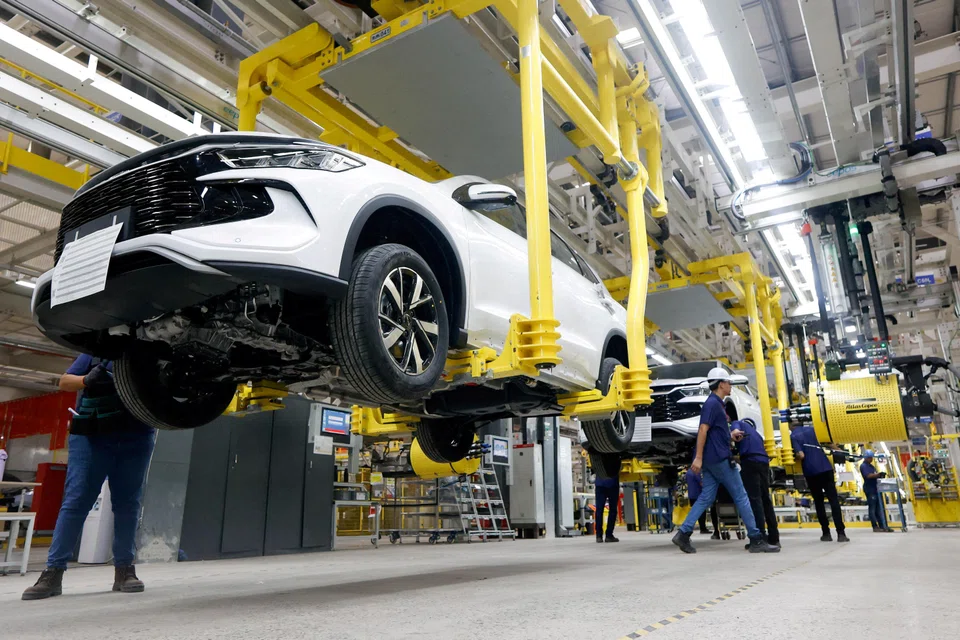
But today, China’s exports are undergoing a profound transformation. Its export model is shifting from simply producing goods for global consumers towards providing capacity for global production systems.
No longer merely a supplier of consumer goods to the world, the country is increasingly becoming an “industrial mother machine” for global industrial development – exporting equipment, technology, components and industrial capability itself.
This shift is already clearly visible in the country’s trade structure. In recent years, the share of industrial intermediate goods and capital goods in its exports has continued to rise, while the share of consumer goods has declined comparatively.
China is a major economy whose growth has been built on deep interaction with the world economy. At a time of intense geopolitical turbulence and growing headwinds against globalisation, how the nation reshapes its external economic relations will affect both its own development and global economic stability.
The key to understanding this transformation lies in recognising that the country’s comparative advantages are changing, and that its external economic relations must adjust accordingly.
A necessary strategic transition
Since the beginning of reform and opening up, China developed a growth model centred on manufacturing expansion. Through large-scale investment, it rapidly built production capacity, while exports drove the economic cycle.
At that stage, Chinese manufacturing was concentrated mainly in low and mid-end consumer goods. With domestic income levels still limited and consumption relatively weak, external demand became an important pillar of economic growth.
By supplying global markets with large volumes of affordable and reliable consumer goods, China not only advanced its own industrialisation, but also effectively lowered inflationary pressure in advanced economies and improved consumer welfare worldwide, creating a classic “win-win” outcome.
However, this model is now facing increasingly visible structural constraints.
China’s economic scale and manufacturing capability have undergone a fundamental transformation. As the world’s second-largest economy and largest manufacturing nation, it continues to expand its productive capacity, yet the world’s ability to absorb consumer goods remains relatively limited.
Slower consumption growth in advanced economies and weak purchasing power in developing countries mean that global consumer demand is becoming less able to match China’s vast supply capacity.
Moreover, the external environment has changed significantly. Some economies, led by the US, have continued to strengthen trade protectionism, placing growing constraints on the traditional export-led model and creating rising external pressure on China’s consumer goods exports.
The nation’s domestic demand cannot fully absorb supply in the short term. Slowing corporate profits are constraining income growth, employment pressures are rising, the social security system remains incomplete, and weak household expectations together with cautious consumption make it difficult for demand stimulus to work effectively.
This means that the old growth logic centred on consumer goods production and exports is approaching its limits.
China’s path forward lies in a strategic transition towards supplying capital goods, industrial equipment and production inputs.
Over the past decades, the country has expanded in scale and also undergone continuous industrial upgrading. Today, it has entered the stage of mid to high-end manufacturing. Its technological capabilities have improved significantly, and its industrial chain is highly complete.
China is the only country in the world that possesses all industrial categories under the United Nations’ industrial classification system. This structural change means that its comparative advantage is shifting from consumer goods towards capital goods, equipment manufacturing and industrial intermediates.
China’s evolving relations with Asean
This transformation is particularly evident in China’s economic relationship with Asean.
The country has already become Asean’s largest source of parts, industrial components and machinery. In 2024, intermediate goods accounted for nearly 60 per cent of China-Asean trade. Most of the remaining trade consisted mainly of capital goods, while consumer goods represented only a relatively small share.
Economic and trade relations between the two are moving beyond traditional merchandise trade towards deeper integration of production networks. Asean is no longer simply the final market for Chinese goods; it is gradually becoming a manufacturing platform within regional supply chains.
This shift is also changing Asean’s role in the regional economy.
The industrial intermediates and production equipment supplied by China are enabling Asean economies to reduce industrialisation costs, attract more manufacturing investment, and gradually move from simple assembly into higher value-added production activities.
Critically, China’s deeper participation in global production systems is providing new momentum for Asean’s industrial upgrading. As Chinese supply chains extend across the region, Asean firms have greater opportunities to move into higher segments of regional value chains, strengthen local manufacturing capability, increase domestic sourcing and improve overall competitiveness.
What Asean is gaining is therefore a greater opportunity to integrate into the global industrial system. In this sense, Asean and China are not replacing each other; rather, they are moving towards industrial upgrading together – to mutual benefit.
By exporting industrial capability, China can ease domestic capacity pressures. Asean can raise its industrial level by integrating into regional supply chains, creating gains for both sides.
A new direction
Countries across the Global South are also accelerating industrialisation, driving rapid growth in demand for infrastructure, production equipment and industrial intermediates. Many developing countries now need the ability to produce consumer goods themselves.
Compared with advanced economies, China holds clear advantages in cost, scale and industrial depth, allowing it to provide integrated industrialisation solutions – exporting productive capacity.
Meanwhile, advanced economies pursuing re-industrialisation face constraints such as ageing equipment and high costs. China’s competitively priced equipment manufacturing and industrial inputs can complement their existing strengths, lower transformation costs and support industrial renewal.
A particularly important area of partnership is the green transition, amid global energy tensions and rising power demands created by artificial intelligence.
With strong scale and technological advantages in solar power, energy storage and electrification, China is well positioned to help build a more stable and sustainable global energy and industrial system through the export of green equipment.
The country’s relationship with the world economy is thus undergoing a profound restructuring. This new relationship can help ease traditional trade frictions centred on consumer goods and shift international cooperation from competition in products towards capacity building, offering a more inclusive path for the next phase of globalisation.
Ultimately, what may emerge between China and the world is a circulation of industrial capability and development opportunities. This may well represent a new direction for future global economic cooperation.
The writer is associate professor at the Lee Kuan Yew School of Public Policy at the National University of Singapore