
China tries shock and awe on Donald Trump
Xi Jinping’s bet that dramatic escalation is the way to win a trade war
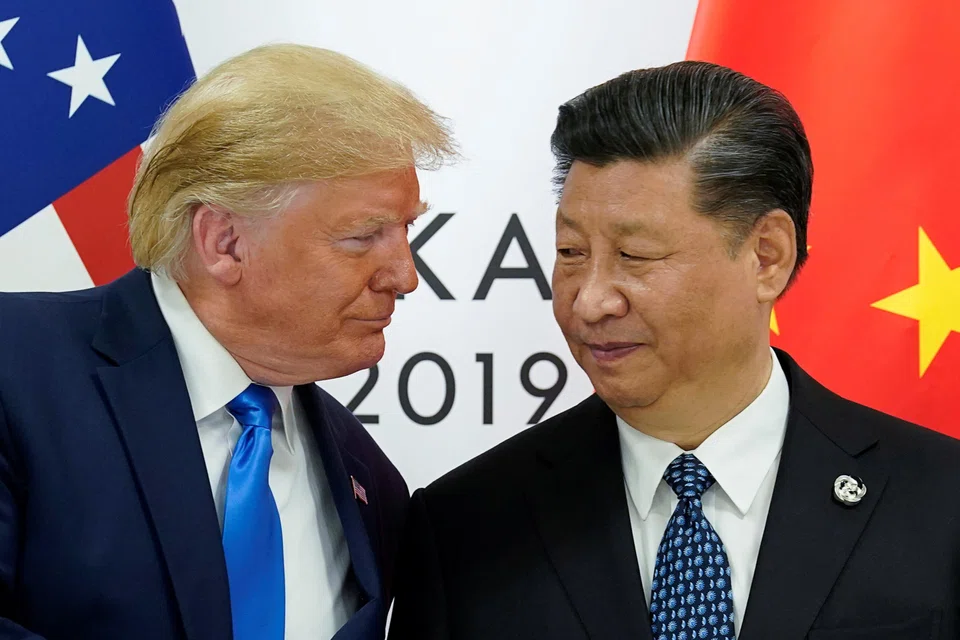
RELIABILITY is for losers. Strength keeps superpowers safe. Some version of that bleak philosophy appears to unite the supreme leaders of China and America.
After some weeks of fragile calm, their trade war is roaring back to life. Officials answering to Xi Jinping and Donald Trump keep exchanging threats and counter-threats. With each round, the two giants give trade partners fresh reasons to fear dependence on them. Neither seems to care.
On Thursday (Oct 9), China unveiled new curbs on exports of rare earth minerals and things made from them, including permanent magnets used in everything from passenger cars to fighter jets. At the same time, China moved to defend its near-chokehold over the production of several rare earths, announcing rules to restrict exports of the technologies needed to process or recycle them.
For good measure, China’s foreign-trade and customs authorities announced rules restricting the export of high-performance batteries and of equipment for making them.
As global investors and governments reeled, Trump cranked tensions higher. Giving China a deadline of Nov 1 to back down, he threatened an additional 100 per cent tariff on Chinese goods and export controls on “any and all critical software”.
He grumbled that he now saw “no reason” for a planned meeting with China’s leader at an Asia-Pacific Economic Cooperation summit in late October, though he later suggested that it might take place.
After pondering Trump’s moves for a day or so, China blamed America. A statement from its commerce ministry, issued on Oct 12, adopts a tone of high-minded dismay. In the space of “just 20 days” since trade talks with China, American officials announced “a string of new restrictive measures” against Chinese companies, it complained.
In the commerce ministry’s telling, China has been quite the paragon. For one thing, its new export controls are not blanket bans, but rather a way for China to safeguard the security and stability of global supply chains. For another, rare earths have many military uses, the ministry noted. As a result, China, “a responsible major country”, is controlling their sale “to better defend world peace”.
In Western embassies and businesses in Beijing, China’s explanations inspire a mixture of alarm and incredulity. Given that Ukraine is being battered, day and night, by Russian drones and missiles packed with Chinese-made components, the ministry’s pious talk of world peace is called “preposterous”.
Alas, non-American diplomats and executives also suspect that their disbelief could not matter less to China’s rulers. In meetings with authorities in Beijing, they find officials to be overwhelmingly focused on their contest with America, which is seen as trying to suppress and contain China’s rise.
Communist Party bosses are not wholly wrong to believe that their country is being contained, suggest those foreigners.
Both Trump and then president Joe Biden have indeed worked hard to deny China advanced computer chips and the means to make its own semiconductors. Diplomats joke darkly that China’s latest trade rules copy existing American restrictions so precisely, down to their “long-arm” moves to control supply chains anywhere on earth, that officials in Washington should sue for intellectual property theft.
Lesser trade partners are collateral damage in this great-power contest. For all China’s promises to grant licences to legitimate end users of rare earths, foreign companies have struggled to obtain permits since a first salvo of controls was unleashed in April.
By early September, China had approved just 19 of 141 licence requests from European firms, according to the European Union Chamber of Commerce in China.
Frustrations continue, with Chinese officials demanding that foreign companies hand over sensitive product designs to be considered for a licence. Curbs on mineral-processing technologies are a blatant attempt to thwart countries trying to “de-risk” supply chains from dependency on China, which controls over 90 per cent of the supply of some rare earths.
Westerners meeting Chinese officials found them “emboldened” after a first round of controls on rare earths and permanent magnets in April panicked American carmakers and other firms, prompting Trump to slash tariffs on China.
Yet, China is giving trade partners new reasons to distrust its rise, and to diversify supply chains. Rare earth production will begin or resume in many countries, and quite soon, for the process is dirty but not especially hard.
As other trade partners reduce their exposure, China risks losing much of the diplomatic credit it gains as a green-tech superpower. Many controlled minerals are embedded in low-carbon technologies, from wind turbines to batteries. By using green tech for coercion, China is weaponising its most benign exports.
Where Maga and the Communist Party agree
For now, China’s shows of strength target an audience of one.
America’s president tantalises China. In his first term, a senior Chinese official told The Economist that Trump was a man guided by his own commercial and political interests, who had been “hijacked” by anti-China hawks.
In conversation earlier this year, an adviser to China’s leadership said that “Trump’s de-emphasising of ideology” creates “room for pragmatic deals”.
A Trump-Xi deal involving lasting policy concessions would be hard, given the two countries’ mutual distrust. Still, China hawks should brace for having their hearts broken by Trump, for he does not share their solemn disapproval of Xi. In a social-media post on Sunday, Trump declared: “Don’t worry about China, it will all be fine! Highly respected President Xi just had a bad moment.”
The Communist Party and Maga (Make America Great Again) agree on one point, at least. In a brutal world, dominance is a surer route to security than the admiration of friends. Other countries may hate where the America-China trade war goes next. Their views will not be sought. ©2025 THE ECONOMIST NEWSPAPER LIMITED. ALL RIGHTS RESERVED
TRENDING NOW
US dollar falters after Iran’s offer to reopen Hormuz sends oil lower
He built the Vingroup empire. Now South-east Asia’s richest man is handing some key roles to his sons
Floods compound Philippine growth woes from public-works scandal
Tokyo reverses baby bust with AI matchmaking and generous subsidies



