



China’s EV dominance in Asia-Pacific faces no immediate challenger
IT IS benefiting from the region’s appetite for small, mass-market cars even as traditional US carmakers have never been competitive there as they are right-hand drive

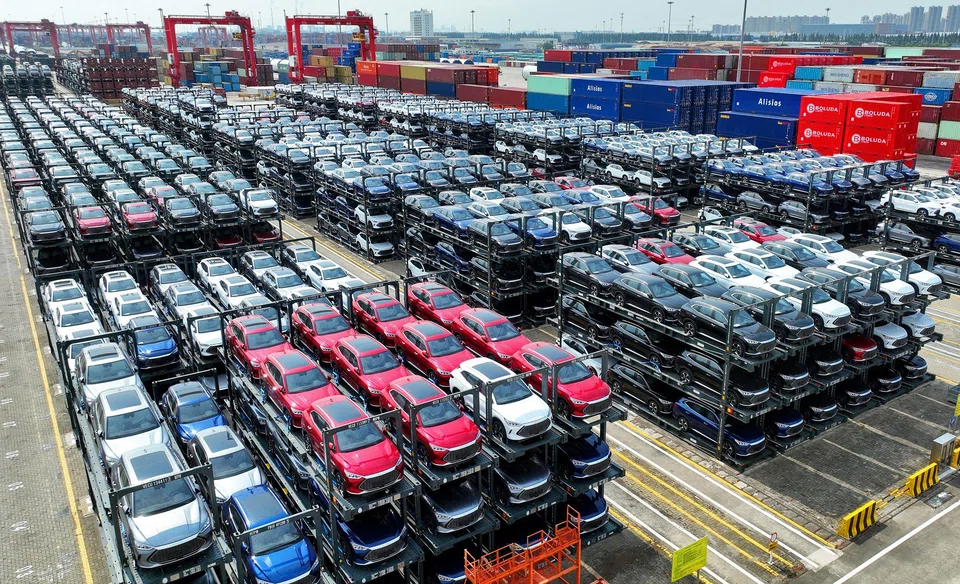
CHINA’S position atop the global electric vehicle (EV) throne seems unassailable – at least for the next few years. This will be especially true in the Asia-Pacific region, which is forecast to be the world’s largest market for EVs and poses fewer trade roadblocks.
The country’s regional EV hegemony is the result of an ambitious long play that has left traditional automotive giants behind – as well as its focus on smaller models, which dovetails with Asian consumers’ taste in cars.
Even as traditional rivals get on the bandwagon, it could be years before the EV playing field is levelled.
Enter the dragon
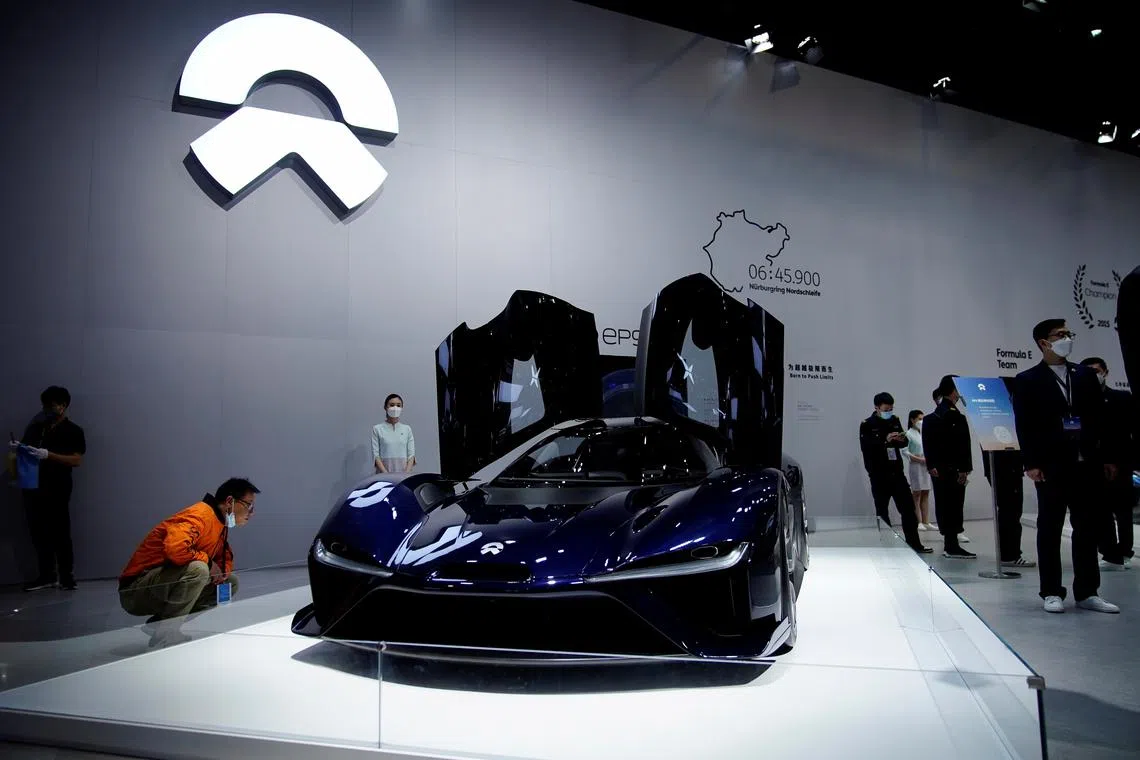
China is now the world’s largest producer and exporter of EVs. It exported around 5.2 million cars in 2023, of which around 30 per cent were “new energy vehicles” (NEVs), a Chinese term that covers both petrol-electric hybrids and EVs. Its EV exports alone rose 70 per cent, reaching US$34.1 billion.
This dominance was established through an early and concerted government drive. Policymakers realised that the country’s automakers could not fight the prowess of foreign counterparts that were long established in the realm of internal combustion engine (ICE) cars.
Instead, China sought a fresh start with EVs – becoming a challenger in a new technological arena, while decarbonising its transport sector and reducing reliance on foreign energy imports.
In 2001, under the 10th national Five-Year Plan macroeconomic blueprint, China’s Ministry of Science and Technology launched a programme that laid the foundation for research into EVs and related technologies, including batteries and power control electronics.
Generous subsidies for NEVs started in 2010, discounting EV prices by up to two-thirds. According to consulting firm AlixPartners, China doled out around US$57 billion in state subsidies for electric and hybrid vehicles from 2016 to 2022.
The country has since become the world’s biggest market for EVs, with 8.1 million vehicles newly registered in 2023 alone, taking its total EV population to 21.9 million.
SEE ALSO
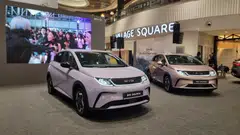
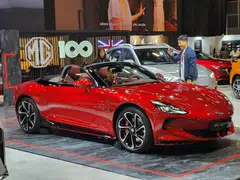
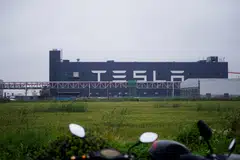

As at March 2024, four of the top 10 best-selling car brands in China are from fully Chinese carmakers – that is, excluding foreign joint ventures – compared to none a decade ago.
Having built a strong domestic market, China’s carmakers are now looking to conquer the globe – or at least their backyard.
A clear field in Apac
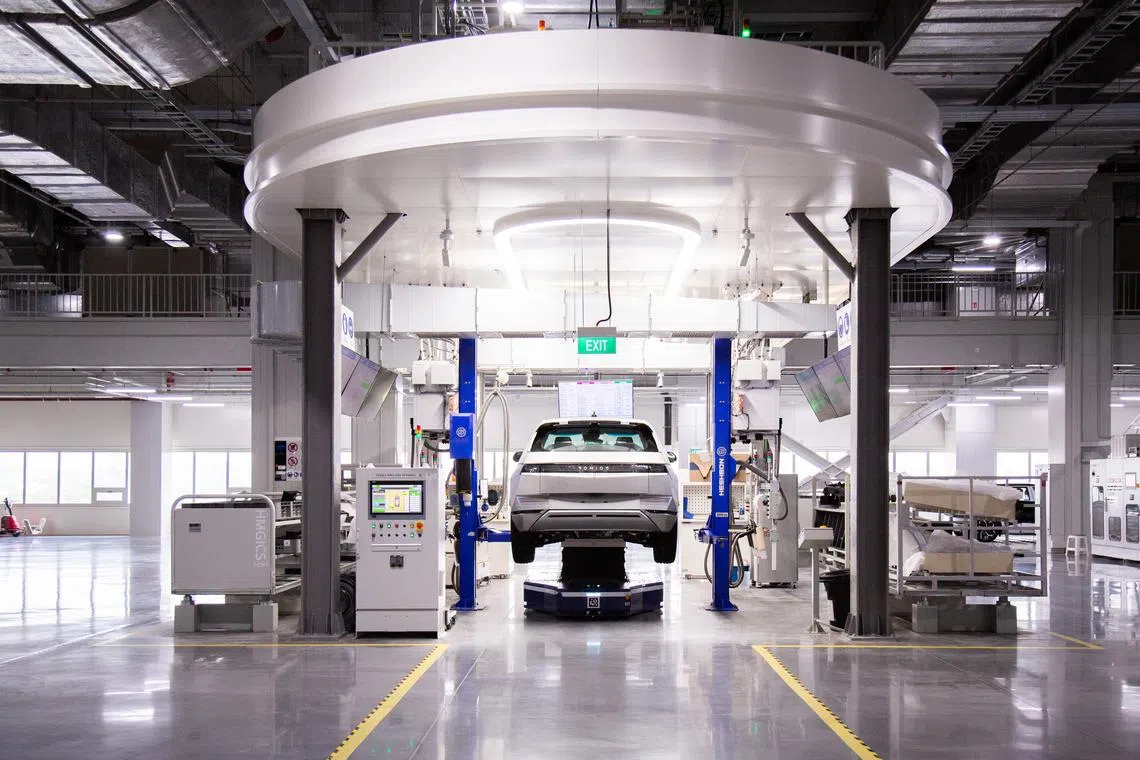
Chinese carmakers’ chief export market is the Asia-Pacific region, where they will face little competition in the EV realm.
This is because the region’s appetite is for small, mass-market cars – which Chinese brands have plenty of, unlike their rivals.
An Economist Intelligence Unit report estimates that Asia will account for 63 per cent of the 115 million new EVs sold worldwide over the next five years. By 2028, 39 per cent of new car sales in the region will be EVs.
On the ICE front, Asia-Pacific has been long dominated by lower-cost Japanese mainstream cars from brands such as Toyota, Honda, Suzuki and Mitsubishi. For EVs to flourish, they will need to be in the same pricing ballpark.
China’s domestic experience might provide a preview. BYD is the world’s top seller of EVs, with its top five sellers in China being small or compact models, defined as costing below US$25,000.
Here, EV rivals have no immediate answer, whether by choice or due to supply constraints.
Japan’s carmakers would be the prime competition, with established supply chains and retail networks across the region – if not for their continued refusal to go big on EVs.
Granted, they have announced plans to ramp up EV production, which includes smaller models. But these seem aimed primarily at Western markets, and there are no mass-market models confirmed for the Asia-Pacific.
In other words, the EV-equivalent of the four-wheeled “white good” that is the best-selling car in history – the Toyota Corolla – is still nowhere in sight.
Meanwhile, EV-only Tesla is struggling not to become another Twitter-style disaster under Elon Musk, who has reportedly canned its Model 2 small car, among other major missteps.
Traditional US carmakers have never been competitive in the region, often ignoring its major markets because they are right-hand drive.
European giants Volkswagen and Stellantis are masters of small-car manufacturing, but are struggling with economies of scale as their costs remain high, especially in batteries and labour.
That leaves South Korea – specifically its biggest carmaker, the Hyundai Motor Group (HMG) – as the most viable challenger.
HMG, which owns the Kia and Hyundai brands, is arguably the only automaker to have kept pace with its Chinese counterparts. Not only does it have smaller, cheaper EVs coming to market, it has ramped up production in Asia.
This includes increased production at existing facilities and a new battery plant in Indonesia, with Kia also considering investing in a plant in Thailand.
Yet HMG’s current EV capacity is only around 350,000 per annum, compared to BYD’s 2023 output of 1.6 million EVs.
HMG is aiming to reach 1.5 million EVs per annum only in 2030, with US$50 billion spent on three upcoming factories in South Korea.
If you can’t beat ’em...
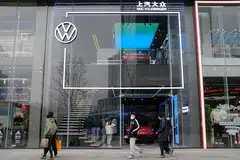
The Volkswagen Group (VW) has shown that there is an alternative to competing with China’s carmakers: cooperation.
In February, it signed a partnership with Chinese EV brand XPeng to jointly develop a platform – a common engineering base that can underpin multiple car models – for the Chinese market.
This would slash development costs by 40 per cent and development time by a third, said VW.
Observers have painted this move as VW’s effort to regain China market share, having lost the position of best-selling brand to BYD in 2022. But it could have even larger consequences.
Michael Mayer, senior vice-president for international sales of Volkswagen, told The Business Times that this platform would be ideal for a low-cost EV that could be sold in the Asia-Pacific, although he did not confirm whether VW was intent on such a move.
Yet even if that materialises, it remains – like HMG’s planned output increase – at least a few years away. In the meantime, China brands will make up tremendous ground unimpeded.
Of course, China may not have things all its electric way. Regional EV adoption could slow after the initial rush, and many places – especially more rural areas – may never adopt the technology.
That is what Japanese carmakers are betting on with their no-charging hybrids, whose regional sales remain strong.
China is not pinning all its hopes on small EVs, with larger, more luxurious Chinese EVs also coming to market. But it remains to be seen if they can muster enough brand value to convince consumers outside the mainstream segment.
For now, at least, China’s electric gamble is paying off. In fact, lightning could strike twice: The Chinese government has already set a target for the mass adoption of autonomous vehicles by 2030. Such self-driving cars could be the next realm for China to conquer.
Decoding Asia newsletter: your guide to navigating Asia in a new global order. Sign up here to get Decoding Asia newsletter. Delivered to your inbox. Free.
Copyright SPH Media. All rights reserved.
TRENDING NOW

UOB found ‘grossly negligent’ over Stamford Land rights issue advice, to pay S$1.9 million
MAS allocates S$1.45 billion to five asset managers in third EQDP batch: Chee Hong Tat

He built the Vingroup empire. Now South-east Asia’s richest man is handing some key roles to his sons

NoMad Singapore marks brand’s arrival in Asia

