

China’s grip on rare earth supply has Trump over a barrel, for now
The country has built up its capacity for both mining and refining rare earths over decades
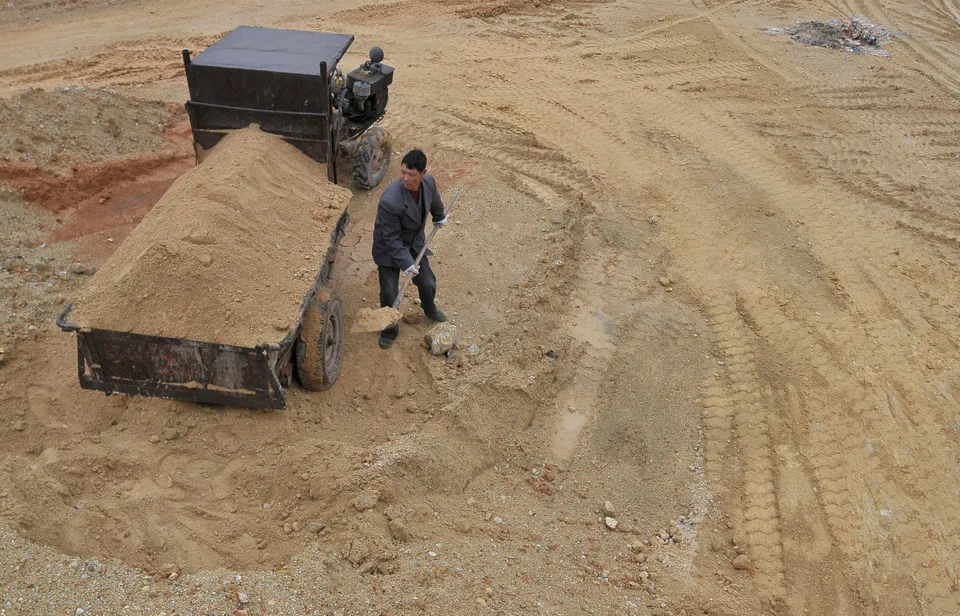

THE Trump administration’s trade war with China is not going according to its script. After all the bluster of previous months, it was becoming clear that Beijing’s trump card (pun intended) was its hold on rare earth minerals.
Last week, the US revoked export controls imposed on American firms supplying chip-design software to customers in China. In return, Beijing agreed to ease restrictions on the export of rare earth products. China supplies around 70 per cent of that market. Rare earth elements are a group of 17 metals that are essential for making everything from smartphones and LED bulbs to electric vehicle motors, wind turbines and military hardware.
To be sure, Washington is not sitting still. The US’s sole indigenous rare earth supply comes from the Mountain Pass mine in California, which is the also largest producer of rare earths in the western hemisphere. On Jul 11, US Energy Secretary Chris Wright is expected to attend the opening of another rare earth mine in Wyoming. More on the way.
The Trump administration would dearly love to rely on its own mines and refining capacity for its defence industries. But that is some way off.
Currently, if the US wants to continue making its top-of-the-range F35 fighter aircraft, it needs to get Beijing to deliver the rare earth magnets that will enable the planes to fly. As it has been pointed out, this is a situation that could become tricky (to put it mildly) if war breaks out over Taiwan, for instance.
There is a scramble around the world to lift rare earth production. Everyone in the rare earths business senses an opportunity to break China’s stranglehold on high-end rare earth magnets. Business leaders are drooling over the prospect of huge profit margins if these minerals could be refined and turned into products the rest of the world needs.
But there are obstacles. China has built up its capacity for both mining and refining rare earths over decades. It has been accused of manipulating the market to force prices lower whenever a potential rival emerges.
Europe is working on its own supplies. In this region, only two countries, Australia and Malaysia, have the capacity to add to rare earth supplies. Australia has the right deposits. The country’s leaders now want Australia to leverage its strategic advantage and create a new manufacturing base that would add value rather than merely sell raw minerals. The US is first in line for this alternate source of rare earth products. Also in the queue are Japan, South Korea, Britain and the European Union.
Malaysia has been a significant player, exporting rare earths produced from monazite since the 1980s. The industry faced setbacks due to environmental concerns, notably the closure of the Asian Rare Earths facility. In 2014, the Academy of Sciences Malaysia published the Blueprint for The Establishment of Rare Earth-Based Industries report, which laid the groundwork for revitalising the sector. Since then, a Malaysian company has gone into rare earth mining.
Recently, Australia’s Lynas Rare Earths’ high-tech facility in Kuantan hit a milestone in rare earth processing, separating one particular ore – dysprosium oxide – outside China. It can now supply customers with the two rare earths required for permanent magnets.
Beijing has the Trump administration over a rare earths barrel – for now. But expect China’s dominance to be eroded sooner rather than later.
TRENDING NOW

Two Singapore-listed palm oil firms named in Greenpeace report on Indonesian plantation fires
Singapore Airlines flight returns to San Francisco after ‘unruly’ passenger incident

Singapore looking into which companies responsible for haze-causing fires: PM Wong
Deluge IPO 3.86 times subscribed ahead of SGX debut

