

China’s next soft-power export could be beauty
Focusing on neighbouring markets will help the industry build cachet
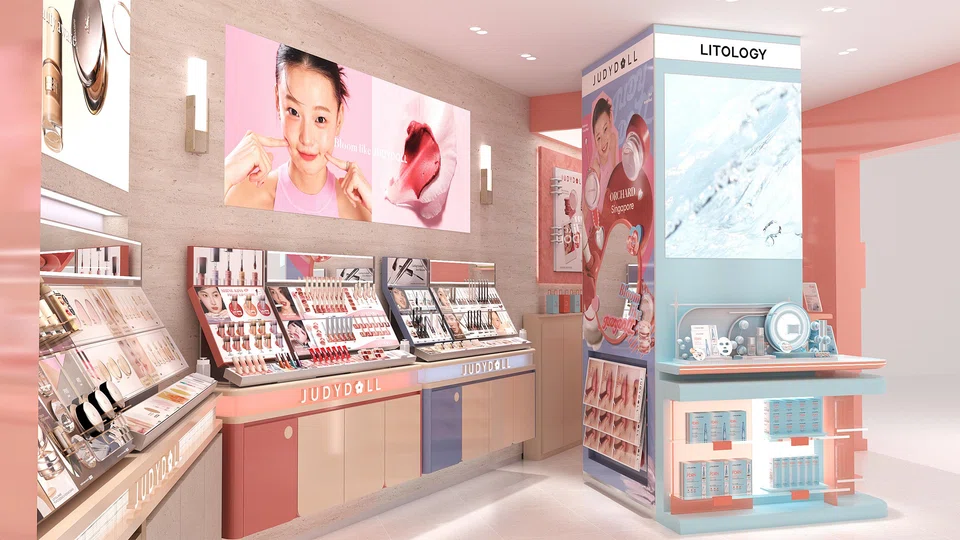
ASIA’S export champions Japan and South Korea have blazed a trail that China is now following.
Once their industrial might was established, they began to sell soft power: music, movies, television, the aesthetic style that accompanies them – and the practical tools to achieve the look.
Although overseas sales of Chinese beauty brands are roughly half those of South Korea, the gap is narrowing. But unlike K-beauty, which counts the US as its biggest market, the West will not be the main growth engine, at least for now.
South-east Asia is the region most critical to the success of Chinese cosmetics and personal-care products, known collectively as C-beauty.
They should carve out an advantage over Japanese and Korean rivals with lower prices, rapid roll-outs and by catering to local needs by offering broader skin-tone ranges as well as halal-certified products that can be used by the region’s more than 200 million Muslims.
The strategy is starting to pay off for privately owned Shanghai-based Joy Group. Founded 10 years ago, it has three main brands: cosmetics lines Judydoll and Joocyee as well as Rene Furterer, a high-end French haircare brand acquired last year.
China’s reopening in 2023 paved the way for the group to expand more aggressively in the region after arriving two years before, culminating in the opening of three stores in Singapore – its first overseas outlets.
As a result, international sales surged tenfold over three years to US$87 million in 2025, helping lift group revenue 22 per cent to US$620 million.
Three of its top five overseas markets are in South-east Asia.
TikTok as cultural influence
Its No 1 cosmetics maker, Proya Cosmetics, should be similarly focused. It needs a new growth driver after revenue declined in 2025, with sales of its namesake brand falling by 10 per cent due to increasing competition.
Building a physical presence in Malaysia through DFI Retail Group’s Guardian pharmacy chain will help. Hangzhou-based Florasis, known for ornate packaging, has also pivoted to the region after a stint building up its US business.
This will also set the stage for expansion further afield in the Middle East and Latin America.
The overseas push is driven by necessity.
Competition in China’s domestic beauty market has become so intense that margins have been squeezed, making profitability harder to achieve.
The approach is gaining traction. Exports to the 10-member Asean more than doubled over the past five years, according to BMI, the research unit of Fitch Solutions. Indonesia, the world’s fourth most-populous country, is the top market.
The region is a natural destination for C-beauty because of the similarity of their respective online shopping ecosystems.
Two of South-east Asia’s top platforms, Lazada and TikTok Shop, are owned by Alibaba and ByteDance, respectively.
Strategies that work in China, such as livestream promotions, can be easily converted.
But TikTok is not just a sales channel; it has also brought trends inspired by Chinese sister app Douyin into the mainstream. “Douyin makeup” favours doll-like eyes paired with gradient lips for an ethereal appearance inspired by anime and China’s xianxia (”immortal heroes”) fantasy genre.
And just as K-pop stars popularised South Korea’s understated-yet-polished aesthetic, Chinese dramas such as Pursuit of Jade (a hit on Netflix’s Global Top 10) are introducing audiences across South-east Asia to C-beauty.
Capturing the Muslim market
To be sure, China’s US$5.7 billion worth of beauty exports is still modest compared with the biggest players, amounting to roughly a quarter of France’s and 60 per cent of the US total, said Alexis Amann, who writes the Playbook of Beauty newsletter.
There is one way it can stand out more effectively in high-growth Muslim-majority markets: by seeking halal certification to ensure products comply with Islamic principles.
Making cosmetics wudhu-friendly – allowing observant Muslims to wear make-up without interfering with the ritual ablution performed before prayer – would bolster those efforts.
By contrast, although many South Korean brands are vegan and halal-friendly, they do not tend to pursue certification.
C-beauty does not need to dethrone French luxury brands or conquer American department stores to succeed. The more realistic strategy is to dominate neighbouring markets, refine products for local tastes and build cultural cachet before expanding further afield.
Just as Korean entertainment helped turn K-beauty into a global phenomenon, China’s growing influence in popular culture could do the same for its cosmetics industry. BLOOMBERG






