Chip Eng Seng shareholders should reject the raw deal offered by the Tangs

Leslie Yee
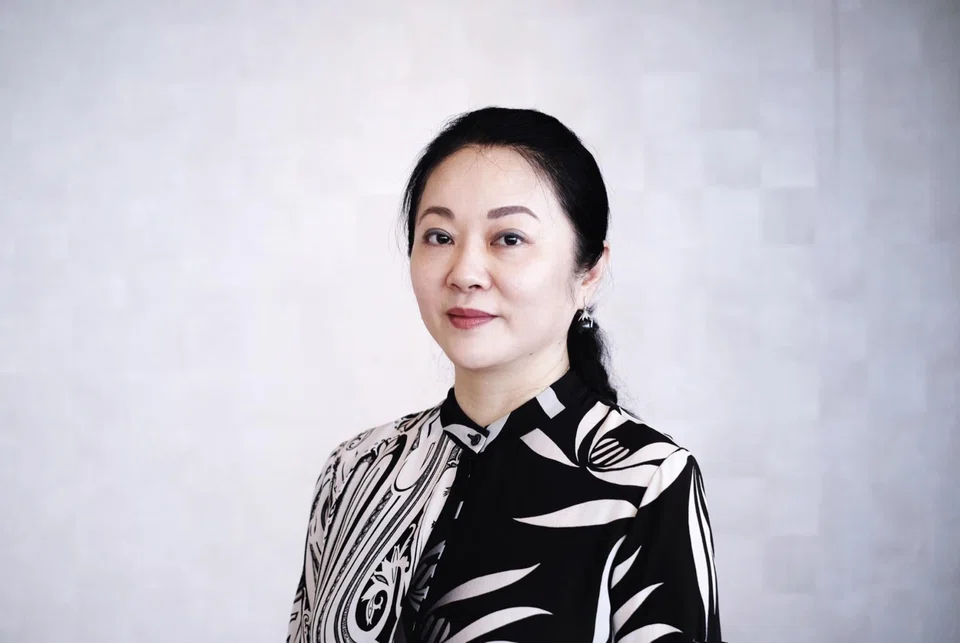
A MAJOR shareholder is again trying to buy up an unloved listed property group at a discounted price. Gordon and Celine Tang are making an offer for Chip Eng Seng (CES), with an eye to privatising it.
As a shareholder of CES, I intend to reject the offer because the price is too low. The couple’s Tang Dynasty Treasure made a final offer of S$0.75 cash per CES share. And the offeror will exercise its right of compulsory acquisition to buy up all the shares of CES if it hits the 90 per cent shareholding mark.
The offer price is at a discount of 24 per cent to CES’ net asset value (NAV) per share of S$0.9906 as at end-June 2022. The group’s NAV could be conservative. CES has an exciting property development pipeline in Singapore, where demand drivers for private homes and Grade A office space are strong. The group’s construction business is profitable, and better days may lie ahead for its hospitality business.
Conservative book value
The group’s top profit contributors for the first half of 2022 were property development and construction, which posted segment profits of S$48.5 million and S$16.3 million, respectively.
In property development, CES can look forward to more contributions from sales of homes in its Singapore projects. Kopar at Newton has sold most of its units and Parc Komo in Changi is fully sold. Both these projects are likely to be completed in 2023.
CES is participating in redeveloping Maxwell House in the Central Business District (CBD) into a commercial and residential mixed-use development.
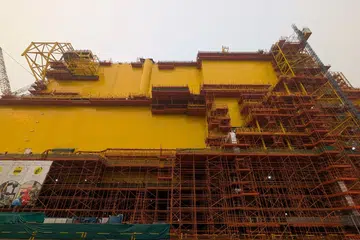
Earlier this year, the group bought an effective interest of 10.5 per cent in 8 Shenton Way in the CBD. This property is being redeveloped to include retail, office, hotel and residential components. It will be Singapore’s tallest building, with a height of 305 metres spanning 63 storeys, when completed in 2028.
CES is also involved in the en bloc acquisition of Park View Mansions in the Jurong area. This housing project can cater to the strong demand for suburban homes in Singapore.
CES’ hospitality business made losses in the first six months. But the recovery of travel should now buoy this hospitality portfolio, which comprises one hotel in Singapore, a resort in the Maldives and two hotels in Australia.
The group is also developing a new hotel in Australia and a new resort in the Maldives. The hotel in Singapore, at Alexandra Road, is being refurbished and targeted to open in the first quarter of 2023 as Momentus Hotel Alexandra.
Celine Tang is chairman of CES. Together with her husband Gordon, the Tangs hold over 49 per cent of CES shares. The couple have undertaken to accept the offer for the shares they hold or control. Recently, the Tangs succeeded in privatising another property group, SingHaiyi Group, at a discount to book value. SingHaiyi was delisted in January 2022.
Sending a clear message
CES is hardly alone among property companies in trading poorly relative to book value. By spurning a low-ball offer from the Tangs, CES shareholders can help investors of other listed property groups.
Major shareholders of asset-heavy groups may be thinking of privatisation as a way to resolve share price undervaluation. A clear message can be sent to major shareholders of groups such as Frasers Property , GuocoLand , Ho Bee Land and Wing Tai Holdings that privatisation offers at substantial discounts to NAV will fail.
In September, a sufficient number of stapled securityholders of Frasers Hospitality Trust (FHT) rejected a privatisation bid above book value made by a unit of its sponsor Frasers Property. FHT has since traded well below the offer price.
If many other shareholders think as I do, and reject the Tangs’ offer, CES’ share price could trade below the S$0.75 per share offer price in the near term.
This offer price is 4.2 per cent higher than the initial offer price of S$0.72 a share. It represents a premium of 26.5 per cent and 42.6 per cent, respectively, over the three-month and 12-month volume-weighted average price up to and including Sep 7, 2022 (being the date CES issued a holding announcement). Also, the offer price is 19 per cent above the issue price of the rights shares of CES that were issued in 2019.
CES shares closed at S$0.75 on Tuesday (Dec 13).
Still, patient shareholders could see CES’ NAV per share grow if the group’s investments in various development projects pay off. Shareholders can also hope to receive juicier offers to buy up CES in future.
If the Tangs do not reach the 90 per cent needed to privatise CES this time round, they may try privatising at a higher price later on.
Meanwhile, CES shareholders will benefit if regulations are tightened to compel offerors to pay at least book value before they can exercise the right to buy all the shares of a listed entity.
CES works with SingHaiyi in numerous joint ventures. With CES as a private entity, the Tangs could potentially optimise and streamline resources to improve operational efficiency. Privatising CES makes sense for the Tangs. And the couple, being astute business persons, can be opportunistic in a volatile equities market.
CES shareholders, however, deserve a deal that better reflects the value of its business. Investor interest and faith in the local bourse are best served when investors are fairly treated.