

Choose stocks with dividend yield of 4% or less over fixed deposits and T-bills
Singapore stocks may be in for a re-rating should retail participation, liquidity and confidence rise

Leslie Yee
RISING inflation is tough for retirees; they do not receive wage increases to cope with higher costs of living. Generous handouts by the government can help retirees mitigate high inflation.
However, some retirees are probably prospering in this inflationary environment. A person who holds S$1 million in Singapore dollar fixed deposits might earn 3.2 per cent per annum today versus 1 per cent per annum some time back. This translates to getting S$22,000 more a year. The higher interest income can cover rising living expenses.
Also, a retiree who collects rental income from a home would benefit from the recent spike in home rentals.
With the higher interest rates offered by safe Singapore dollar-denominated instruments such as fixed deposits, Treasury bills (T-bills) and Singapore Savings Bonds, investing in such instruments becomes fairly attractive. The latest six-month T-bills offered a cut-off yield of 3.99 per cent.
In contrast, buying a home for investment typically offers a poorer yield and entails significant transaction costs.
As for equities, many real estate investment trusts (Reits) offer yields of over 5 per cent per annum. But Reit prices could fall as higher borrowing costs erode distribution income, and higher capitalisation rates lower book values. Also, a Reit investor may need to inject funds to participate in equity-raising exercises, or risk being diluted.
What about listed equities that offer lower yields than Reits? Is it rational to hold shares that pay 4 per cent dividend yield or less? I examine two stocks that I own, which are in this category.
Higher dividends
Based on share prices as at Jul 10 and dividends paid for the last financial year, property group GuocoLand traded at a yield of around 4 per cent, and inspection and technical services provider Vicom traded at a yield of around 3.9 per cent.
Dividends can fluctuate. Still, stocks such as GuocoLand and Vicom have consistently paid dividends.
Both groups have a controlling shareholder that likely values receiving dividends. Hong Kong-listed Guoco Group holds a deemed majority interest in GuocoLand, while Singapore-listed transport group ComfortDelGro is Vicom’s majority shareholder.
As an investor, I have reservations over whether any company’s board of directors truly looks after my best interest. But I have faith that boards of many listed groups will strive to raise dividends and achieve higher share prices over time.
There are reasons for optimism with groups such as GuocoLand and Vicom, as they operate good businesses.
With GuocoLand, I hope the group pays higher dividends as it grows its recurrent income. In Singapore, the group should gradually see meaningful contribution from its 709,000 square feet of Grade A office space at Guoco Midtown on Beach Road.
Furthermore, GuocoLand has generally done well in residential developments here. Over time, the group’s net asset value can grow as development projects contribute to higher retained earnings and the value of investment properties rises.
Vicom is a leader in vehicle testing. Many car and motorcycle owners use Vicom’s vehicle inspection service. If people keep their vehicles on the road for longer, this may help Vicom’s inspection service.
Vicom can grow its non-vehicular inspection and testing segment. This segment caters to customers from sectors such as the aerospace, marine and offshore, biotechnology, oil and petrochemical, building construction and electronics manufacturing industries.
Perhaps the group can better use technology to find new opportunities and improve operational efficiency.
Vicom’s total dividend of S$0.0664 for 2022 is up 6.8 per cent from 2020. In 2021, the group paid a special dividend of S$0.02 per share to mark its 40th anniversary, which raised the total dividend for that year to S$0.0828.
While one can hope for growth in dividends and the occasional payment of a special dividend from buying shares in high-quality businesses, one may have to contend with a lower interest rate when a 12-month fixed deposit or a six-month T-bill matures.
The US Federal Reserve could stop hiking interest rates in the near future and reduce rates subsequently to help boost economic growth. Might interest rates in Singapore start falling?
Capital gains
An investor in fixed deposits, T-bills or bonds can draw comfort in getting back one’s principal at maturity. But inflation can be a killer.
Take S$200,000 in bonds that are held to maturity for 10 years. One may get decent recurrent income over 10 years and receive the principal at maturity.
However, when a discount rate of 5 per cent is applied, based on the higher end of long-run inflation expectations, the net present value of S$200,000 in 10 years’ time is about S$123,000.
Certainly, share prices fluctuate. There is no guarantee that share prices of GuocoLand or Vicom will be higher in several years.
Still, if a business’ revenue grows in nominal terms and inflation and margins remain constant, profits can rise. For example, if GuocoLand sells homes at higher prices in future and the profit margin is unchanged or even dips slightly, absolute profit can rise.
In a letter sent to The Business Times earlier this year, S Nallakaruppan, president, The Society of Remisiers (Singapore), highlighted that Singapore has one of the cheapest stock market valuations in the world, and many good-quality companies have not been accorded their fair valuations.
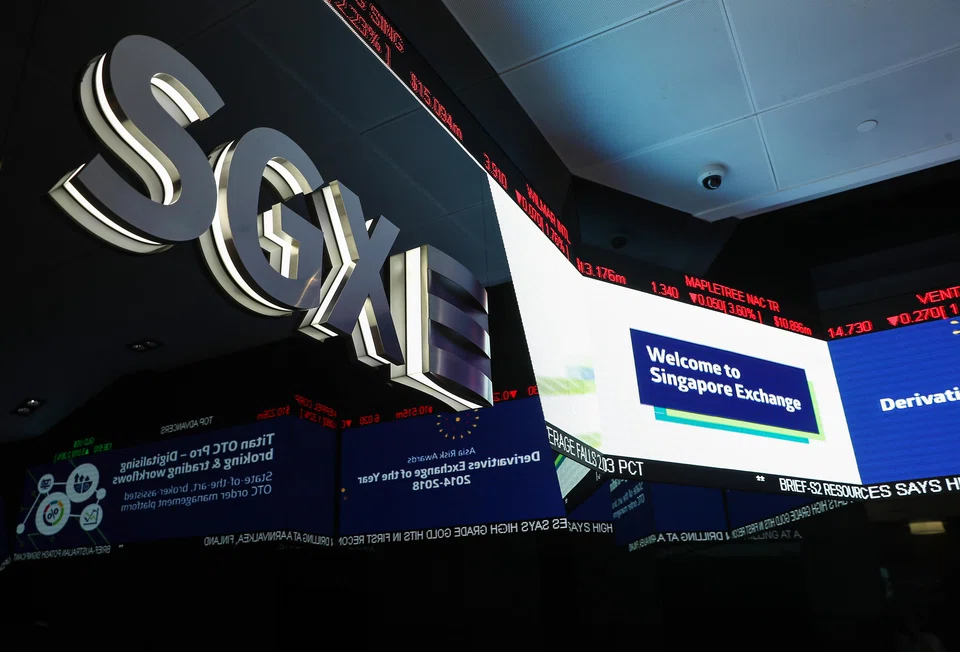
Singapore stocks may re-rate should retail participation, liquidity and market confidence rise.
In recent years, several high-quality entities on the local bourse have been privatised by major shareholders. With GuocoLand and Vicom, one may also see substantial capital upside from corporate action.
Perhaps ComfortDelGro will see no need for Vicom to be separately listed and make an offer to privatise it at a significant premium to the trading price.
For GuocoLand, privatisation is an option that could be under serious consideration by Guoco Group or GuocoLand’s chairman Quek Leng Chan, who is a major shareholder.
GuocoLand traded at around 0.4 times its end-2022 net asset value, based on its share price as at Jul 10. There is room for a privatisation bid that could represent a big premium to its share price and a large discount to book value.
I hope the Singapore equities market becomes more vibrant so that investing in equities here can provide decent returns. I am keen to buy more locally listed equities to support the growth of Singapore-listed groups.






