MARK TO MARKET

CICT’s big acquisition, fundraising exercise are signs of what’s to come as Fed finally cuts rates

Investors looking to ride the coming rate cuts with Reits should be prepared to be tapped for funds from time to time

Ben Paul
Published Mon, Sep 9, 2024 · 05:00 AM
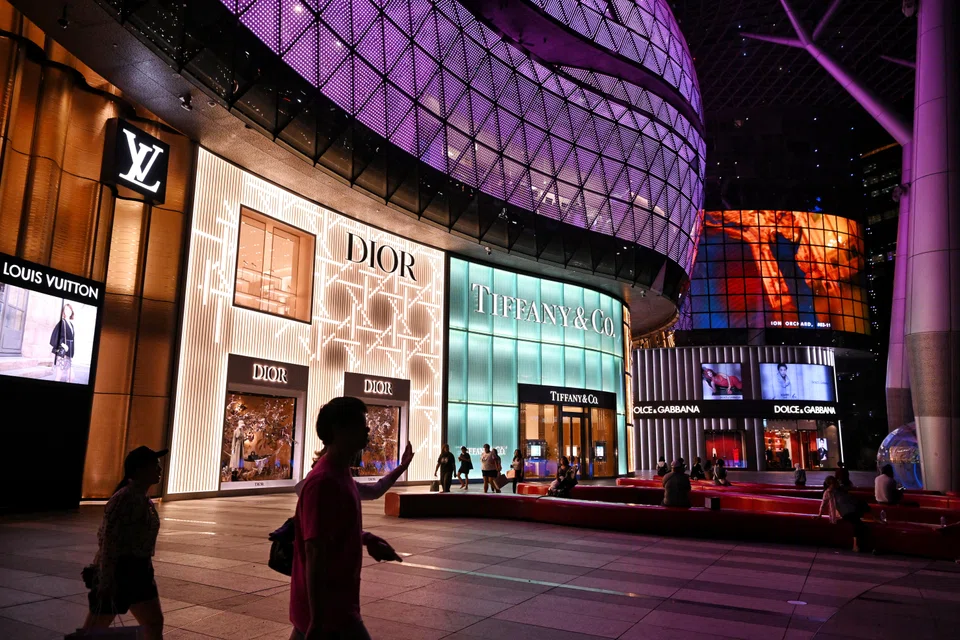
    • With Ion Orchard in its fold, CICT will have a property portfolio worth S$26.4 billion.
    • With Ion Orchard in its fold, CICT will have a property portfolio worth S$26.4 billion. PHOTO: BT FILE

    THE first message that appeared on my phone last Tuesday (Sep 3) was from a longtime investor in real estate investment trusts (Reits), complaining about the impact that CapitaLand Integrated Commercial Trust’s (CICT) latest acquisition and equity fundraising plans might have on the market price of its units.

    “It creates a lot of ‘overhang’ on the stock,” he grumbled.

    CICT’s manager had called for a trading halt that morning, and announced that the Reit will acquire a 50 per cent interest in Ion Orchard from its sponsor group CapitaLand Investment (CLI) at an agreed property value of S$1.85 billion.


    Under the deal, CICT will purchase an entity that holds the 50 per cent stake in Ion Orchard for almost S$1.08 billion. Including various transaction-related fees, the total outlay for CICT is expected to be more than S$1.1 billion.

    CICT said it will finance the acquisition by raising S$1.1 billion through a private placement of 171.7 million new units, and a preferential offering of 377.3 million new units.

    The following day, CICT said its private placement had been priced at S$2.04 per unit. This was close to the bottom of its indicated price range of between S$2.038 and S$2.091 per unit, and a 4.4 per cent discount to CICT’s volume weighted average price on Sep 2.

    The preferential offering, which is to be allotted to unitholders on a 56-to-1,000 basis, will be priced at S$2.007 per unit.

    When CICT lifted its trading halt, the market price of its units promptly dipped. They closed on Wednesday at S$2.06, down nearly 3.3 per cent from their previous close of S$2.13 on Monday.

    The “overhang” I was warned about did not last long, though. CICT rebounded on heavy volume over the next two days. It ended the week at S$2.14, slightly above its last close before the acquisition and fundraising plans were unveiled.

    A good deal for CICT?

    To be sure, Ion Orchard is a marquee asset that will naturally draw investor interest.

    Owned by CLI and Sun Hung Kai Properties in a 50:50 joint venture, the property opened for business in 2009. It has 623,608 square feet of net lettable space, and currently has a committed occupancy rate of 96 per cent.

    Seamlessly linked to Orchard MRT station, it naturally attracts millions of visitors every year.

    Even before CICT – which was formerly known as CapitaLand Mall Trust – enlarged itself by merging with CapitaLand Commercial Trust in 2020, there was anticipation that it would one day acquire its sponsor’s stake in the property.

    With Ion Orchard in its fold, CICT will have a property portfolio worth S$26.4 billion. Retail space will account for 35 per cent of the portfolio. Offices and integrated developments will make up a further 37 per cent and 28 per cent, respectively.

    Properties located in Singapore will account for 94.2 per cent of the portfolio, up from 93.7 per cent before.

    Yet, the terms of the deal are not particularly attractive from CICT’s perspective. RHB said in a report last week that it is “neutral” on the deal as the pricing of Ion Orchard is “slightly on the higher end”.

    CICT’s manager said Ion Orchard is being acquired at a gross yield of about 7.1 per cent, based on the annualised H1 2024 gross revenue for the property. RHB figures the pricing represents a net property income (NPI) yield “in the mid 4-per cent range”.

    On a pro forma basis, the acquisition would have boosted CICT’s distribution per unit (DPU) for FY2023 by 1.2 per cent, and H1 FY2024 by 0.9 per cent.

    OCBC Investment Research pointed out, however, that this pro forma accretion “is supported by a higher proportion of fees taken in units”.

    The pro forma DPUs were calculated on the basis that 70 per cent of CICT’s total management fees for the whole portfolio is paid in the form of units.

    CICT’s financial statement for H1 2024 stated that only 50 per cent of its management fees for the period was payable in units.

    The acquisition of Ion Orchard is also not going to help CICT’s relatively high leverage. Based on the pro forma estimates provided, the transaction would push its aggregate leverage as at Jun 30 slightly higher, from 39.8 per cent to 39.9 per cent.

    Prepare to be tapped

    So, why was the “overhang” of CICT’s fundraising exercise cleared so quickly last week?

    The way I see it, this was largely due to widespread expectation that the Fed will announce its first rate cut next week. The long-awaited rate cut could help take pressure off Asian currencies, and spark a broader loosening of monetary policy in this region that supports economic growth and asset prices.

    Singapore-listed Reits should get their fair share of increased investment flows to the local market, not least because they are seen as beneficiaries of lower interest rates.

    CICT itself has performed quite well recently. For H1 2024, it reported a 2.2 per cent rise in gross revenue to S$792 million and a 5.4 per cent improvement in NPI to S$582.4 million.

    Despite a 10.2 per cent rise in finance costs to S$169.7 million, distributable income was up 3.7 per cent to S$366.5 million. DPU came in at 5.43 Singapore cents, from 5.30 Singapore cents for the same period last year.

    CICT experienced positive rent reversions for 9.3 per cent for its retail properties in H1 2024, and 15 per cent for its office buildings. Its manager is guiding for high single-digit rent reversions in H2 2024.

    Based on CICT’s annualised H1 2024 DPU, its units are currently trading at a yield of almost 5.1 per cent.

    While Reits are often portrayed as income-oriented investments, they are actually real estate securitisation platforms that are hardwired to raise funds and expand their portfolios whenever possible.

    As DPU yields compress on the back of strong investor interest, many other Reits may soon do exactly what CICT is doing – possibly creating a broader “overhang” in the market that does not clear as quickly.

    Investors looking to ride the coming rate cuts with Reits should tread carefully, and be prepared to be tapped for funds every now and then.

    The writer owns units in CICT.

    The Mark To Market column will take a break next week.