The circular economy of tyres
By Sreepadaraj Karanam
THERE are many essential necessities that get people through each day: running water, electricity, cups of coffee – and tyres.
Whether you drive your own car each day or board a bus to take you across town, tyres are the enabler of mobility. Every year, globally, an estimated one billion tyres reach the end of their service life. About 60 per cent of these rubber tubes are collected for material or energy recovery, but the rest either end up in landfills or have an undetermined end use. As a result, we are losing valuable materials that have many reuse and recycling purposes.
This is even more disconcerting given that the global population is growing, and with it, the number of cars and corresponding demand for tyres. It is critical that tyre manufacturers across the industry ensure we are using tyres as sustainably as possible.
The retreading alternative
Tyre companies can certainly implement a circular economy ethos into their production processes. Within the industry, there is much ongoing research to explore more sustainable sources of raw materials and production of tyres. There are also studies on extending the life of tyres such as reusing those at the end of life via chemical recycling. With this process, old tyres could be converted into raw materials to create new tyres.
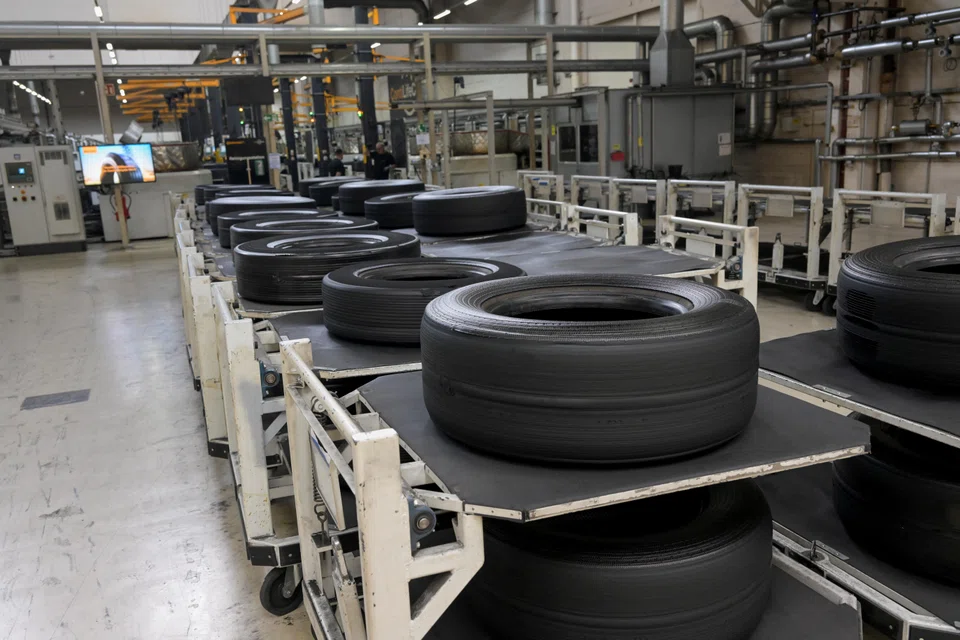
In the meantime, there are other circular economy options for tyre reuse, and in particular, retreading. This manufacturing process is a holistic approach of replacing the tread on worn tyres so that they can be reused. A more sustainable and economically-friendly practice, retreading uses fewer raw materials and resources, including oil, energy, and rubber, and reduces CO2 emissions.
With energy conservation and CO2 emission reduction throughout the entire tyre life cycle being key priorities for the industry, the use of retreading can be an important alternative while the advancement in chemical recycling continues. Companies like Bandag, a leading supplier of rubber for the retreading of tyres, reported a saving of over 94 million gallons of oil and 186 million pounds of tyre waste using retreading in 2021. The Japan Automobile Tyre Manufacturers Association, Inc (Jatma) recently found that retreading efforts across the industry in the Japanese market reduce resource usage by nearly 70 per cent and CO2 emissions by some 65 per cent.
In addition, efforts such as installing solar panels at manufacturing centres to further reduce CO2 emissions are important considerations, as are recycling and upcycling efforts outside of the direct mobility industry. For example, several sustainable fashion brands have introduced apparel made from recycled tyres, ranging from outdoor gear and shoes to bags and accessories.
With eco-minded forward thinkers coming together across industries and working to ensure old tyres are put to better use, the future looks much brighter.
Smart tech solutions
A major enabler of the circular economy across industries – and especially for the mobility industry – is technology. By investing in new research and development for innovative technologies that increase sustainability, companies are helping to create a long-lasting impact on the whole supply value chain, ultimately saving costs, energy and more, in the long run.
Major strides are being made, especially with new and exciting tyre performances that reduce rolling resistance, boost material circularity, and improve fuel efficiency, which directly decrease the overall carbon footprint of vehicles.
What is more, smart technology solutions in the realm of Internet of Things (IoT) are enabling vehicle owners – whether individuals, corporations, or governments – to monitor tyre efficiency data. By keeping an eye on metrics such as inflation, pressure, and temperature levels and receiving predictive maintenance updates, users can ensure that their tyres are in optimal condition and last longer.
Challenges to overcome
The path to a circular economy takes time, energy and money.
Technological solutions often require extensive research and development, which means substantial investments upfront, which can be hard to justify in times of economic recession. The silver lining here is that mobility companies may not necessarily have to shell out the money entirely on their own. There could be government grants as well as green financing opportunities available. It would be amazing to see more members of the mobility industry securing these funds and investing in innovative and sustainable processes that support a more circular economy.
But technology is only one aspect of the circular economy. Even if players in the mobility industry implement more sustainable materials and production processes, a wider culture of tyre recycling and repair needs to be introduced and nurtured. Ideally, both companies and governments should work together to champion – and perhaps incentivise – tyre recycling and retread programmes for vehicle owners.
With industry players, mobility companies, and everyday drivers doing more to maintain tyres and ensure their longevity, the staggering statistics of discarded tyres could decrease drastically.
Ultimately, adopting and investing in circular economy practices pay off in the long run – for consumers, companies, industries, governments, and the planet.
The writer is vice-president, sustainability & CSR, at Bridgestone Asia Pacific