Climate change as the policymaker’s puzzle
Ilyas Salim
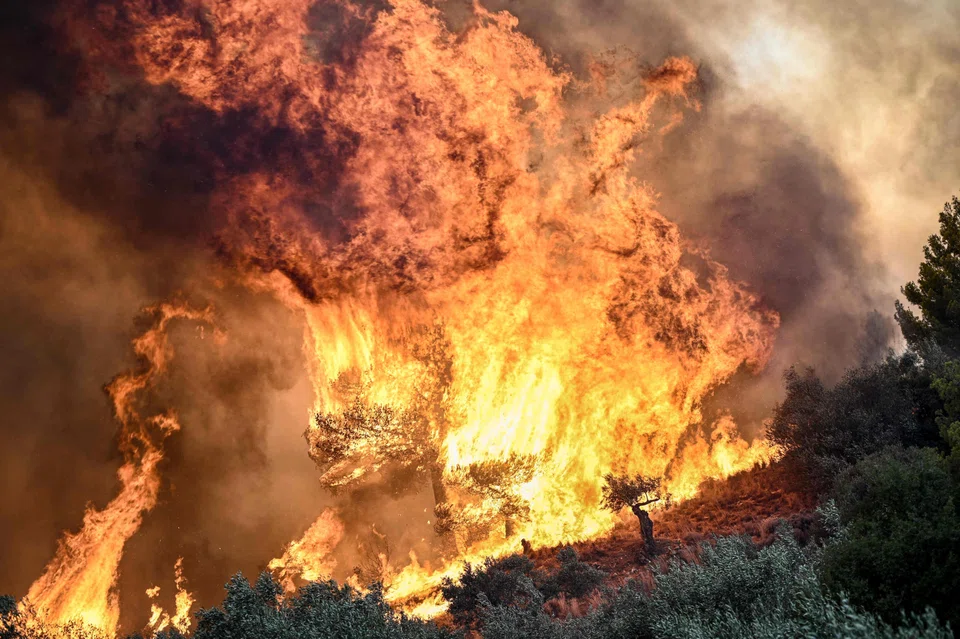
CLIMATE change represents the ultimate policymaker’s bane – a “super wicked problem” with consequential tendrils stretching threateningly towards just about every facet of human civilisation.
For a crisis whose acuteness is existential in scope, and which generates extreme divergences between parties and priorities, how do policymakers begin to accurately assess the risk dynamics and weigh resilience strategies?
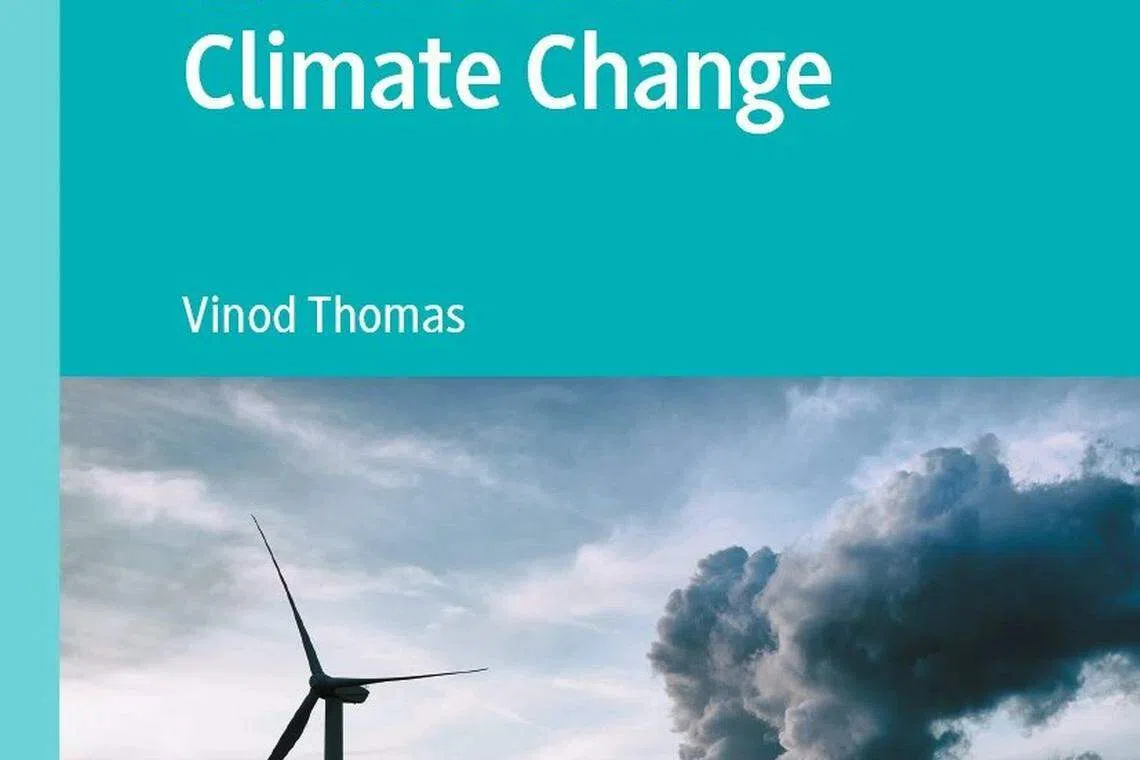
Such is the thankless task that Dr Vinod Thomas, a visiting senior fellow at the Iseas-Yusof Ishak Institute with decades of experience at institutions such as the World Bank and the Asian Development Bank, sets out for himself in Risk and Resilience in the Era of Climate Change.
A risk-resilience framework
Thomas devotes the first half of his book to looking at climate change through a framework that accounts for both the sources of risk (in terms of exposure, vulnerability and intensity) it generates, as well as the corresponding dimensions of resilience that qualify these risks, and, crucially, the interplay between them.
Through this lens, the task of addressing climate risks is laid out with an almost mathematical clarity – a useful quality for the policymakers and researchers for whom the book is intended. A key insight is that merely responding to climate disasters can no longer remain as the bar, given their rising likelihood and intensity.
However, Thomas notes, mitigation and resilience-building efforts are not given their due weight on the current scales of climate policy. Accordingly, the book’s risk-resilience calculus calls for a much stronger emphasis on mitigation measures in anticipation of future disasters.
Tackling root causes
The failure to give adequate weightage to resilience-building and mitigation strategies raises a more fundamental question. Why do we still underappreciate the realities of anthropogenic climate change?
A decisive international momentum to prevent temperatures from rising beyond 2 deg C – as per the 2015 Paris Agreement – remains elusive. Collective action between nations is hindered by concerns about free-riding and moral hazards. Reliance on fossil fuels remains the proverbial elephant. Governments and even multilateral development banks continue to incentivise oil and gas producers and consumers.
Clearly, says the book, our political and personal priorities are heavily skewed. But how do we hammer our frames of cost and benefit into a shape that accepts climate action as the need of the hour?
Stressing the disaster-emissions link
To start with, there is a need to draw a more direct line of causation between emissions and disasters, to emphasise the endogenous element in this equation.
Public opinion, says Thomas, is “still not making a sufficiently strong climate-disaster link”, and the crisis is often presented by the media and policymakers as a distant rather than present one. Adjacent crises such as the Covid-19 pandemic and air pollution have shown that a clear cause and effect draws a stronger public response.
To change public opinion, direct lines of accountability must also be more firmly communicated. Governments should answer for inadequate climate investments. Enablers of fossil fuels should be called out as fundamental perpetrators of the crisis. Fingers must be pointed at top violators of international climate agreements.
Proper accounting
At the same time, says the book, externality-accounting measures should be deeply implemented across policymaking and economic activity. Spillover effects arising from production and consumption should be clearly evaluated when assessing commercial activities. Coal, for instance, is often described as the “lowest-cost fuel”; yet its production and use yield extremely high environmental and health costs.
Traditional macroeconomic models often demonstrate an “excessive discounting of the future that is irrational from the social point of view”. This is because mainstream growth economics, “wedded to a tradition of finding means to maximise economic growth”, inevitably produce models that underplay climate impacts in projecting growth, says Thomas.
A deep-rooted shift in the economics discipline’s “frame of mind” is needed. The concept of externalities should be organically and centrally embedded in the practice and teaching of growth economics in schools. Economists and scientists need to better integrate each others’ work for a “coupling of science and economics to act on climatic trends”.
Fortifying against the inevitable
Achieving all this, argues the book, will shatter the myth of a dichotomy between environmental protection and economic growth. A myopic fixation on gross domestic product must give way to a measure of “net domestic product that is inclusive of social and environmental impacts”.
Ideally, this will help muster the public and political will to better engage in resilience-building efforts. The book describes a host of short-term and long-term disaster resilience measures, from the implementation of evacuation protocols and green financing to system stress tests and policy evaluation metrics. Market mechanism tools such as carbon pricing should be applied widely and rigorously, especially to polluting products such as petroleum.
Donning his policymaker’s hat, Thomas presents an accessible and informed perspective on the climate crisis, even as he makes an impassioned plea for action. He mobilises an array of statistics, case studies and research to illustrate his points, making his book a reference gold mine for bureaucrats and researchers – and for the lay reader who wants to be told straight how bad the problem is, and what can be done about it policy-wise.