

Climate change is stunting our economic growth
The good news is we can still avoid even worse outcomes
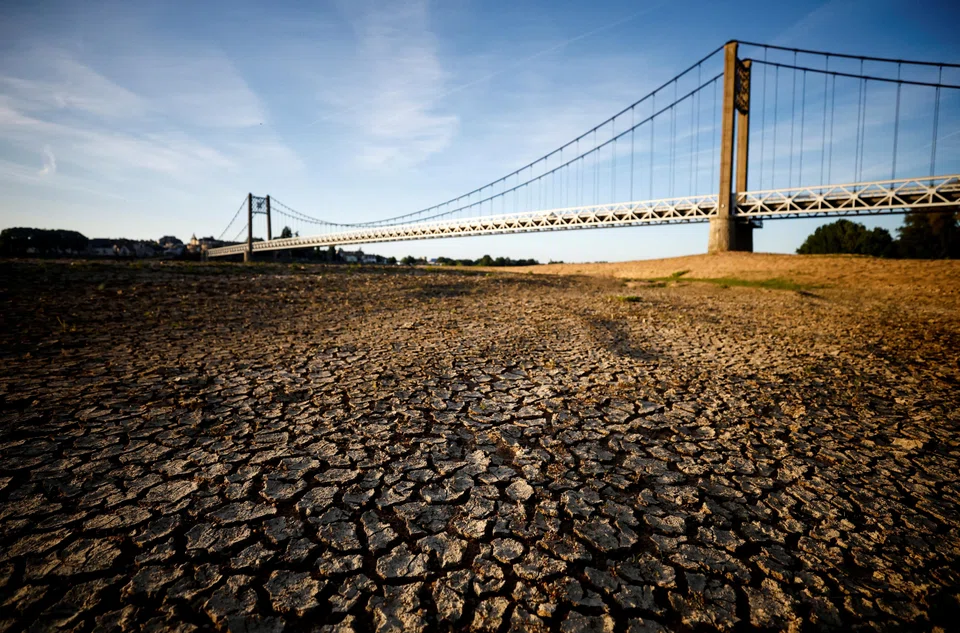
IMAGINE you were running for king of the world on a platform of slashing economic growth by 20 per cent forever. You’d be lucky to get your own family to vote for you.
And yet humanity insists on running the global economy on fossil fuels that are doing exactly that sort of damage. The good news is that we still have time to vote them out before they do even more.
The amount of planetary heating already in the pipeline as a result of a century of pumping greenhouse gases into the atmosphere will make global income 19 per cent lower by 2049 than it would have been without global warming, suggests a new study from the Potsdam Institute for Climate Impact Research.
This income loss will be driven mainly by rising temperatures, according to the researchers, which will affect agriculture, public health, productivity and more.
This will cost US$38 trillion in lost income every year by mid-century, compared with the US$6 trillion of investment the researchers estimate will be needed each year to meet the Paris climate accord’s goal of limiting warming to 2 degrees Celsius during that time.
If we fail to mitigate heating by transitioning to renewable energy sources, then the economic damage will rise to more like 60 per cent of global income by 2100.
“It feels starker than ever that the costs of doing nothing are far higher than the costs of doing something,” co-author Maximilian Kotz said in an interview.
The study’s damage estimates are much higher than those of previous efforts, a result that Kotz chalks up to his group’s methodology, which he described as “conservative”. Regardless, the direction of travel is clear and consistent.
“Degrowth” is the concept of slowing economic output to stop despoiling the environment.
What fossil fuels are doing to the world isn’t quite degrowth: most economies will keep expanding as the climate changes, driven partly by those same fossil fuels. They just won’t be nearly as healthy as they would have been without global warming. Call it stunted growth, like your mum used to warn would happen if you smoked cigarettes.
Fossil fuel companies and people who want to keep cashing their political-donation cheques insist that economies can’t thrive without the dirty stuff.
This is especially true in the developing world, they often argue, which is coming late to a party that started long ago in the United States and other developed countries. To play catch-up, the thinking goes, these lower-income countries will need to burn fuels that have traditionally been cheap and abundant.
ExxonMobil, for example, has gone from denying that climate change exists to insisting that countries shouldn’t risk “energy poverty” by rushing too quickly into renewables. It has argued people won’t accept the “degradation in global standard of living” that it says achieving net-zero carbon emissions by 2050 would require.
Of course, Exxon and its peers are talking their book: they’re banking on future demand from developing nations, which tend to be far more energy-intensive than developed ones.
But nothing drives demand for fossil fuels quite like economic growth.
And as the Potsdam study notes, the impacts of climate change will fall most heavily on lower-income countries, sapping their income by more than 30 per cent in extreme cases. Their energy demand should follow suit.
Some developing countries will still burn a lot of fuel trying to adapt to brutal heat and extreme variability in temperatures and rainfall, Kotz notes. But they would have to run a lot of air-conditioning to make up for a 30 per cent hit to gross domestic product.
Perhaps this effect will limit energy demand and carbon emissions in developing nations, preventing even more global heating. But this would be a weak silver lining to the stark and persistent injustice of the climate change that is already happening: countries that contributed the least to the problem suffer the most.
Developing nations from Afghanistan to Indonesia were hit with deadly flooding just last week. Miserable droughts that are already routine in parts of Africa have been made 100 times more likely by the 1.2 deg C of warming we’ve experienced so far, according to the non-profit group World Weather Attribution.
This all sounds like bad news, and it is. It adds to the genre of grim climate headlines loaded with disaster and scary numbers. They can be so mind-numbing and despair-inducing that they lead people to just throw up their hands, cook a cheeseburger on a charcoal grill and forget about it all.
But the good news buried in the Potsdam report is that we still have the power to avoid far worse human suffering and economic destruction in the decades to come.
Limiting warming to 2 deg C (or even lower, if we can manage it) will make us not only safer and healthier but richer.
TRENDING NOW

China recruited exec at Singapore data centre firm to spy on Nvidia CEO Jensen Huang: US intelligence
DBS, OCBC, UOB’s big sell-off: Was it their Q3 numbers or a broader market de-rating?

Could Japan trigger the next global financial crisis?

Philippines’ FDI slowdown exposes uneven investment prospects across S-E Asia

