Climate court ruling could set precedents in Europe and beyond
But legal challenges also risk backlash from governments, which have their own legislative efforts
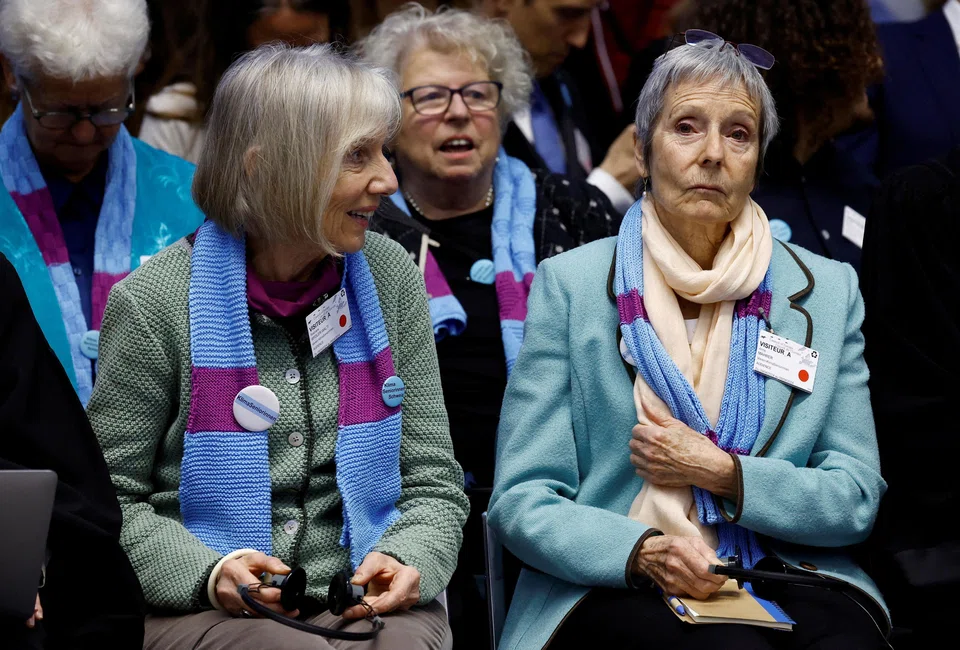
THE political battle against climate change has, so far, largely been driven by government legislation and regulation. However, a key European Court of Human Rights (ECHR) ruling this month raises a new, potentially important legal precedent in the 46 member states of the Council of Europe.
Some eight years ago, the KlimaSeniorinnen or Swiss Elders for Climate Protection group – comprising 2,000 Swiss women over the age of 64 – filed legal action against their government for failing to take stronger action against climate change.
On Apr 9 this year, the ECHR in Strasbourg – unrelated to the European Union – surprised the Swiss government by upholding the lawsuit. In an approximately 300-page ruling, it said that insufficient measures against global warming infringe the human rights of the female senior citizens involved in the case.
A sign of the importance of the case is that it was heard by the 17 judges of the Grand Chamber, the ECHR’s most prestigious chamber. They ruled 16-1 in favour of KlimaSeniorinnen.
Setting a precedent
Swiss President Viola Amherd expressed surprise at the decision, asserting that sustainability, biodiversity and net zero are key goals for Switzerland. Swiss politicians themselves are divided on the ruling. The Swiss People’s Party and Centre Party are critical of it, while the Socialists and Greens support the decision.
The ruling has major significance, in part, because it is the first time that a supranational court has ruled on climate change with a direct link to quality of life, health and well-being. Specifically, the judges ruled that the demographic group of older women is particularly vulnerable to climate-induced heatwaves.
The court found that the Swiss state had violated Article 8 of the European Convention on Human Rights, which enshrines the “right to respect for private and family life”. The right of groups of people to enjoy a “healthy environment” is a long-standing element of Article 8 case law.
The ruling sets a potentially key precedent in the 46 member states of the Council of Europe, increasing pressure on those governments to step up action against climate change.
These countries include not only the 27 members of the EU, but also a wider range of nations such as Armenia, Azerbaijan, Georgia, Switzerland, Turkey, Ukraine and the United Kingdom.
Granted, some non-governmental organisations and activists have already had similar domestic legal successes, inside and outside member states of the Council of Europe.
For instance, a judge in Montana in the US ruled last year that state agencies are infringing a constitutional right to a clean environment by allowing fossil fuel development.
However, the ECHR ruling represents the first occasion that an international court has upheld a climate case. So it could now influence the law across a cross-section of the diverse members of the Council of Europe.
In addition, the decision will probably encourage other bodies to bring similar cases to the ECHR. Indeed, some such litigation had already been suspended prior to the ruling on this case.
The ruling creates more scope for domestic legal challenges in Council of Europe member nations. It further raises the possibility that the European Convention on Human Rights may need to be formally amended to comprise the right to a clean, healthy and sustainable environment.
There are also ramifications for comparable cases in wider jurisdictions, including the Inter-American Court of Human Rights in Costa Rica, which has pending cases that relate to the human rights impacts of climate change.
Backlash from governments
While the decision may be a boon to NGOs and wider activist groups, there has already been a political backlash in some member states.
One common criticism is the perception that the judges are acting as de facto legislators, rather than judges. UK government lawyer, Sudhanshu Swaroop, asserted that the ECHR is seeking “to legislate for a global challenge without having global jurisdiction”.
The context is that domestic laws and regulations to address global warming are already being passed at an increasing rate, especially since the 2015 Paris climate treaty was agreed.
A recent report by the Grantham Institute at the London School of Economics found that there are over 800 climate change laws and policies now in place across the world, up from 54 in 1997. About half of these are legislative measures, and half are executive actions.
Since 1997, when the Kyoto Protocol was agreed, the number of climate laws and policies has roughly doubled every five years.
Indeed, it is mainly developing countries, which will provide the motor of global economic growth in the coming decades, which are leading this drive towards tackling global warming through legislation.
Many are concluding that it is in their national interest to reduce greenhouse gas emissions by embracing low-carbon growth and development, and to better prepare for the impact of climate change.
This background of active legislation sets the context for UK Foreign Secretary David Cameron’s response to the ECHR ruling earlier this month.
He said: “I think it’s dangerous when these courts overreach themselves, because ultimately we’re going to solve climate change through political will, through legislation in this House of Lords and the House of Commons, by the actions we take as politicians, by the arguments we put to the electorate – and so I do think there’s a danger of overreach”.
“We should always keep the ECHR in proper context,” he added. “Since 1975, there have been 21,784 cases and only 329 judgments against the UK, so we have relatively little incoming.”
But there are occasions “when this court overreaches itself”, said Cameron. “We saw one (this month) with respect to climate change, where it took a judgment against Switzerland.”
It comes as little surprise, therefore, that UK Prime Minister Rishi Sunak is facing growing calls from Conservatives to pull the country out of the convention altogether. This is not only because of the climate ruling, but also because of potential ECHR legal obstacles to his policy of sending asylum seekers to Rwanda.
The huge political challenge for Sunak is that leaving the ECHR would have implications for the Good Friday Agreement underpinning the Northern Ireland peace process. It would also put the United Kingdom in a very small and undistinguished club of countries that have left the Council of Europe, which comprises Russia and Belarus.
Overall, the court ruling could prove very significant in the years to come. However, the more that climate action shifts towards the legal rather than legislative arena, the greater the potential for political backlash, not just from Conservatives in the UK.
The writer is an associate at LSE IDEAS at the London School of Economics
TRENDING NOW
Grab CEO’s wife Chloe Tong on life with Anthony Tan and finding her purpose
What role can Japan play in Asean’s future?
He built the Vingroup empire. Now South-east Asia’s richest man is handing some key roles to his sons
Asean’s challenge is to become resilient against global geopolitics: former Indonesia trade minister