WEALTH & INVESTING

Closure of CPF Special Account: What’s next?

Changes to the system are a wake-up call for everyone to acquire financial knowledge
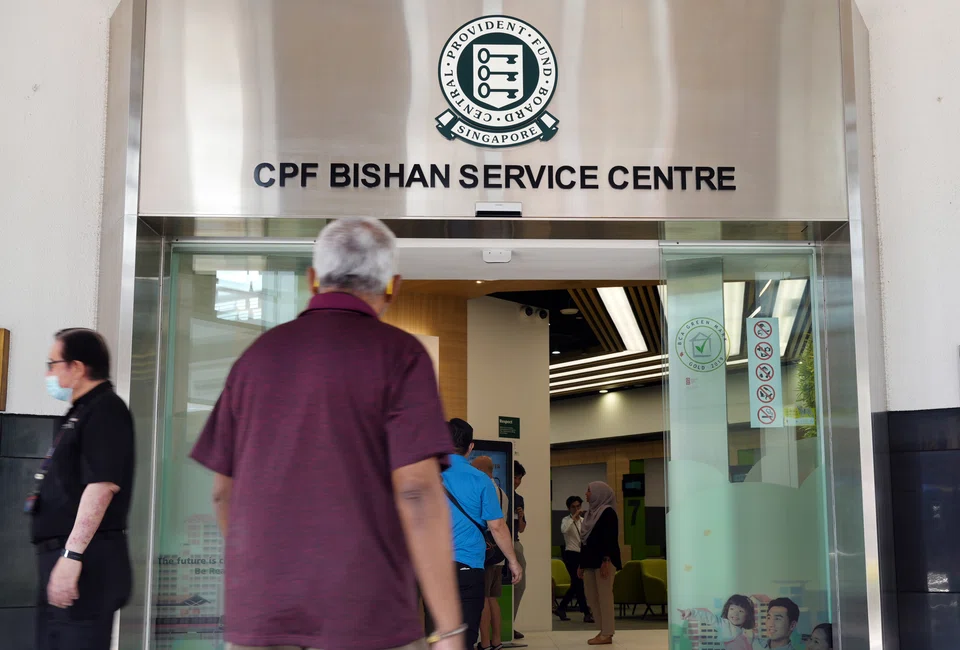
    • In addition to leveraging government schemes to grow one's nest egg, reaching out to professional wealth planning managers can help close gaps and boost financial resilience.
    • In addition to leveraging government schemes to grow one's nest egg, reaching out to professional wealth planning managers can help close gaps and boost financial resilience. PHOTO: BT FILE
    Published Sat, Mar 9, 2024 · 05:00 AM

    NEWS that the Special Account (SA) of the Central Provident Fund (CPF) will be closed from early 2025 for those aged 55 and above has thrown a spanner in the retirement plans of some CPF members, particularly those who have substantial SA savings after turning 55.

    They are likely to be “CPF-rich” and would have planned to enjoy the attractive and risk-free interest of 4.08 per cent per annum. They would also have had the flexibility of making withdrawals anytime from their SA, having set aside the Full Retirement Sum (FRS) or the Basic Retirement Sum (BRS) plus property pledged in their Retirement Account (RA).

    On the bright side, CPF members can top up their RA up to the Enhanced Retirement Sum (ERS) of four times of BRS from 2025, which translates to S$426,000 next year. ERS is currently three times of BRS. The revised ERS will boost retirement adequacy for all, as they can look forward to higher risk-free monthly payouts for life.

    When a member turns 55, SA and Ordinary Account (OA) savings up to the FRS will be transferred to the newly created RA. As the SA will be closed thereafter, any SA balance in excess of FRS will be transferred to the OA and earn the lower interest of at least 2.5 per cent.

    Future employer and employee CPF contributions will be channelled into the OA, RA, and MediSave Account (MA). If the RA has reached FRS and/or the MA has reached the Basic Healthcare Sum, the excess contributions will go to the OA. Any SA monies invested before age 55 will also be transferred to the OA, if the FRS in the RA has been met.

    Here are some tips to maximise your CPF savings.

    If you are aged 55 and above

    • Transfer OA savings to the RA, up to the new ERS amount, to enjoy higher monthly CPF Life payouts. A male CPF member who turns 55 in 2025 and tops up his RA to ERS of S$426,000 can expect monthly payouts of S$3,300 under the CPF Life Standard Plan for as long as he lives. In fact, he can continue to top up his RA to the prevailing ERS each year from age 55 to enjoy higher monthly payouts.
    • Keep the money in OA and use it as a fixed deposit, enjoying the 2.5 per cent interest.
    • Invest OA monies under the CPF Investment Scheme (CPFIS) in T-bills, fixed deposits, insurance plans, unit trusts, and so on, depending on risk profile, financial knowledge and objectives. When the investment is liquidated, the proceeds return to the OA.
    • Withdraw savings (beyond the FRS) for investments and/or insurance that are not covered under CPFIS.
    • Withdraw savings (beyond the FRS) for immediate needs, if necessary.

    If you are below age 55

    Members below age 55 will continue to have the SA, which earns at least 4 per cent interest. Maximise your SA by reaping the power of compounding interest, which will result in higher monthly payouts in retirement. Here are two tips:

    • Make cash top-ups to your SA up to the current FRS. You enjoy up to $8,000 tax relief when you make a cash top-up to your accounts, and up to another $8,000 when you make a cash top-up to that of your loved ones (parents, parents-in-law, grandparents, grandparents-in-law, spouse and siblings) in each calendar year.
    • Transfer your savings from your OA to your SA, up to the prevailing FRS, to earn higher interest of up to 5 per cent. However, CPF transfers are not eligible for tax relief.

    Come next year, and assuming I have SA savings of just over S$300,000, I will likely use one-third of it to top up my RA to the ERS of $426,000, and continue to top up to the prevailing ERS each year till age 65.

    CPF Board has worked out that I can expect monthly payouts of about S$3,200 under the CPF Life Standard Plan from age 65. This is a higher payout than the $2,300 monthly payout I was expecting if ERS had remained at three times of BRS.

    The remaining $200,000 will be transferred to my OA, at a “loss” of 1.58 per cent (4.08 per cent minus 2.5 per cent) interest. As I have no pressing liquidity needs, I intend to keep them in my OA and invest most of it under CPFIS to earn potentially higher returns than the OA interest of 2.5 per cent. If I find viable investment options outside CPFIS, I will withdraw a portion of my OA.

    In the past, it would have been more challenging for CPF members to find risk-free products that can offer an interest of at least 4 per cent.

    In the light of the still-high interest rate environment, it is possible to invest in lower-risk investment options such as Singapore T-bills, Singapore Savings Bonds, corporate bonds, retirement insurance plan, and enjoy decent returns.

    Demystifying CPF Life Plans

    When we reach our payout eligibility age of 65 at the earliest, we get to select one of three CPF Life plans. Here are some considerations.

    For the CPF Life Escalating Plan, the initial monthly payouts are lower than that of the Standard Plan by 20 per cent, and they rise by 2 per cent each year thereafter. It will take about 23 to 25 years for the cumulative payouts of the Escalating Plan to catch up with that of the Standard Plan.

    The CPF Life Basic Plan’s monthly payouts are relatively lower than that of the Standard Plan, while its bequest amounts are higher but up to a certain age. This is because the Basic Plan is structured in such a way that only 10 to 20 per cent of your RA savings will be deducted as CPF Life premiums when you join the annuity scheme.

    Under the Basic Plan, your monthly payouts will be paid out from your RA till it is depleted at about age 90, after which the payouts will come from the CPF Life pool.

    For the Standard and Escalating Plans, 100 per cent of your RA savings will be deducted as CPF Life premiums when you join CPF Life.

    For all three plans, when you die, your beneficiaries will receive your CPF Life premium balance and this will exclude any interest earned. The interest earned on CPF Life premiums, along with the premiums of other CPF Life members, ensures that we can continue receiving payouts no matter how long we live, even if our CPF Life premium balance is depleted.

    Beyond age 90, there is no bequest under the three CPF Life Plans. This means that for those who live to their 90s and beyond, they would be better off choosing the Standard or Escalating Plan to enjoy the higher monthly payouts.

    To guide my choice, I would pick the CPF Life plan that offers the desirable payout required to fund my retirement lifestyle and not be overly concerned about maximising the yields and bequest. For members considering a plan with lower monthly payouts, assess if they are adequate.

    The changes to the CPF system are a wake-up call for everyone to empower themselves with financial knowledge, understand the need to invest, their risk profile and the wide range of investment options.

    In addition to leveraging government schemes to grow your nest egg, do reach out to professional wealth planning managers to help close your gaps and boost financial resilience.

    The writer is head of financial planning literacy at DBS