
COEs: Signal of possible change of course does not guarantee a policy U-turn
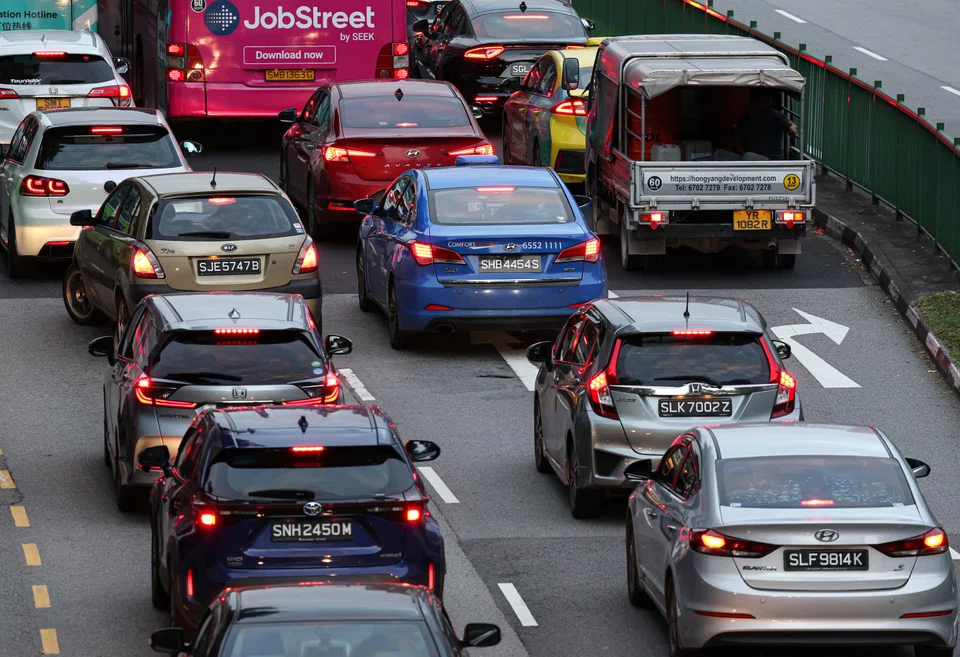
IN THE debate on the Transport Ministry’s budget earlier this month, two particular points captured the attention of Singapore motorists – even though they were not actual policy announcements. They were not even a promise of future announcements.
Instead, what sparked discussions and raised hopes was merely an indication that the Singapore government would consider two oft-raised ideas: a one-off increase in the vehicle population, alongside higher charges for car use, and a separate Certificate of Entitlement (COE) category for private-hire cars.
Car ownership is a perennial hot-button topic in Singapore, with policy changes and COE bidding results always closely watched. In that sense, it is no surprise that even the subtlest signal of an upcoming change might be pounced upon.
Still, it is worth noting how carefully measured the political officeholders’ speeches were.
Transport Minister Chee Hong Tat did not even say that the government would review the idea of a one-off increase in vehicle numbers – a pronouncement that might have raised expectations of, say, a committee or workgroup – but instead that it was “open to reviewing the idea”.
Similarly, Senior Minister of State for Transport Amy Khor said that the Transport Ministry “will address” the possibility of a separate COE category for private-hire cars in the next phase of an ongoing review of point-to-point transport, later this year.
Both officeholders were careful to leave open the possibility that these ideas might be considered, but ultimately not adopted.
The value is in the process of seriously and thoroughly reviewing these ideas, instead of rejecting them out of hand.
Of course, such an outcome might not satisfy those who have already leapt to certain conclusions.
Singapore’s political watchers – from academics to online forum participants – have grown used to reading between the lines of official speeches.
The mere broaching of a policy possibility is sometimes seen as a so-called test balloon, to gauge public reaction ahead of more definite pronouncements. It might also be seen as a way of preparing the ground – particularly industry players – before or during feedback-gathering exercises.
Therefore, no matter how carefully a speech is framed and hedged, there will unavoidably be some who conclude that the policy change is as good as confirmed, and everything that comes before is mere foreshadowing.
There is perhaps a degree of precedent in the case of unemployment support. Singapore’s labour movement began a dedicated call for this in 2021, after a year-long consultation on how to assist professionals, managers and executives, in partnership with the Singapore National Employers’ Federation.
The government said then that the report’s recommendations would “be taken into consideration”. In the following years, repeated calls for unemployment support – and hints from politicians – raised hopes that some form of this would be on the way.
Eventually, the government announced that it would indeed implement the suggestion. But while details are yet to come, it is clear that instead of unemployment support as commonly imagined, which may not be tied to specific training requirements, Singapore’s version will take the form of support for reskilling.
Transport watchers might have to temper their expectations similarly. On the road, a driver has to signal their clear intention, and follow through. Governments do not face the same obligation.



