

A collaborative road map for a low-carbon future
Amid growing recognition for the need to finance both the rapid deployment of renewables and an accelerated coal-managed phase-out, banks can step up to be part of the solution
By Taimur Baig and Helge Muenkel
THE modern world runs on electricity. Fossil fuels – of which coal accounts for some 60 per cent – contribute to about 60 per cent of our electricity generation. Underscoring the long road ahead, the power sector makes up for a third of the world’s greenhouse gas emissions.
Numerous action plans and pledges have been made to enable a meaningful green transition and net-zero outcomes by 2050 or beyond. But achieving this goal remains an uphill task. Coal consumption hit a new high in 2022, due to Europe’s demand temporarily resurging amid the energy crisis following the war in Ukraine, while China and India pushed ahead with capacity addition.
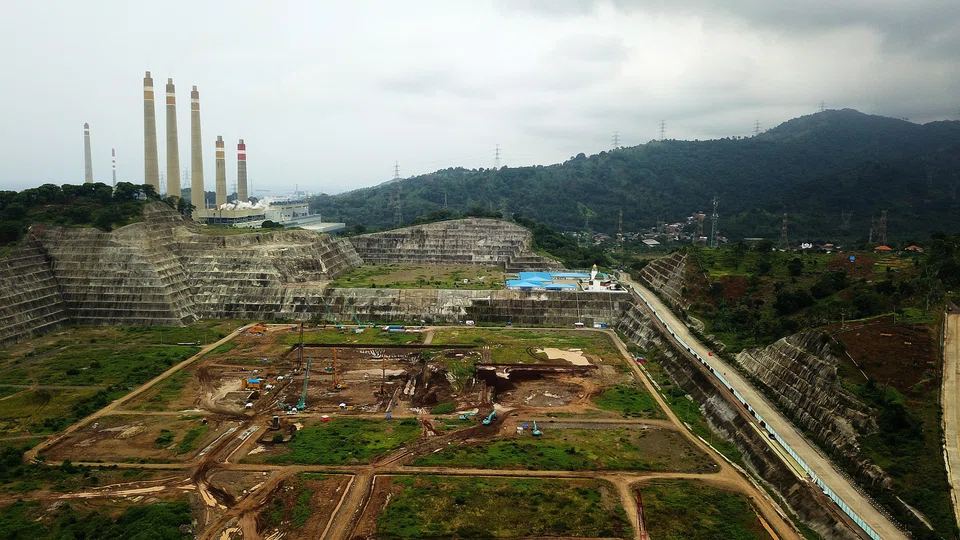
Coal is the majority source of energy and emissions in Asia, where around 5,000 operational coal plants reside, with China and India representing about 86 per cent of total power generated. Indonesia, the most populous nation in South-east Asia, has the largest number of coal-related activities.
And while Asia’s green transition is very complex, for instance due to socio-economic considerations, there is nonetheless tangible commitment towards a low-carbon future in the region. Of the more than 140 countries that have announced or are considering net-zero targets, 25 are in Asia, with pledges covering about 47 per cent of global emissions. Asia’s corporate sector is also making progress in committing to or setting science-based decarbonisation targets. From just 60 companies in 2019, there are now over 1,000 such companies regionally – representing a quarter of signatories globally.
Opportunities to deploy renewable energy such as wind and solar vary materially across Asian countries. But the levelised costs – a comparative measure of the relative competitiveness of different energy sources – of renewable energy has decreased significantly in recent years, making it increasingly competitive with traditional fossil fuel sources.
To help drive sustainable development, we need to reduce Asia’s dependence on coal and enable greater access to affordable clean energy.
Facing the complexities
While public policies on coal phase-out are strengthening globally and regionally, it is possible to further accelerate the phase-out of coal by designing credible financial incentives for the early shutdowns of plants. Amid growing recognition for the need to finance both the rapid deployment of renewables and an accelerated coal-managed phase-out, banks can step up to be part of the solution.
Clear guidance and guardrails are needed to help banks design financing solutions, given the reputational and other risks interlinked with coal financing. We are already seeing significant developments in the policy space. Recently, regulators of Asean nations agreed on a taxonomy that defined the criteria for managed coal phase-outs. The Monetary Authority of Singapore also signalled its intent to include specific criteria on managed coal phase-out in the Singapore taxonomy. And the Glasgow Financial Alliance for Net Zero is working to develop guidance for financial institutions to support the financing of credible early retirements of coal-fired power plants. The development of this work was co-led by DBS and supported by key partners, including Singapore’s central bank.
These frameworks should not be misconstrued as a blank cheque to support carbon-intensive activities. Rather, they lay the foundation for financiers to work effectively with partners to drive collective action for a just transition.
What a managed phase-out of coal could look like
Coal-fired power plants across the region are among the youngest in the world. Accelerating their early retirement will be complex but essential for achieving a low-carbon future. Extensive collaboration is needed from lawmakers, regulators, tax authorities, businesses, financial institutions, researchers and communities.
With all relevant ecosystem partners involved, the first step to a coal managed phase-out transaction is to ensure its credibility. This requires an assessment of the overall energy transition plans of the country where the asset is located.
Equally important are the transition plans of the owners of the target plant. An entity’s decarbonisation strategy ought to be credible and science-based. Critically, the selection criteria of specific coal power plants – which will depend on the asset’s technical specificities, age and other factors – needs to ensure real and material emissions reductions that are being made possible with new financing.
Once the asset is identified, innovative financial models can be used to expedite early shutdowns. New owners, financially incentivised to commit to early phase-outs, need to come on board. Outgoing owners should be compensated appropriately, given their existing power offtake agreements, but also their increased risks of owning a stranded asset. Concessionary forms of capital, including those from development banks and impact investors alongside commercial finance, should be used to create a blended finance solution that will lower the cost of capital.
Well-managed phase-outs of coal must also optimise trade-offs between environmental goals and broader socio-economic considerations. It is important to know that the entire coal supply chain accounts for substantial employment in Asia – nearly six million jobs, mostly in China, India and Indonesia. The impact on workers who are either directly or indirectly affected by the early retirement of coal power plants would have to be accounted for, with a comprehensive community engagement and transition plan.
To keep the lights on, phasing out coal can only happen in parallel with renewable energy production, development of supporting infrastructure such as energy storage systems, as well as the upgrading of transmission and distribution systems to deal with the intermittency of wind and solar power. Failure to do so could result in communities not having access to affordable and reliable sources of electricity, a sure-fire way to impede development and public support.
And finally, it will be instrumental to publicly disclose the approach to phasing out a coal plant, and to continuously update on the progress made.
Intergenerational equity
The debates about a just transition, a path to a low-carbon society that also assures social equity, are typically focused on the current generation’s needs and constraints. This is understandable when one is focused on making a daily living; the aim is for people to live well, which includes living in good health, having access to food, shelter, fresh water, a decent job and affordable energy. For developing nations, having to deal with climate change-related restrictions on fossil-fuel based activities feels naturally unjust, as many industrial economies have already reached better living standards, built on decades of emission-intensive industrial activities.
While recognising such considerations, there is still scope for broadening the lens of cost-benefit calculations. The transition cost today comes across as much more meaningful when multi-generational dividends are brought into the picture. Future generations should also be able to live well. Regardless of context, the benefits of greening the global economy must be considered in light of welfare enhancements over multiple generations.
There is no question that employment, financial and energy security considerations are paramount as green transition takes place. But when it comes to the cost-benefit calculations of the transition, the generational dividends make such calculations ever more persuasive.
The writers are from DBS. Taimur Baig is chief economist and Helge Muenkel is chief sustainability officer.
TRENDING NOW

Nvidia reinstates Jensen Huang as CEO; Trump says move poses no national security risk

Indonesia’s coal tycoon Low Tuck Kwong replaced as Bayan Resources president-director

Nvidia surges 33% after reinstating Jensen Huang, reviving AI trade; stocks soar in US and Europe

Consider lowering homeownership barriers for some non-resident foreigners

