

Collapsing banks, Reits hint at trouble ahead
Fed adopts less certain posture on further tightening, but its projections suggest rates will end 2023 higher than where they are now

AN old fund manager friend told me in October last year that it was probably time to load up on stocks.
The US Federal Reserve was hiking rates at a torrid pace of 75 basis points each time. Yields on 10-year US Treasury bonds had pushed above 4 per cent. And, the S&P 500 Index had closed as low as 3,577.03 on Oct 12, 2022.
My inner bear demurred. It seemed unlikely to me that inflation could be quelled without a deep slump in economic activity and corporate profitability, which was not yet apparent. Also, I feared pockets of excesses built up during the long period of ultra-low interest rates might unwind in a disorderly manner amid the rapid tightening of monetary policy.
The series of bank failures in the United States over the past month, as well as the collapse of Credit Suisse, left me feeling somewhat vindicated. But the market seems to have taken all the bad news in its stride. With hindsight, my fund manager friend might have had the right instincts.
Since the end of October, the S&P 500 has delivered a total return of 6.9 per cent. The Nasdaq 100 recorded an even more impressive return of 16.1 per cent. And, the prospect of higher interest rates did not seem to be a factor in the performance of many stocks that helped pull these US market indices higher.
For instance, the best performing component of the S&P 500 and Nasdaq 100 during the period was Meta Platforms (formerly Facebook). It returned 127.5 per cent as its management abruptly refocused on improving operational efficiency and profitability.
Another strong performer in both these indices was chipmaker Nvidia, which has returned 105.9 per cent since the end of October amid optimism about artificial intelligence becoming a major driver of its growth.
Wynn Resorts was the third best performing component of the S&P 500. It delivered a total return of 75.1 per cent as China eased Covid-19 restrictions in Macau.
Here in Singapore, the Straits Times Index (STI) has delivered a total return of 6.5 per cent since the end of October. Leading the STI’s advance were Sembcorp Industries, Genting Singapore and DFI Retail Group – which returned 50.5 per cent, 39.1 per cent and 36.2 per cent, respectively.
Only two of the STI’s 30 component stocks are in negative territory since the end of October: City Developments (minus 3.4 per cent) and DBS (minus 2.5 per cent). Yangzijiang Shipbuilding recorded a total return of zero during the five-month period.
So, are we at the foothills of a fresh bull market? Or, is this just another bear market rally that will soon come to an end?
Stress in Reits
The way I see it, the depositor runs on the likes of Silicon Valley Bank and Signature Bank over the past month are a sign of looming trouble for the markets. Rising interest rates are weighing down the value of even the safest assets, and gradually rendering some financial structures and business activities unviable.
The varied performance of Singapore’s real estate investment trusts (Reits) recently offers a stark display of this trend.
Since the end of October, the iEdge S-Reit Index recorded a robust total return of 9.1 per cent. Leading the advance were Frasers Logistics and Commercial Trust and Keppel DC Reit – which delivered total returns of 22 per cent and 20 per cent, respectively. In third place was CapitaLand China Trust, with a total return of 18.8 per cent.
Against this backdrop, some Reits are expanding their portfolios. For instance, Mapletree Logistics Trust (MLT) – which has returned 15.6 per cent since the end of October – said last week that it will acquire eight assets in Japan, Australia and South Korea for a total S$913.6 million.
MLT also said it will raise S$200 million through a placement of 121.3 million new units at S$1.649 apiece. MLT closed Friday (Mar 31) at S$1.71.
Yet, some components of the iEdge S-Reit Index have performed very poorly amid the rebound in the whole market. Notably, Manulife US Reit has delivered a total return of minus 36.6 per cent since October last year.
Manulife US Reit suffered an unexpectedly large downward revaluation of its property portfolio at the end of 2022, which inflated its gearing significantly. It said in December that the reduced valuation for its properties was partly due to “higher discount rates and capitalisation rates”.
Keppel Pacific Oak US Reit (Kore) and Prime US Reit – which are similarly focused on commercial properties in the US – also appear to be facing doubts about the value of their underlying assets. Kore has returned minus 26 per cent since October, while Prime US Reit has returned minus 27.3 per cent.
Then, there is Lippo Malls Indonesia Retail Trust (LMIRT). Dogged by debt refinancing concerns, LMIRT said on Mar 20 that it will not pay distributions on a S$140 million tranche of perpetual securities issued in 2016. The move will prohibit it from making any further distributions to its unitholders.
LMIRT has delivered a total return of minus 42.7 per cent since the end of October.
Checking my FOMO
The big question now is how much longer it will take for the Fed and other major central banks to get inflation under control.
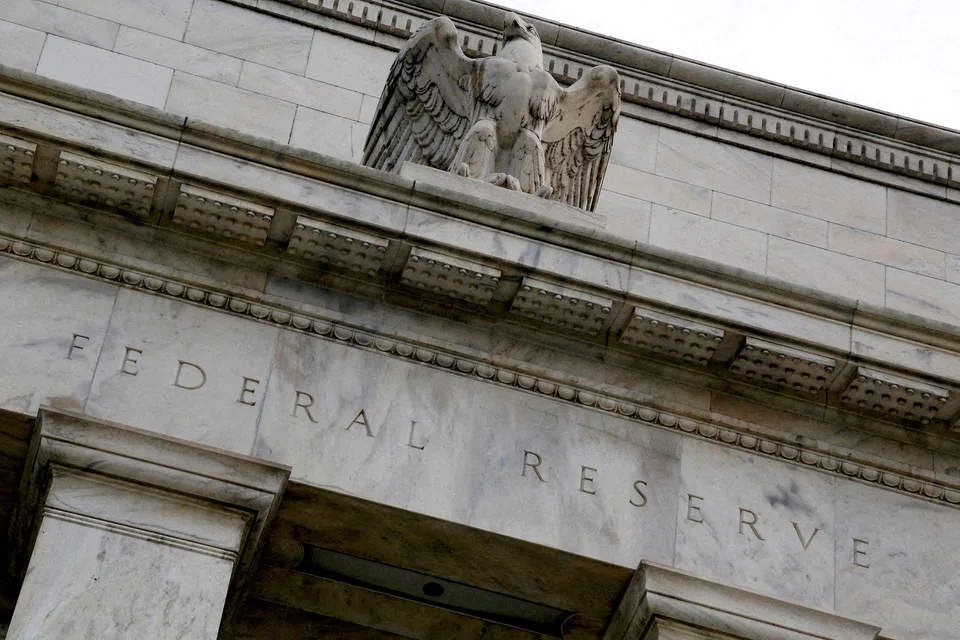
On Mar 22, the Fed said it would raise the target range for the federal funds rate by 25 basis points to 4.75-5 per cent. But it adopted a less certain posture on the likelihood of further tightening in the months ahead – a plain acknowledgement that financial market stress is now a risk.
Nevertheless, median projections by participants of the latest Fed meeting still put the midpoint of the federal funds rate at 5.1 per cent by end-2023 and 4.3 per cent by end-2024. In December, Fed meeting participants were projecting a federal funds rate of 5.1 per cent by end-2023 and 4.1 per cent by end-2024.
While some market watchers see the prospect of rates peaking in 2023 as a reason to be optimistic about stocks, my view is that the cumulative tightening in monetary policy over the past year is only just beginning to weigh on the global economy and financial markets.
More to the point, the Fed’s projections suggest interest rates are still set to end this year above where they are now.
In the months ahead, my sense is there will be significant volatility in the market that creates more attractive buying opportunities than we saw last October. In the meantime, my biggest challenge could be keeping my FOMO – or, fear of missing out – in check.
TRENDING NOW
Chairman’s role in spotlight with raft of proposed new rules for Singapore boards

Director of PR firm sacked for secretly recording internal meeting loses wrongful dismissal claim
Indonesia stocks suffer worst plunge in nearly 30 years as MSCI proposes standalone status

If Europe goes to war, the fallout will be felt in East Asia

