
A defining moment for Biden's presidency?
Despite chaotic Afghanistan withdrawal, long-term viability of Joe Biden's leadership depends more on upkeep of economic recovery.
 Add BT as a preferred source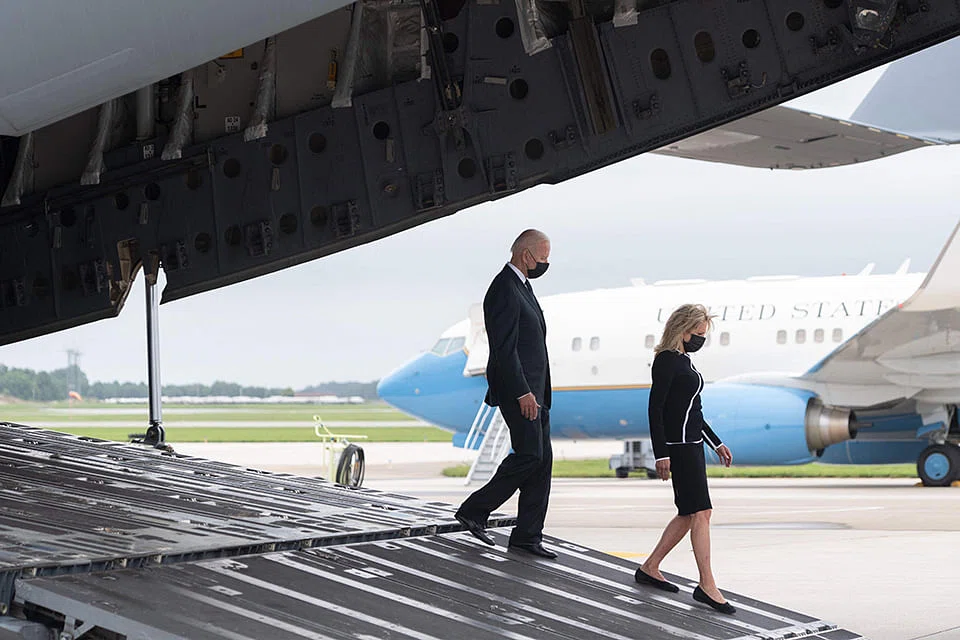
ON Nov 4, 1979, a group of Iranian militants masquerading as students stormed the US Embassy in Tehran, taking over 70 Americans captive and refusing to free them until the United States agreed to return the exiled Iranian shah back to Iran.
The event was the start of a dramatic crisis that lasted 444 days and challenged then-President Jimmy Carter, who pledged to safely return the hostages while protecting US interests.
What came to be known as the Iran Hostage Crisis ended up dominating the entire agenda of the Carter presidency, with Americans glued to their television sets as they followed the tribulations of the hostages in the embassy in Tehran that were broadcast, among other places, on a highly-rated ABC News programme called America Held Hostage.
The crisis reached a climax on April 24, 1980, when President Carter ordered the US military to attempt a rescue mission, using warships that were patrolling the waters in Iran. But the rescue attempt failed and resulted in the deaths of eight American servicemen after one of the helicopters carrying them crashed into a transport aircraft.
A friend of mine was riding on a bus in Washington that day and recalled the reactions of the passengers when the failed mission was reported over the radio. There was a deathly silence on the bus as the news came. It became clear to him then that the tragedy would mark the end of the Carter presidency and that the White House occupant was bound to lose the upcoming presidential election scheduled to take place that November.
And that is exactly what happened when Republican Ronald Reagan defeated Democratic President Carter, carrying 44 states and helping the Republicans to take over the Senate. The American hostages were then released on the same day Mr Reagan was inaugurated as president.
Navigate Asia in
a new global order
Get the insights delivered to your inbox.
One of the reasons we need to recall the depressing saga of America Held Hostage is because many Republicans now hope - and some Democrats worry - that from the perspective of the 1979 crisis and against the backdrop of the messy US withdrawal from Afghanistan, including the death of 18 American soldiers, President Joe Biden is now in a process of being "Carterised". The argument is that the current crisis would prove to be politically deadly for the president and his party.
Indeed, anyone who has been viewing the news on CNN, not to mention the conservative Fox channel, in the last few days would probably have seen this Republican lawmaker or that conservative pundit, including those planning to run for the presidency in 2024, blaming President Biden for the tragic events in Kabul.
The president's political adversaries describe the messy withdrawal from Afghanistan as the worst disaster in American history and are demanding that President Biden resign from office or threatening to impeach him. More than one right-wing talking head compares him to President Carter, creating expectations that the Biden presidency is over.
"It's time for accountability, starting with those whose failed planning allowed these attacks to occur. Joe Biden, Kamala Harris, Antony Blinken, Lloyd Austin, and Mark Milley should all resign or face impeachment and removal from office," said Republican Senator Marsha Blackburn of Tennessee last week.
Never mind that it was a Republican president, George W Bush, who had ordered the invasion of Afghanistan while pledging not to draw the US into a military quagmire there; or that Republican President Donald Trump was the one who had initiated peace talks with the Taliban, at one point even considering inviting them to talks in Camp David, reaching a peace deal with them, and setting up a timeline for the withdrawal of American troops from Afghanistan.
All President Biden did was to carry out the commitment made by his predecessor in office, a decision that was backed by a large majority of the American people who were looking forward to ending the longest war in US history. In fact, not even one Republican lawmaker has proposed that the US should continue to occupy Afghanistan or opposed the return of the Taliban to power, which was seen as a done deal.
But we live in an era where images sometimes have more impact than empirical evidence (also known as facts) have on the way Americans perceive the political world around them. And images of chaos, terror and bloodshed can indeed be very powerful. That has allowed former President Trump to make the following statement: "What a terrible failure. How many terrorists will Joe Biden bring to America?"
After all, one could have made the argument in 1979 that then-President Carter should not be blamed for the Iran hostage crisis. It was the result of several decades of American policy towards Iran that was pursued by both Republican and Democratic presidents who backed the Iranian shah who was eventually ousted from power during the revolution in Iran that year.
But then you had to tell that to the Americans who were bombarded by scenes from the US Embassy in Tehran where the hostages pleaded with their president to get them home, followed by images of the American helicopters that crashed into the transport aircraft.
Those images helped create the sense that America was a paper tiger and that President Carter was a loser, despite the fact that he actually proved to be a successful foreign-policy president who helped to make peace between Israel and Egypt in 1978 and retaliated forcefully to the Russian invasion of Afghanistan in 1979.
So expect the Republicans to continue trying to turn last week's tragic events in Kabul into the "defining moment" of the Biden presidency and to convince Americans that only they would be able to recover the alleged loss of American honour and US credibility in the world, hoping for a rerun of the America Held Hostage crisis.
But contrary to the Republican mantra, there is no reason to believe that the withdrawal has damaged American credibility and provided an opportunity for America's global nemeses - China, Russia, and Iran - to fill the vacuum left by the Americans in Afghanistan.
TIME FOR RECOVERY
In reality, those three countries were actually the beneficiaries of US occupation of Afghanistan. In a way, the US military helped secure their access to energy resources in the region, and, in the case of China, even protected its border with Afghanistan from the export of radical Islamism from there to their Xinjiang province and other areas with large Muslim populations.
At the same time, Russia will now be concerned over possible cooperation between the Taliban and Muslim terrorists operating in the Caucus and central Asian republics, while the Iranians are worried that a Sunni Taliban regime would repress the Shi'ite Hazara minority in Afghanistan. These countries now have an interest in joining India in trying to contain potential threats from Afghanistan and pressing Pakistan to restrain its allies in Kabul.
In any case, it is important to recall that the hostage crisis had taken place during the last 400 days of Mr Carter's presidency and only ended when he left office, not leaving enough time for him to recover politically.
The withdrawal from Afghanistan is happening during the seventh month of the Biden presidency, with the rest of his term ahead of him. And most indications are that, notwithstanding last week's terrorist attack, the evacuations would be completed on time and allow most Americans, as well as Afghans who had worked for them, to leave the country.
That the evacuation of Americans and other foreigners will probably continue to be messy does not change the fact that the majority of Americans continue to support leaving Afghanistan.
And here is another interesting thing to consider: Most historians now believe that President Carter lost the 1980 presidential election not because of his handling of the hostage crisis, but that the state of the American economy at that time - a devastating combination of high rates of inflation and unemployment - was responsible for his electoral defeat.
There is no doubt that in the aftermath of the chaotic withdrawal from Afghanistan, public opinion polls would point to a steady decline in the popularity of President Biden in the next few days, or even weeks. But the long-term viability of his presidency would depend more on Mr Biden's ability to maintain and expand the current economic recovery. His political fate and that of his party depend on that.
Decoding Asia newsletter: your guide to navigating Asia in a new global order. Sign up here to get Decoding Asia newsletter. Delivered to your inbox. Free.
Share with us your feedback on BT's products and services

