A 'just transition': How to ensure no one's left behind
What does 'justice' mean in the context of transitions expected in the coming decade? How can we ensure these transitions aren't shallow, but deep and transformational?
 Add BT as a preferred source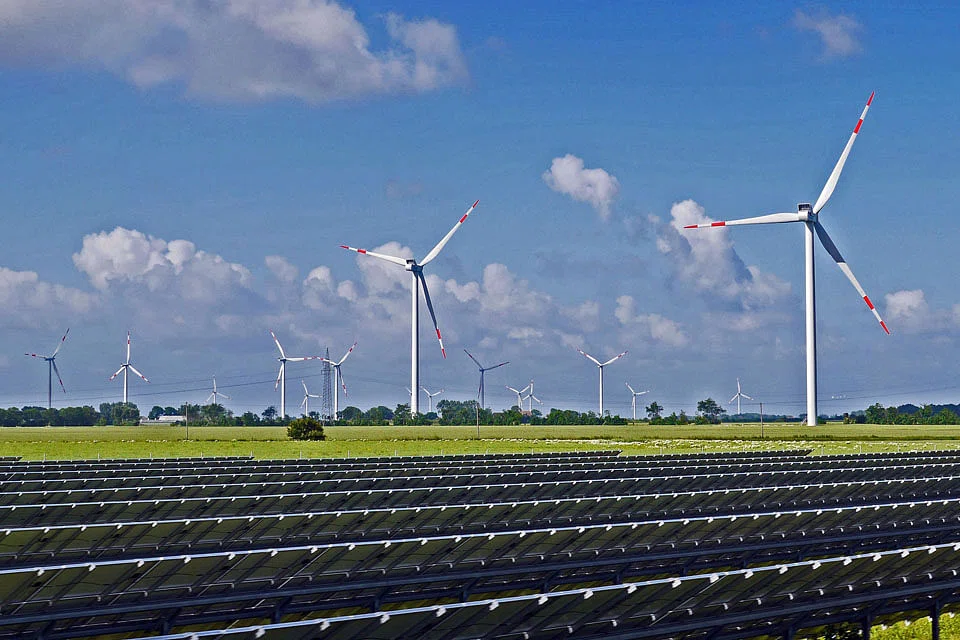
DeeperDive is a beta AI feature. Refer to full articles for the facts.
THE concept of a "just transition" is rising in prominence as governments, businesses and civil society alike wake up to the risk of people and communities being "left behind" in a changing world. It is already taking centre stage in the now-inevitable fossil fuel transition, recognising the vulnerability of those involved in or peripheral to the industries past their heyday. Looking beyond the energy sector, it will also be essential in many other interconnected transitions - from how we use land and produce food, to creating circular economies and how we will live in (or even relocate) cities.
The concept comes with great promise. However, conversations and declarations around what a just transition really means have so far focused on the distribution of jobs and/or levies, rather than the deeper opportunity to rewire and reconfigure underlying systems to achieve greater equity, justice and regeneration by placing respect for universal human rights at the heart of transformational work.
This needs to change if we're to genuinely realise a just transition.
The depth of the current energy transition and the scaling of renewable energy (RE) is a case in point. Taking the Indian RE sector, it is clear that more justice is required across areas such as price pressures, human rights, governance, jobs and power dynamics. Left unaddressed, the energy transition is on track to be shallow, thus creating rather than tackling social and environmental risks. For example:
• The race to the bottom to make renewable energy price-competitive means there is less time and resources available to focus on sustainability, let alone justice and regeneration in the value chain. The search for ever-cheaper renewable energy means cutting costs, which almost inevitably means less scrutiny and transparency in the supply chain and thus dropping environmental and social standards. We have been told that actors find it "impractical" to comply with human rights norms in their value chains and social impact assessments. Even when done with the best of intentions, rushed community consultations fall victim to structural power dynamics and risk reinforcing negative norms.
• The market creation drive has included a relaxing of governance standards including the need for Environmental Impact Assessments (EIAs) for renewable energy developments. There is no shared view of what constitutes a negative impact in many areas, or the threshold for violation. Though a number of investors are working to improve the situation, there remain only weak accountability mechanisms throughout the value chain.
Navigate Asia in
a new global order
Get the insights delivered to your inbox.
• The jobs provided by the coal industry and its peripheral sectors are physically not where the renewable energy investment is going, so we cannot rely on a direct swap to avoid joblessness, even if the skills needed were vaguely close.
• Dynamics and differing power between actors in and around the renewable energy value chain are stark. Many different types of actors related to this chain have expressed a concern that their ability to have a positive impact is limited by the decisions made by others, in which they have little or no influence. Decisions around what site to use for instance, or timelines, can be make-or-break on whether proper thought and process happen on environmental and social impacts.
All of these, including in other areas we are observing such as food and supply chains, point towards an opportunity to do things differently and in a manner that can contribute not just to tackling the climate emergency but also the biodiversity crisis, and inequality.
So what could seizing this opportunity look like?
Four levels of possible transitions
The Just Transition Research Collaborative (JTRC) depicts four levels of possible transition: "Perpetuation of Status Quo", "Managerial Reform", "Structural Reform", and "Transformational".
"Perpetuation of Status Quo" is where providing jobs is the proxy for justice, and "Managerial Reform" is where rules and standards may change but the basic economic model and balance of power do not shift.
They do not address the underlying causes of why we need the transition in the first place, and so humanity remains on a collision course with the iceberg that is the trauma of fallout from perpetual inequity and injustice. Any progress made will therefore be undone over time. These two transition levels are akin to moving deck chairs on the Titanic, and could be what we are seeing when it comes to the scaling of renewable energy.
"Structural Reform", JTRC's third level, focuses on distributive and procedural justice. It sees inclusive and equitable decision-making processes, collective ownership and management of the new system by different stakeholders - or rights-holders - which requires an evolution in institutional structures, power dynamics and governance.
Forum's collaboration with communities in Selby (Yorkshire, UK) on The Local Just Transition Challenge aims to work with those in deprived areas who are traditionally excluded from planning processes and decision-making to create ways in which they can vision their own pathways for their community.
This goes beyond job security, and offers the space to tackle inequity in access to nutrition, green space, affordable and safe transport and housing.
This gets us some way towards a compelling vision of a "just and regenerative" future, but it is only really JTRC's fourth level, "Transformational", that changes reality.
But how do we know we have reached the Transformational level?
Shifting from extractive to regenerative models
When done well, this provides the opportunity to address multiple challenges (across the Sustainable Development Goals) as the transition happens. What these deep transformational transitions look like will vary greatly across contexts, necessarily responding to cultural and socio-economic factors.
The Responsible Energy Initiative - a multi-year stakeholder collaboration of which Forum is a part - is about exploring these factors and how to address them working as a constellation of actors, including investors, buyers, manufacturers, developers and civil society. Already, there is an acknowledgement that a responsible energy system looks distinctly different from the one we operate today, even for renewable energy.
This is the opportunity for development that lasts, and for all.
Just transitions must be about the process, not just the outcome
We've talked a lot about "just transition" as an outcome, but the process of getting there is vital. How is the vision for transition set? Who shapes it? How can we use the opportunity transition brings to build an economy that creates and shares value differently? These are all key questions.
The transitions we are already experiencing, with more set to come, must be deep and transformational.
The opportunities that could arise from deep transformational transitions in response to this moment are too big to forgo, and the consequences of shallow transition are too unpleasant to even consider.
- The writer is associate director (India), at Forum for the Future.
- This article is part of Forum for the Future's Future of Sustainability: Looking Back to Go Forward opinion series.
Decoding Asia newsletter: your guide to navigating Asia in a new global order. Sign up here to get Decoding Asia newsletter. Delivered to your inbox. Free.
Share with us your feedback on BT's products and services