A more sustainable future for aviation in Asia, post-Covid
 Add BT as a preferred source
AS border restrictions gradually ease, global travel optimism returns. Faced with the potential surge in air travel, and the ongoing peak in freight demand, we should continue looking for ways to recover the aviation industry in the Asia-Pacific region more sustainably.
Combating climate change is more important than ever, as the Earth accelerates towards the tipping point of irreversible damage, which scientists now believe could be as soon as 2027.
Prior to the pandemic, International Air Transport Association (IATA) projections saw over 8.2 billion air travellers by 2037, with more than half of additional passengers coming from the Asia-Pacific region alone.
Air cargo, an industry that has not typically shown significant year-on-year growth, recorded strong performance this past year, likely due to heightened demand during the pandemic.
Industry-wide cargo tonne kilometres increased by 9 per cent in February 2021 compared to the same month in 2019, with air cargo demand growing by 10.5 per cent in Asia-Pacific during the same period. With industry reliance on international trade continuing to grow, we can expect further increases from the air cargo industry.
But with strong growth forecasts in both air travel and air cargo, are we doing enough to curb the industry's environmental impacts?
Navigate Asia in
a new global order
Get the insights delivered to your inbox.
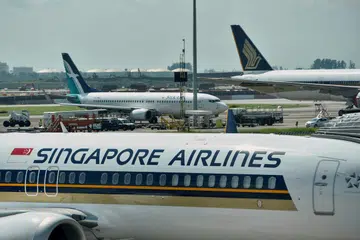
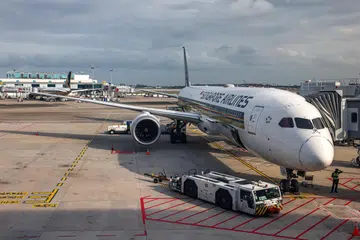
Airlines around the world have declared their commitment to international goals of net-zero carbon emission, with major leaders like Singapore Airlines, Cathay Pacific, Qantas and Air New Zealand joining the movement in Asia-Pacific.
With electric and hydrogen-powered aircraft only expected to be commercially viable by the 2030s and likely to only be available for short- and medium-haul air traffic, it is imperative that besides exploring other alternative solutions, we should also implement existing available tools to combat the climate crisis before it's too late.
One of those solutions is sustainable aviation fuel (SAF), supported by numerous independent reports as likely the single largest way to reduce greenhouse gas emissions.
It should not be seen as a stopgap measure, but rather an already commercially available drop-in solution to help in both the transition to the next generation of aircraft as well as in the long-drawn battle against climate change.
SAF is identified by IATA as one of the key elements to achieving the aviation industry's ambitious emissions reduction goals. It is a fuel produced from renewable raw materials, such as used cooking oil, or animal fat from food industry waste, meeting all quality and performance requirements of conventional fossil fuels.
Due to its chemical properties, it also burns clean and its use can reduce non-CO2 emissions of aviation, which are estimated to be twice as damaging as carbon emissions in contributing to climate change.
However, the journey to industry-wide adoption of SAF comes with a number of challenges. For one, air transport is one of the most impacted industries during the pandemic. As borders remain closed and airlines grounded, the industry faces one of its worst economic downturns in history. While this has forced some players to focus on short-term survival, it should not be an excuse for the industry to step back from long-term sustainable development. We need to strike a balance between economic and sustainability targets.
GOVERNMENTAL SUPPORT IS IMPORTANT
The importance of governmental support for the adoption of SAF to meet industry climate goals is significant. Mandates, which require a certain share of all jet fuel to be SAF, are an essential tool for governments to encourage the adoption of SAF.
Countries in Europe are already developing mandates as part of their regional plans. The European Commission's "Fit for 55" climate package includes the ReFuelEU Aviation proposal on the implementation of a European-wide SAF mandate by 2025. Asia-Pacific, however, is still catching up to its European peers.
With its Green Plan 2030, Singapore - a sustainability leader in Asia-Pacific - is making considerable headway in tackling the carbon-intensive maritime and aviation industries. In aviation, the Green Plan seeks to achieve the International Civil Aviation Organisation's goals of carbon-neutral growth from 2020, and 2 per cent annual fuel efficiency improvement till 2050. To achieve this goal, the Singapore government is currently reviewing study findings on use of sustainable aviation fuels at Changi Airport.
The government of New Zealand is also proposing to implement a biofuels mandate that would include aviation.
But the government's support should not stop at the mandate. There are already seven approved technological pathways for producing sustainable aviation fuels, and the biofuel industry is continuously innovating and exploring new raw materials to further grow the potential of SAFs.
It is important that governments in Asia-Pacific and across the globe maintain a feedstock and a technology-neutral approach in their policy frameworks. The scale of the climate challenge for aviation requires the use of all available solutions that fulfil the established sustainability and greenhouse gas emission savings criteria.
Every stakeholder in the global supply chain and Asia-Pacific region - governments, regulators, airlines, logistics service providers, communities, business travellers and private passengers - have a part to play in making the aviation industry more sustainable. Only together can we create a healthier planet for our children.
The road to a new normal is paved with many challenges. That is why at Neste, we believe in strengthening collaborations and efforts to make the essential changes for the industry.
With collective efforts from governments, regulators, industry leaders, logistics service providers, and business and private travellers, the aviation industry will remain in its pioneer position in technological innovations, and create a more sustainable aviation sector for generations to come.
- The writer is executive vice president, renewable aviation, at Neste.
Decoding Asia newsletter: your guide to navigating Asia in a new global order. Sign up here to get Decoding Asia newsletter. Delivered to your inbox. Free.
Share with us your feedback on BT's products and services