

Accelerating US inflation sets markets on edge
Slower growth and rising costs pressures could weigh on corporate earnings; cheap stocks could turn out to be value traps

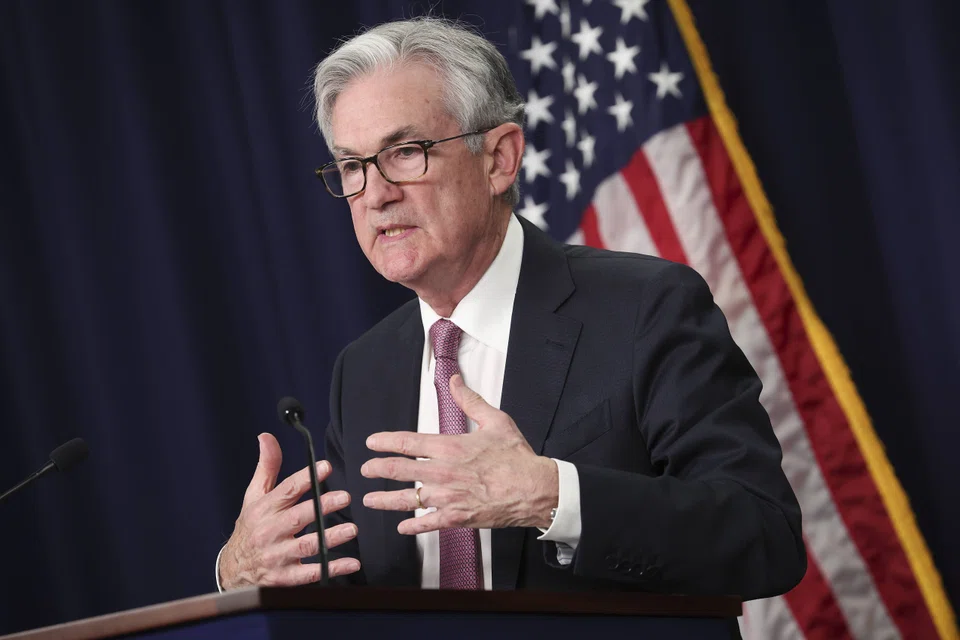
JEROME Powell kicked off his customary post-FOMC (Federal Open Market Committee) meeting press conference in May this year by directly addressing the American people.
“Inflation is much too high, and we understand the hardship it is causing, and we’re moving expeditiously to bring it back down,” the Federal Reserve chairman said, adding that the US central bank has the tools to get the job done.
“The economy and the country have been through a lot over the past 2 years and have proved resilient. It is essential that we bring inflation down if we are to have a sustained period of strong labour market conditions that benefit all,” he said.
Powell said in response to a question during the press conference that his opening remarks were a reminder of sorts that the Fed works for the American people and that inflation is hurting them.
“It’s very important that they know that we know how painful it is and that we are working hard on fixing it,” he said.
The FOMC hiked the federal funds rate by 50-basis points at its meeting held on May 3-4, and announced plans to shrink its balance sheet. But continued acceleration in US inflation has since forced it to quicken the pace of its rate hikes.
After its meeting on Jun 14-15, the FOMC announced a 75-basis-point hike in the federal funds rate and Powell repeated his inflation-fighting pledge to the American people at the post-meeting press conference.
This past week, on Jul 13, US consumer price data showed that inflation accelerated to 9.1 per cent for the 12 months to June – up from 8.6 per cent in May and 8.3 per cent in April.
There is now speculation that the federal funds rate could be hiked as much as 100 basis points at the Fed meeting on Jul 26-27. It has also spurred monetary policy tightening around Asia, including here in Singapore.
More hostile Fed
For investors, the key issue now is how quickly this tightening will bring inflation under control and the extent to which growth and corporate earnings will be hurt in the process.
Investors will also have to get comfortable with the fact that the Fed does not work for them, though it may have seemed that way for a very long time.
With the “Greenspan put” in the years following the crash of 1987, and “quantitative easing” that remained a feature of American monetary policy long after the 2008 subprime mortgage bust, the Fed has repeatedly come to the rescue of the market.
The Fed also slashed the federal funds rate at the onset of the pandemic in March 2020 – a move that probably helped spark the huge run in the S&P 500 but that might now be contributing to inflation rates not seen since the early 1980s.
Given that curbing inflation is a major priority, the Fed is now unlikely to take its foot off the brakes at the first sign of any financial market turmoil.
Some market watchers say the whole idea of pushing interest rates up and restricting economic activity in order to cool inflation makes about as much sense as cutting rates at the onset of the pandemic.
Economic activity came to a sudden halt in 2020 because of lockdowns to curb Covid-19 infections – which could not have been alleviated with looser monetary policy.
On the other hand, the current surge in inflation is at least partly the result of supply chain disruptions and higher commodity prices – which are more likely to be resolved through investment spending rather than higher interest rates.
These arguments are not likely to deter the Fed from further monetary tightening, though.
US unemployment in June came in at 3.6 per cent for the fourth month in a row. This is very close to the 3.5 per cent registered back in February 2020, before the pandemic started.
While oil and food prices have been strong drivers of the consumer price index, inflationary pressures are quite broad-based with even the services sub-index (excluding energy services) up 5.5 per cent during the 12 months to June.
More to the point, tightening monetary policy is the only thing the Fed and other major central banks can do to curb inflation.
Secular inflation risk
On the face of it, much of the perceived risk of tighter monetary policy and slower growth might already be reflected in the market.
Since the beginning of this year, the S&P 500 has fallen more than 19 per cent. And, while the index dipped last week on news of higher US inflation, it quickly rebounded to close Friday at 3,863.16 – down 36.22 points or 0.9 per cent for the week.
Looking ahead, it could just be a matter of time before tighter monetary policy and slower growth result in lower oil and commodity prices.
But these waning cyclical drivers of inflation might be negated by some big secular trends.
In particular, China might be less of the global disinflationary force that it has been over the last couple of decades – because of rising wages and an ageing population.
Moreover, analysts say the global corporate sector could suffer cost pressures as they move some of their manufacturing facilities out of China in the name of supply chain resilience.
So, what does all this mean for investors?
As this column said last month, bear markets tend to end when central banks begin loosening monetary policy. But the Fed is clearly a long way from that inflection point.
In the meantime, slower growth and rising cost pressures could weigh on corporate earnings and seemingly cheap stocks could turn out to be value traps.
Companies not only need to be recession-proof but inflation-proof too. They need to have costs that can be controlled, strong pricing power and products that enjoy inelastic demand.
Then there are foreign exchange risks. The Fed’s hawkishness is spurring the US dollar. That’s bad news for countries in this region that have weak current accounts, and companies with local currency revenues and US dollar costs.
Long story short, investors face a potentially tough and unforgiving environment in the months ahead; and they should ensure their portfolios are tuned for a possibly lengthy period of elevated inflation and interest rates.
TRENDING NOW

ComfortDelGro appoints two new independent directors

Once staunchly pro-China, Malaysian Chinese businesses are now distancing themselves from Beijing

NoonTalk needs continued financial support from CEO Dasmond Koh, auditors warn

DP Architects sets the benchmark for sustainability disclosure and design

