

ADB to boost financial firepower, efficiency
Using leveraging to create a bigger equity base for the bank will allow annual loan commitments and grants to rise to US$20b from US$13b now.
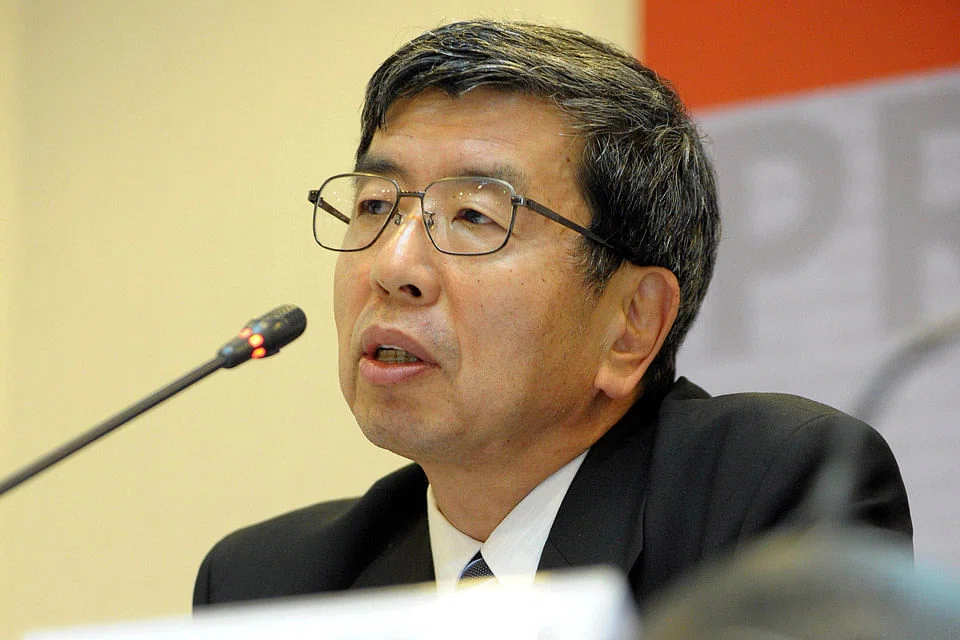
FINANCIAL leveraging is the name of the game so far as Asian Development Bank president Takehiko Nakao is concerned when it comes to increasing the bank's impact on economic development in Asia, especially in the area of infrastructure. Leveraging plus "increased efficiency", as he puts it.
Faced with the arrival of a newcomer on the Asian development banking scene in the shape of the China-led Asian Infrastructure Investment Bank, which some suggest could "poach" projects and staff from the ADB, Mr Nakao is adopting a positive and pragmatic attitude.
"The Asia Pacific region needs money," he told BT in an interview prior to the ADB's annual meeting in the Azerbaijan capital of Baku over the weekend.
Funding is needed especially for infrastructure, an area that would require some US$8 trillion in the current decade, according to ADB estimates. Therefore, additional sources of finance such as the AIIB are welcome. "It is not a zero sum game," he says.
In saying this, Mr Nakao is acknowledging a reality which is increasingly being accepted - that the size of the financial challenge involved in providing transport, power, communications and other basic infrastructure in developing and emerging economies around the world requires scaling up the resources of multilateral development banks. They need to "gear up" or "leverage up" in order to meet that challenge.
As World Bank president Jim Yong Kim put it on a visit to Tokyo in March: "The infrastructure gap is enormous - an estimated US$1 trillion to US$1.5 trillion more is needed each year. To fill this gap, we need to tap into the trillions of dollars held by institutional investors - most of which is sitting on the sidelines - and direct those assets into projects that will have great benefit for a range of developing countries."
But the multilateral development banks, or MDBs, themselves also need to become more muscular lenders in the area of infrastructure, as Mr Kim acknowledged in Tokyo. "We aim to grow our business," he said, and if this requires going to World Bank shareholders for more capital, he is prepared to do so at the right time, he indicated.
Unlike the World Bank, which all but withdrew from infrastructure building in the late 1990s and the early part of the new millennium, the ADB has remained closely involved with this critical sector. Recognising the growing need for finance, then ADB president Haruhiko Kuroda negotiated a tripling of the bank's US$55 billion capital in 2009.
"There was a time when there was reduced support for the multilateral development banks, because the private sector was regarded as being superior," Mr Nakao told BT. It was thought before the global financial crisis "that we should get rid of public sector institutions including even the IMF", he noted. "Now there is a change."
The ADB, Mr Nakao says, "has had a very important role in the Asia Pacific region for 50 years and it will continue to play an important role". But at the same time he emphasises that "we must make efforts to reform ourselves by increasing our lending capacity, strengthening knowledge and streamlining procedures".
A further general capital increase for the ADB would not have been feasible so soon after the 2009 boost. So Mr Nakao came up with an imaginative scheme in August 2013, shortly after he took office, to boost the ADB's lending power further by using donor funds - a kind of virtual equity - as capital.
This scheme is only now coming to fruition. It has been agreed to by all 34 donors of the Asian Development Fund (ADF) and is expected to receive the formal blessing of the 67 ADB shareholding governments by the time of the ADB annual meeting. "I appreciate the constructive feedback and support by donors and shareholders in making this happen in such a short period," he says.
The plan involves "merging" in effect the ADB's two main lending arms - Ordinary Capital Resources (OCR) which is financed by shareholder capital plus borrowings and is used to finance loans at near-market interest rates, and ADF which is a special fund financed by donor governments and is used to finance concessional lending to poorer countries. The merger will be effective from January 2017.
"It is a basic principle of financial business to use leverage," says Mr Nakao, who is a former vice-finance minister for international affairs of Japan. The ADB has been able to leverage up its ordinary capital to the extent that US$17 billion of paid-in equity supports outstanding loans of US$56 billion. But its ADF funds have not been leveraged in design because ADF borrowers were seen as lacking creditworthiness when the ADF was established in 1973. As a result, the US$32 billion in the ADF currently supports outstanding loans of only US$28 billion.
VIRTUAL EQUITY
Mr Nakao's breakthrough (and so far only the ADB among regional development banks has promoted such a scheme) has been to treat ADF funds as virtual equity. The idea reflects the fact that all ADF borrowing countries (except for Afghanistan under debt relief) have repaid their debt. By merging OCR and ADF, the bank's paid-in equity will increase to around US$50 billion, he says. "This is a really big thing because our lending capacity can be increased by 50 per cent by (virtue of) having much bigger equity, and our income will be increased because of our leverage."
For the "financial institutional community this is a really interesting idea", says Mr Nakao. "Our move has promoted discussion among other MDBs - how to use leverage for their concessional lending windows." These exist not only at the ADB but also at the Inter-American Development Bank, the African Development Bank and the World Bank. For the ADB, using ADF money is relatively easy as the ADF is a special fund administered by the bank rather than a separate legal entity as in the case of most other MDBs.
In a sense, the ADB can be seen as flexing its financial muscles now in order to show that it is capable of competing with the AIIB, which is expected to have US$50 billion of paid-in and callable capital initially, rising later to US$100 billion, compared to the ADB's authorised capital (again paid-in and callable) of US$153 billion. "In terms of the paid-in equity, which is a basis for rating, the difference between the ADB and the AIIB would be even starker," says Mr Nakao. With what the ADB president calls its "huge equity to loan ratio" (more than 45 per cent at the time of the merger of the two funds) the ADB is assured of being able to retain its Triple A credit rating in the international bond markets where it raises debt finance.
"Our lending capacity is large and we are now expanding it by as much as 50 per cent as a whole and for low-income countries by 70 per cent," Mr Nakao said. Currently, annual loan commitments (as distinct from actual disbursements) of ordinary lending have been running at the rate of around US$10 billion plus some US$3 billion of "soft" loans and grants from the ADF. The ADB president sees annual lending (and grants) rising to around US$20 billion a year as a result of creating a new and bigger equity base for the bank.
"This is a kind of win-win situation because it enables stronger support for poorer members, increased ordinary operations (including for private sector lending and investment) and a smaller burden for donors to the ADF, which will be retained as a grant fund only. Now the issue is whether we can use this money well or not," says Mr Nakao. "That is the challenge."
FINANCE WITH KNOWLEDGE
Financing needs are very large and what the ADB is doing "is limited" even after scaling up its lending in terms of total financial needs, he admits. "But by combining our knowledge and expertise with finance we have a demonstrational impact on development. Countries have the power to borrow on their own domestic capital markets but they borrow from us in order to combine finance and knowledge."
Mr Nakao does not rule out the possibility that the ADB might have to go back to shareholders again at some point in time for more capital. But this might not be so easy as it was in the past, given that both the ADB and the AIIB will be competing to some extent for funds from the same sources. If Asian nations "are opting for the AIIB to secure more resources, why not give money to us?" Mr Nakao said somewhat wistfully, while acknowledging that the AIIB is selling itself partly on the ground that it will be more efficient than existing MDBs.
The task of reforming and strengthening the ADB is about more than simply increasing the bank's financial firepower, he notes. "We are trying to reform ourselves to make our services more speedy and more convenient for (borrowing) countries." This appears to be a tacit response to criticism from AIIB prospective president Jin Liqun, who is a former vice-president of the ADB, that existing multilateral development banks are too slow and bureaucratic in processing project approvals and in other aspects of their operations.
Mr Nakao stresses, however, that while seeking greater efficiency in its operations the ADB must also continue adhering to "safeguard policies" covering everything from the environmental impact of its projects to resettlement of individuals displaced by those projects.
On possible cooperation between the AIIB and the ADB, Mr Nakao says: "We should consider appropriate partnerships, including co-financing, when (the AIIB) is formally established. We already have answered questions from the AIIB at the staff level about procurement systems and safeguard policies as well as legal issues. There have been some inquiries from the AIIB secretariat and we have been sharing with them."
TRENDING NOW
Easy to rent out, hard to sell: Are buyers losing interest in Singapore’s one-bedroom condos?

GovTech retrenches another 38 staff in second round of layoffs

Stocks to watch: Seatrium, CapitaLand Investment, Keppel DC Reit, Suntec Reit, CLCT, TSH Resources

World’s largest offshore wind platform by Seatrium consortium on track to be completed by 2028

