

After its market intervention, Beijing faces other challenges
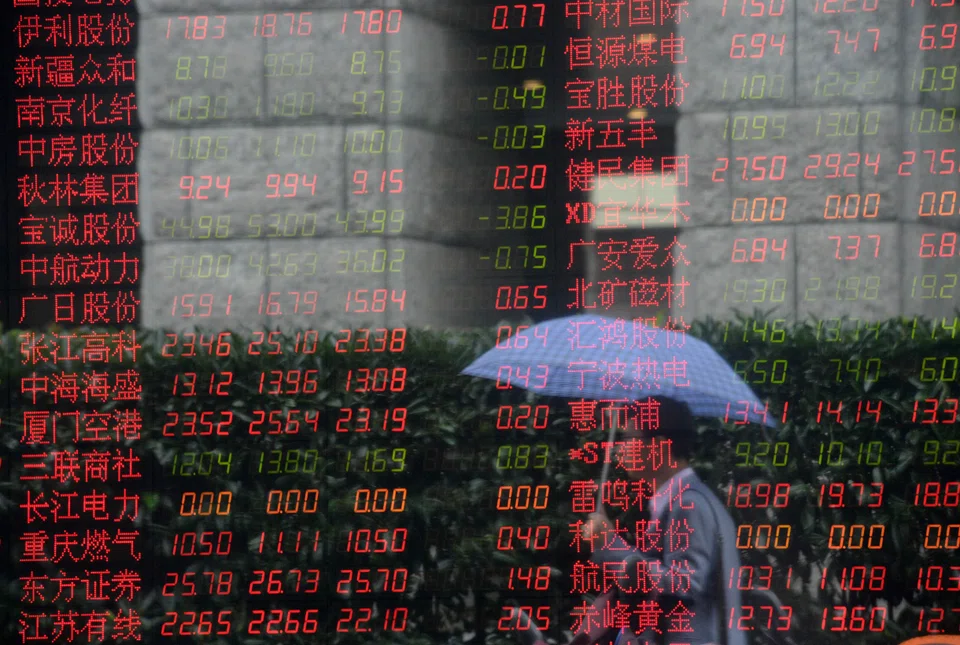
ONE can debate the merits of the Chinese government's intervention in the country's equity markets, but what is more certain is that Beijing now faces a number of challenges because of the actions it has taken to try and rein in a stockmarket crash.
Recent weeks have been a nightmare for Chinese stocks. The Shanghai Composite Index fell as much as 32.1 per cent in just one month after hitting a one-year closing peak of 5,166.35 on June 8. The government stepped in on a number of occasions to try to stem the slide. In late June, interest rates were cut and pension funds were allowed to increase equity allocations. In early July, the government relaxed rules on margin trading, froze initial public offerings and even directly bought shares - all to prop up a market that was coming off a heady climb in which the index had swelled to more than 2.5 times its value from a year earlier.
Beijing's strong response has fuelled vigorous debate. Supporters argue that the government was compelled to stem an outflow of foreign capital and prevent a runaway crisis that would have complicated attempts at engineering a soft landing for a slowing economy. Critics say that the measures leave the government holding a massive equity position that will be a headache to unwind, and that they send the wrong message about the government's willingness to interfere with market forces.
Those arguments are not mutually exclusive. Intervention may well have been effective in averting a bigger crisis in the short run, but it has come at considerable cost. Nor has the dust settled yet. The Chinese government still faces the challenge of limiting the problems created by its intervention. Nor do we know what will happen when the many stocks in which trading has been halted finally start trading.
There is no easy way to unwind the equity positions that the government has taken. For Hong Kong - the popular case study that undertook a HK$100 million (S$17.6 million) intervention in 1998 - the exit solution was the creation of an exchange-traded fund in 1999. But the size of China's positions are easily many times bigger than Hong Kong's were. China Securities Finance Corp (CSF), the government's vehicle to provide liquidity and demand, has access to about 3 trillion yuan (S$670 billion) of funds, by some estimates. Also, unlike Hong Kong, which made its move when its market was already near a bottom following the Asian financial crisis, China stepped in as its market was correcting from a frothy high. Any rumours of an early exit, as was evident this week, will spook investors, who still believe prices are inflated.
As the Chinese government walks the high wire of unwinding, it must also repair the damage to its reputation. One problem with the government's actions is not simply that it pulled the trigger, but also that it did so only when the market was falling from a high. Where was the same prudence when a bubble was clearly inflating? China needs to acknowledge its failure on this front and make it clear that it will not always provide a safety net.
Funds and institutional investors also need reassurance that the government is committed to allowing the market to discover prices rather than rigging them through intervention. Investors cannot deploy money if they have no certainty about whether the market will operate freely, as a market should.
The goal for Beijing, now that it is propping up the market, is to figure out a way to let go without toppling the machine.
TRENDING NOW

OCBC mobile, online banking services restored after Friday afternoon disruption

SGX CEO Loh Boon Chye to step down; succession planning under way

Waymo founder predicts ‘landslide’ robotaxi adoption in Singapore, driven by high car costs

Vietnam’s northern provinces, not Hanoi or Ho Chi Minh City, are powering near 10% GDP growth

