AI must consider human factors
THE future is here. Artificial intelligence (AI) has revolutionised the future of work and how humans perform daily tasks. This is especially true in workplaces that have begun automating their processes.
As innovation and technology advance at lightning speed, how can we ensure humans aren’t left behind in an AI future?
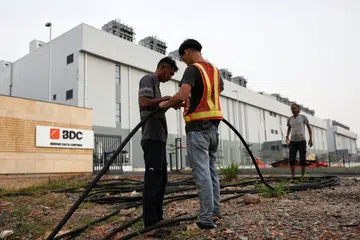
In his National Day Rally speech this year, Prime Minister Lee Hsien Loong announced that Singapore will house the world’s largest fully automated port in Tuas within the next 2 decades. The port is said to rely on AI for improved operations and utilises automated guided vehicles, with 5G technology and the Internet of Things (IoT) to ensure connectivity.
This marks a quantum leap for the future of work in Singapore.
Nevertheless, port workers are still essential to on-ground operations. As we reskill these workers to adapt to the new automated working environment, we should probably do the same for our AI to enable it to collaborate more effectively with their human counterparts.
Working in tandem for productive functioning
Previous studies of robot behaviour extracting meaning out of the collected data will be beneficial to enhance collaboration between humans and robots. However, in environments such as seaports, shop floors, or even in a healthcare facility, where workers are constantly moving, the workspace environment is changing, and robotic solutions need to be built around ensuring the continuity of its productive functioning.
At Nanyang Technological University (NTU), companies like Schaeffler have spearheaded the company-on-campus concept to foster close collaboration between engineers and researchers, PhD candidates and students in an effort to fast-track advanced research output for robotics, IoT, and autonomous systems.
Such collaborations have brought about solutions for today’s needs, such as collaborative robots (cobot), autonomous mobile robot (AMR) concepts, and smart factory applications.
Creating meaning through human-robot interaction
Equipped with highly precise sensors and actuator technology, cobots are designed to interact directly with humans in various settings. Through supervisory control of cobots via IoT and on-ground observation, cobots are able to work alongside human workers in real environments.
From heavy lifting of pallets to organising objects in warehouses for industrial uses, cobots can perform labour-intensive work through RFID technology. RFID also enables cobots to detect silhouettes of humans and recognise their presence.
In promoting safe working conditions for industrial settings, cobots are designed to coexist with humans. For example, a cobot will stop its motion when it senses a worker in its vicinity or after receiving commands through speech and hand gesture recognition to avoid collisions or accidents on site.
In many ways, human interactions with AI can help us understand its intentions, while we explore the adoption of AI and use the technology to create meaning for daily tasks.
Enabling automation at scale through cooperation
Automation also serves to complement today’s human workforce and fill workforce gaps. With the current talent crunch, robotic solutions can contribute to industry productivity and the longevity of Singapore’s human resources by freeing up employees’ time for roles that require critical cognitive abilities.
Close cooperation with government agencies such as the Agency for Science, Technology and Research (A*Star), Economic Development Board (EDB), and National Research Foundation (NRF) can further expedite the fruition of research and development projects. The inputs from these agencies can help the production of new concepts and technologies to support Singapore’s focus on digitalisation and innovation.
At the Schaeffler Innovation Challenge, in partnership with NTU, students had the opportunity to pitch ideas and solutions for Singapore’s vertical farming industry challenges via robotics and automation. Such engagements will encourage future generations of workers to familiarise themselves with new technologies of the future.
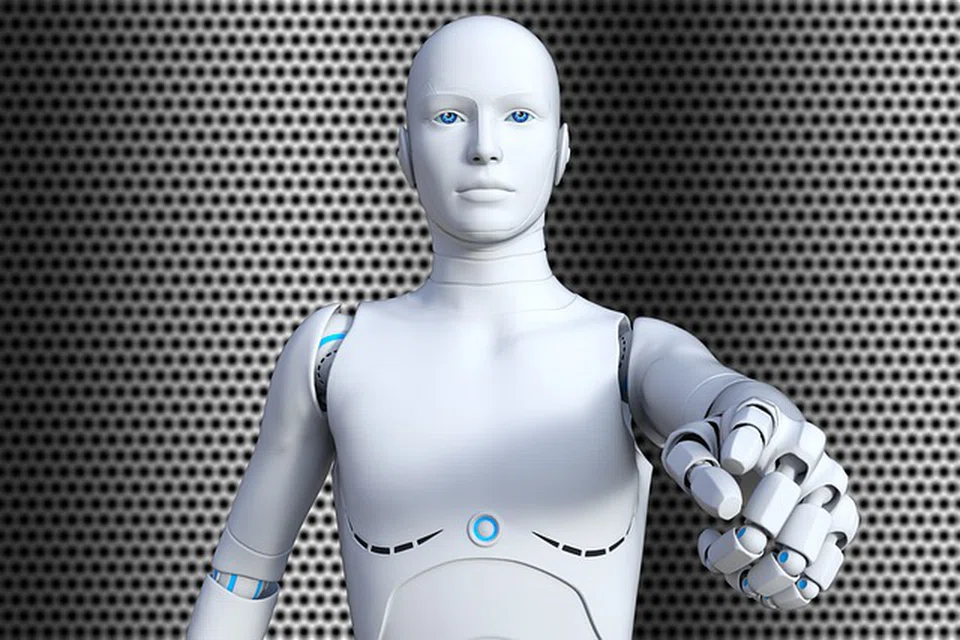
The accelerated adoption of AI may also be impeded by a fictional, yet convincing, perception that robots may eventually evolve to be Terminator, I-Robot, or Ultron in the Avengers movies.
Despite how robots have been portrayed in some Hollywood movies, in real life, they are not fully autonomous in how they learn and behave. These are characteristics that still require programming from human operators.
We often neglect the human touch that brings AI to life and the human intelligence that comes before AI, which has also inevitably affected how we visualise our interactions with it.
Whether it is a fully automated port, a manufacturing facility, or an automated arm in the operating theatre, work can be made more meaningful and productive when human factors in AI are considered.
The writer is head of transformation programme office (Asia-Pacific) and deputy director of Schaeffler Hub for Advanced Research, at Schaeffler (Singapore).