

Aid management and institutional capacity in Nepal
The government has responded swiftly but long-standing deficiencies in institutional strength and governance capacity persist.
 Add BT as a preferred source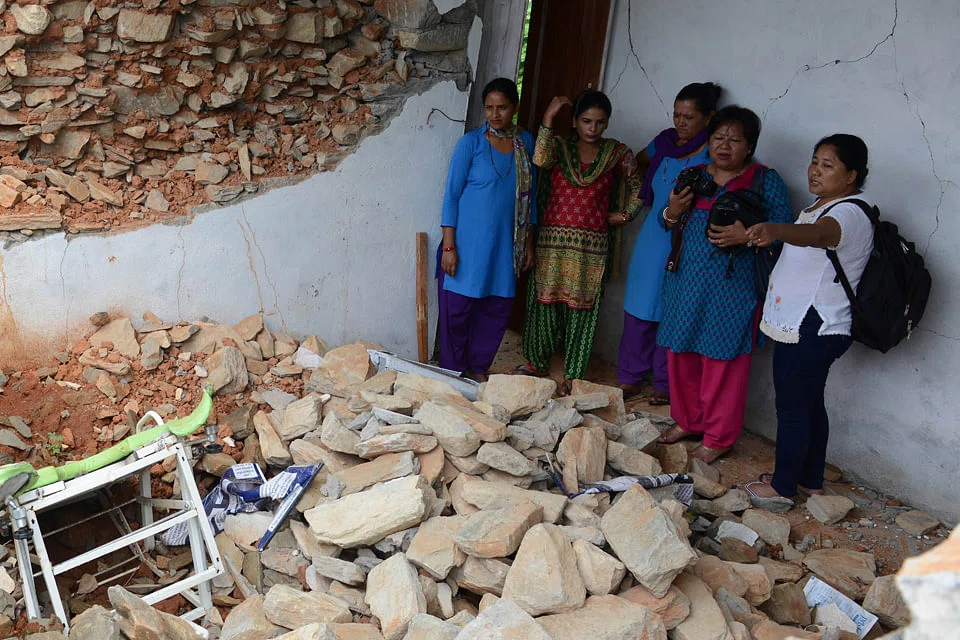
DeeperDive is a beta AI feature. Refer to full articles for the facts.
SUFFICIENT time has passed since the Nepal earthquake in April to reflect on deeper structural causes and institutional failures. The crisis attracted global attention and placed developed world organisations face-to-face with Nepal's own weakened governance capacity. While aid management is an immediate concern, institutional reforms are needed to build longer-term resilience.
Discussions about recovery and reconstruction have increasingly focused on aid and its effective use, by both government and international agencies. Misuse of recovery funds after the 2010 Haiti earthquake was recently publicised. Comparisons to Nepal quickly followed, particularly in social media. It is widely assumed that aid effectiveness is an unattainable goal.
Massive flows of donations and aid typically follow any disaster. According to Richa Shivakoti, a Singapore-based migration analyst, in developing countries such as Nepal, donors often have little trust in the government's management of funds. Therefore, many donate directly to international aid organisations such as the Red Cross, Save the Children and Medecins Sans Frontieres. Soon after the earthquake, the Nepali government, international agencies and citizen groups made separate appeals for immediate relief. For example, the UN's Office for the Coordination of Humanitarian Affairs (OCHA) issued a flash appeal for recovery support, requesting US$422 million.
Copyright SPH Media. All rights reserved.
TRENDING NOW

From 1MDB to ‘corporate mafia’: Is Malaysia facing a new governance test?
Higher costs, lower returns: Why are Singaporeans still betting on real estate?
South-east Asian markets account for 8.8% of global capital inflows from 2021 to 2024: report

Richard Eu on how core values, customers keep Singapore’s TCM chain Eu Yan Sang relevant

