Alibaba selling SingPost shares is no cause for other shareholders to follow suit
There is no change in whether the stake is held by Alibaba Investment or not, unless the investors that absorbed the shares are in the position to provide a fillip to SingPost businesses or share trading

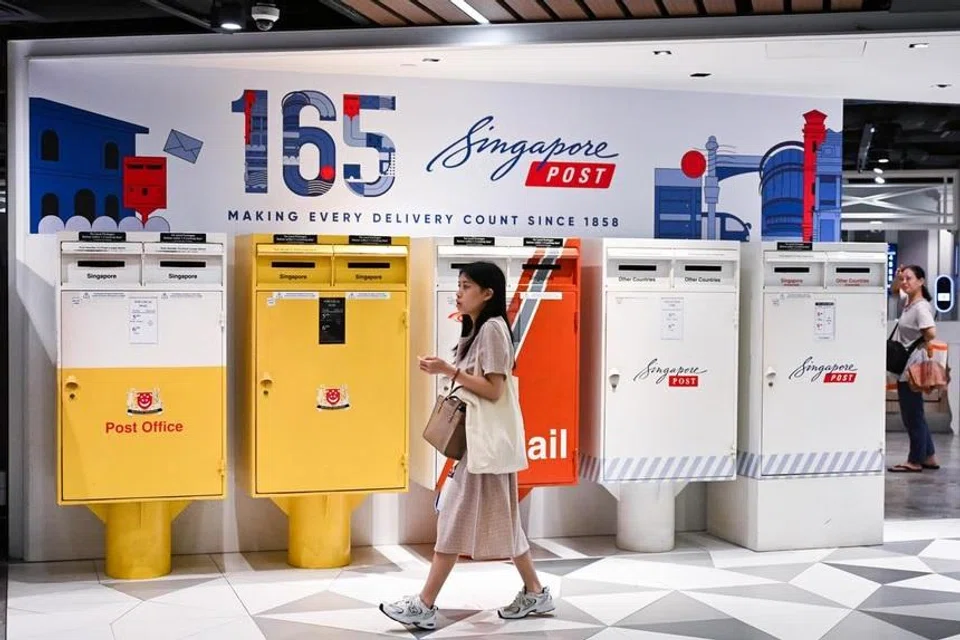
[SINGAPORE] National postal service provider Singapore Post (SingPost) had 151.3 million of its shares sold by Alibaba Investment on Sep 9, which reduced the holding of the Chinese e-commerce heavyweight Alibaba Group wholly owned subsidiary to 4.6 per cent from 11.3 per cent.
The sale at S$0.426 a share – lower than the counter’s 52-week-low of S$0.43 – yielded Alibaba Investment S$64.4 million in proceeds.
But the disclosure made by the former substantial shareholder to the Singapore Exchange did not name its counterparty in the off-market transaction.
When asked on Sep 11, a SingPost spokesperson said: “The identity of the buyer has not been disclosed.”
Queries with SingPost’s top shareholder Singtel (which owns nearly a 22 per cent stake) and share registrar Boardroom Ltd about who bought the shares from Alibaba Investment drew no response.
Alibaba Investment also did not reply to The Business Times.
The trading volume of SingPost shares spiked to 170 million on Sep 5, compared to the previous 52-week record high of 90.9 million or a trading volume of under 20 million shares on most days.
Investment bank Morgan Stanley made two regulatory disclosures on Sep 12, offering some light on Alibaba Investment’s share sale.
It disclosed a placing agreement dated Sep 4, in which it would be underwriting the sale by Alibaba Investment of nearly 151.3 million SingPost shares.
Another disclosure indicated that the bank had offloaded 4.6 per cent of SingPost shares, holding only 2.1 per cent that it agreed to underwrite. It sold 104 million shares for S$44.6 million, or at an average price of S$0.4292.
The bank did not say who bought the SingPost shares.
The buyers are probably eyeing the value to be unlocked from SingPost’s disposal of non-core property assets.
No surprise
Alibaba Investment’s sale of the shares should not come as a surprise to investors, though.
SingPost postal business is on a secular decline while its e-commerce logistics business is operating in a highly competitive landscape.
Operating profit slid 60 per cent year on year for the quarter ended June to S$3.4 million for the national postal service provider, while top line was 23.8 per cent lower at S$162.3 million. It was hit by a significant reduction in international delivery and intense competition.
The reset strategy that it has been touting – after divesting its Australian cash cow Freight Management Holdings – has yet to be unveiled.
The Alibaba group and SingPost, meanwhile, agreed in April to unwind their respective minority cross-shareholdings in Shenzhen 4PX Information and Technology, and Quantium Solutions International, effectively ending their joint ventures.
This also could have been a precursor to the reduction of shares by Alibaba Investment.
The move could have prompted some shareholders to divest their holdings, as SingPost shares closed 1.1 per cent lower with a trading volume of 13.7 million shares a day after the disposal was announced, and 3.4 per cent down with 26.2 million shares changed hands the day after.
The counter closed at its 52-week low of S$0.43 on Tuesday (Sep 16), down S$0.005 or 1.2 per cent.
But SingPost shareholders need not feel disheartened by Alibaba Investment’s sell-off.
This is because there is no change in whether the stake is held by Alibaba Investment or not, unless the investors that absorbed the shares are in the position to provide a fillip to SingPost businesses or share trading.
SingPost has not enjoyed any preference from the e-commerce heavyweight in landing orders for its logistics business.
It is strictly commercial, and SingPost has to bag the orders on its own merit from Alibaba e-commerce subsidiaries, BT was once told by its senior executive.
The Chinese company first invested in SingPost in 2014, buying an approximately 10.4 per cent stake, and raised its holding to 14.4 per cent in 2016.
Then, it fuelled optimism among investors that having the e-commerce behemoth as a substantial shareholder should offer tailwind to SingPost’s delivery business.
But such a scenario did not play out.
Ultimately, the company would have to chart its course by itself – although a synergistic shareholder would, of course, be much welcomed.