

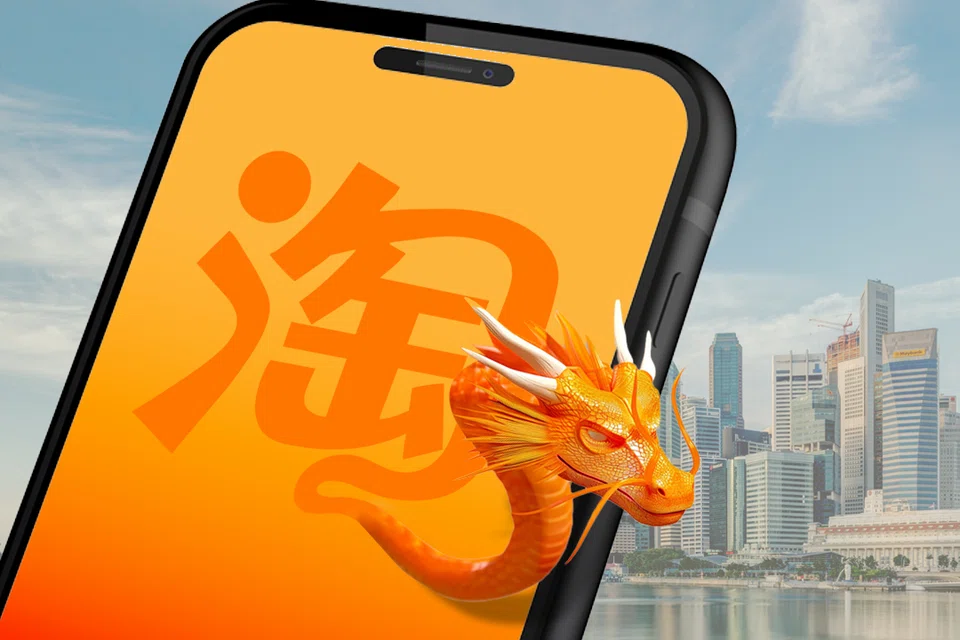
Alibaba’s Taobao could be a hidden dragon in Singapore’s e-commerce space
The platform has been making moves to grow its market share, including launching its English version for users here

RECENT developments have been shaking up the e-commerce space in Singapore, with industry watchers suggesting that the shuttering of marketplace Qoo10 could signal the start of consolidation in the sector.
Meanwhile, one e-commerce contender has been quietly making moves here, and taking small steps to grow its market share.
In September, Alibaba’s e-commerce marketplace Taobao launched an English version for users in Singapore.
The English interface helps the platform overcome a major hurdle it has had in winning over potential customers here – by catering to those who cannot read Chinese, are not conversant in Mandarin, and lack the tech-savviness to use translation apps.
While official data is not yet available, Taobao clearly already has a significant market share in Singapore. After all, anecdotal evidence suggests that being a Taobao agent – or a middleman who handles purchases on the platform – can be a sustainable, profitable business.
Meanwhile, Taobao is also being integrated with another Alibaba-backed e-commerce platform, Lazada, which has included a tab in its app for Taobao’s fashion section.
There are also specific promotions on Taobao targeting Singapore customers, such as free shipping just by spending as little as 99 yuan (S$18.40) during sales promotion periods.
One market observer said that Taobao’s growing presence in Singapore might see it turn into one of the largest e-commerce platforms here. However, it is still flying under the radar of most industry analysts.
Consultancy Momentum Works, in its most recent e-commerce report, noted that Shopee was the e-commerce leader with a 52 per cent share of Singapore’s gross merchandise value (GMV), followed by Lazada at 34 per cent. The report did not cover Taobao’s GMV share in Singapore.
Hidden giant
The advances made by Taobao to potentially emerge as a leading e-commerce platform in Singapore should come as no surprise. With a majority Chinese population who are largely fluent in Mandarin, navigating the e-commerce platform should not be a big issue, barring cultural quirks and differences in dealing with China merchants.
Coupled with Singapore’s friendlier approach to cross-border trade when compared with other South-east Asian countries, and its stronger currency, this has created a conducive environment for Taobao to grow its base here.
The platform appears to have recognised the influx of Singapore customers as well. With various discounts for credit cards and payment methods from Singapore banks, Taobao could really be the giant crouching in the shadows for e-commerce here.
This could spell more competition for the likes of e-commerce giant Shopee, which has fought its way to the top of the sector via aggressive subsidies and free delivery.
Taobao’s wide variety of products from merchants in China, coupled with low prices due to a weaker Chinese yuan, are competitive factors that are tough to beat.
The silver lining for Shopee is that Singapore’s 2024 GMV of US$4.4 billion is still small compared with its South-east Asian peers. It is less than half of Malaysia’s GMV of US$9.6 billion, and less than 10 per cent of Indonesia’s of US$53.8 billion.
But being top dog in Singapore does bring bragging rights.
According to Momentum Works, Singapore’s e-commerce market includes global giant Amazon, which currently holds about 9 per cent of GMV in 2024. For US investors, it also helps put Shopee’s e-commerce lead in the region into perspective.
Given Lazada’s presence here in Singapore, Taobao’s growing heft might look like parent company Alibaba is cannibalising its own platform.
However, Taobao and Lazada belong to two different business units – with their own objectives in mind.
The integration with Lazada might be a way for Taobao to soothe over potential friction, reinforcing an area in which Lazada might be lacking but still retaining a larger proportion of the e-commerce offerings.
The only advantage that local e-commerce platforms have over Taobao is delivery time – local merchants can offer next-day delivery, compared with a week or more taken by merchants on Taobao.
Most of Shopee’s efforts have been aimed at competing with other e-commerce platforms based in the markets it is in, which includes Lazada and TikTok Shop. But with Taobao’s growing shadow in Singapore, Shopee could be facing an unexpected competitor.
TRENDING NOW

Two Singapore-listed palm oil firms named in Greenpeace report on Indonesian plantation fires

Singapore Airlines flight returns to San Francisco after ‘unruly’ passenger incident

Singapore looking into which companies responsible for haze-causing fires: PM Wong

Deluge IPO 3.86 times subscribed ahead of SGX debut

