

Amazon is showing us what a soft landing looks like
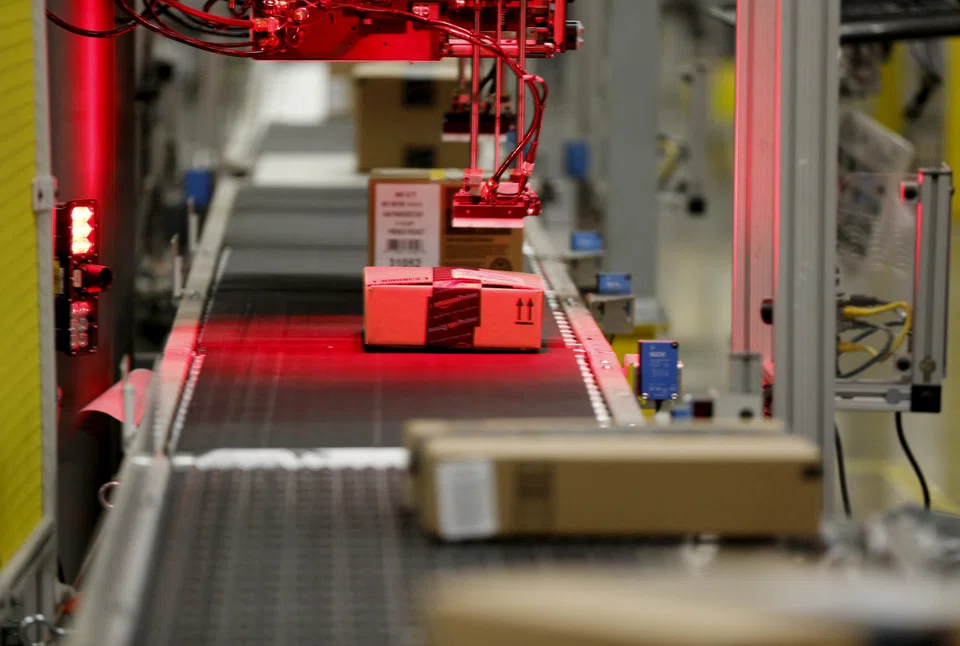
THE question of whether the United States economy can achieve a soft landing is one that continues to preoccupy investors. For a look at how it might be possible, consider Amazon.com, which arguably has achieved just that.
Amazon’s e-commerce business unit essentially went through a recession during the first half of 2022 as consumers shifted from buying goods online to spending on activities such as travelling and dining out. But the retailer has managed to respond to the rapid change in consumer behaviour by adjusting staffing levels at its warehouses and relying on other, less volatile parts of its business empire. While there is no guarantee that the broader US economy can pare back activity without triggering a more painful slump, Amazon’s rebalancing holds useful lessons.
In earnings released last Thursday, Amazon reported slowing sales growth and its second consecutive quarterly loss, which included a write-down of the company’s stake in electric vehicle maker Rivian. Most of the weakness in the company’s core operations occurred on the e-commerce side, which earlier this year wound up with more staffing and warehouse capacity than it needed. The company had made investment decisions in 2020 based on the initial surge in demand following the onset of the Covid-19 pandemic. By the time that capacity came online in early 2022, consumers had begun pulling back on purchases of certain goods.
As a result, Amazon eventually began to focus on cutting costs and increasing productivity in warehouses. Because Amazon has such high labour turnover — more than 100 per cent a year for warehouse workers — it didn’t take very long to reduce headcount. Amazon employed about 1.5 million people by the end of June, down about 180,000 from a peak in the first quarter. On its earnings call last week, the company said that right-sizing of the labor force had been mostly completed by the early part of May.
But Amazon, like the rest of the US economy, is more than moving packages between warehouses, trucks and homes. Revenue from Amazon Prime subscriptions, advertising and the Amazon Web Services cloud-computing business all grew by double digits on a year-over-year basis in each of the first two quarters of 2022. That has shored up revenue despite the downturn in e-commerce. Amazon’s stock price surged 10 per cent on Friday in response to the latest results.
Currently, Amazon’s staffing levels are stable but likely to grow as the e-commerce machinery gears up for another busy holiday season. And the company says it is going to shift its investment spending more toward the lucrative cloud business and content for its Prime Video product. Spending on e-commerce is likely to grow more conservatively.
Amazon’s story is a microcosm for the hope people have for a soft landing of the US economy over the next few quarters.
Parts of the US economy are currently in recession. Housing construction has turned down over the past few months as homebuyers pulled back in response to higher mortgage rates. Retailers are focused on reducing their elevated inventory levels rather than restocking their shelves. The auto industry is partly paralysed as it waits for enough semiconductors to put into vehicles to meet consumer demand. And segments of the technology industry are cutting spending to adjust to the less-exuberant investor environment.
Yet for now, the rest of the economy has been strong enough to keep employment growing. Airlines are still trying to staff up. Consumer demand for travel and leisure remains strong. State and local governments have budget surpluses and are still trying to claw back jobs that were lost during the pandemic. A massive infrastructure bill passed by Congress will lead to hiring and investing all over the country.
The question is whether the latter categories are strong enough to offset weakness in significant areas of the economy, but not so strong that they keep inflation high. Markets have grown more optimistic about this possibility over the past month, and why not? If Amazon can shed 10 per cent of its headcount over a few months without skipping a beat — and without that loss rippling throughout the labour market as a whole — anything seems possible. BLOOMBERG
TRENDING NOW

ComfortDelGro appoints two new independent directors

Once staunchly pro-China, Malaysian Chinese businesses are now distancing themselves from Beijing

NoonTalk needs continued financial support from CEO Dasmond Koh, auditors warn

DP Architects sets the benchmark for sustainability disclosure and design

