

America threatened by 'imperial overstretch'
The US global empire may have extended itself far beyond its ability to maintain its military or economic commitments.
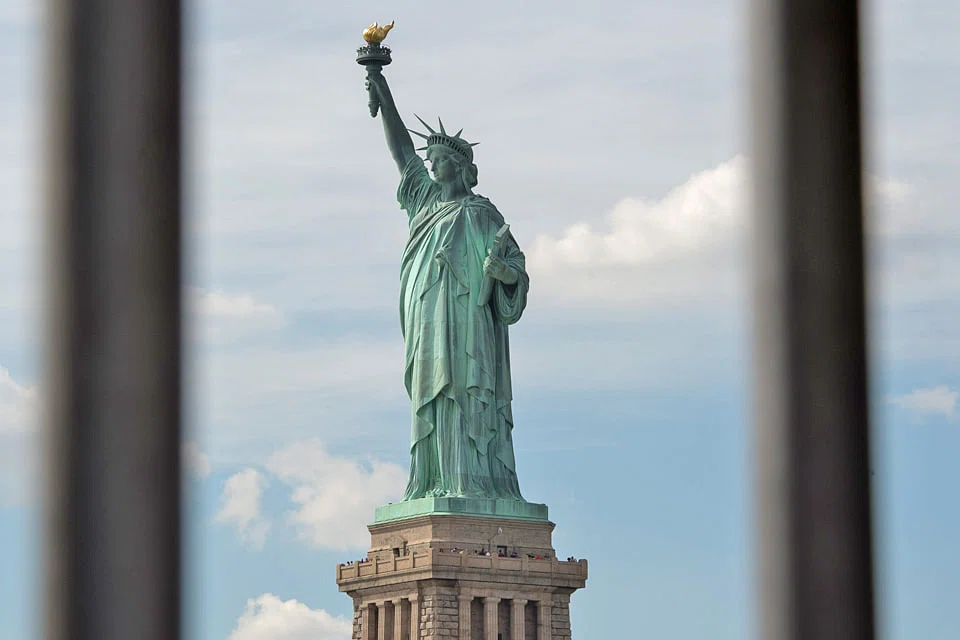
LIKE some great empires of the past, the American empire may be heading towards decline due to "imperial overstretch" - a concept denoting that the US global empire has extended itself far beyond its ability to maintain its military or economic commitments.
Republican presidential candidate Donald Trump has not actually used the phrase, but he has implied that America is declining due to imperial overstretch, and as a remedy he advocates military and trade isolationism.
The idea of imperial overstretch (or imperial overreach) was presented by Paul Kennedy, a professor at Yale University, who believed that defence spending imposed such a crushing burden on the US that its decline was inevitable.
The Kennedy scenario has not become a reality, although the US is showing symptoms of it. Since 1987 - when Dr Kennedy articulated his concept in his book, The Rise and Fall of the Great Powers - US military spending actually fell from 6.1 per cent of gross domestic product to 3.3 per cent of GDP last year.
Two classic examples of imperial overstretch are the fall of the British and Soviet empires - that spent too much on defending and maintaining their far-flung empires to the neglect of their domestic economies. Imperial overreach had earlier caused the fall of the Roman and the Ottoman empires.
Mr Trump's populist rhetoric that the US must not play the role of a global policeman is resonating with most Americans. A Pew Research study in May found that 57 per cent of Americans want the US to deal with its own problems, and let other countries handle their own; just 37 per cent said the US should help other countries deal with their problems.
There might be, however, a huge opportunity cost to the US of retreating from the world versus the cost of investing American resources in maintaining the US-led liberal world order.
Investing in military interventions and deployments abroad is obviously an enormous burden that diverts resources from domestic economic needs. But the flip side is that military spending actually contributes to economic growth, and that if the US did not invest in the liberal world order, it would then pay a huge missed-opportunity cost.
If Mr Trump, as president, withdrew the US from the North Atlantic Treaty Organization (Nato) or reversed President Barack Obama's policy of remaining engaged in Asia, the US would no longer benefit from its global engagement. Mr Trump has injected the issue of the US role in Nato into his presidential campaign by questioning its value.
But his threat to abandon the US commitment to Nato did not find approval with most Americans. According to the Pew Research survey in May, 77 per cent of Americans said that being a member of Nato was a good thing for the US - a view held by large majorities in both parties. However, his threat played well with some Trump supporters; three in 10 of them said that being a member of Nato was a bad thing for the US - the highest share among the supporters of any presidential candidate. But even among Trump backers, most (64 per cent) saw Nato as a good thing for the US.
Paul D Miller argues in his book, American Power and Liberal Order: A Conservative Internationalist Grand Strategy, which was released in September, that it is cheaper for the US to maintain the existing liberal world order than build a new one from scratch. Sustaining the liberal order at a low cost makes more sense than abandoning it only to rebuild it at a high cost later, he explains.
Dr Miller argues that, on the one hand, advocates of US withdrawal from the world believe that a liberal order has "zero value" because it does not matter for American security. On the other hand, advocates of internationalism passionately espouse the view that a liberal order brings concrete benefits and its absence would incur costs.
Yet the ideas of Mr Trump, as an advocate for a US retreat from the world, introduce isolationist ideology back into the US foreign policy debate, and his extreme stance conforms with the views of many Americans who want to see a new liberal order in which the US shares responsibility for global policing with other major powers.
Mr Trump also recognises the risks of both overextended foreign alliances and of imperial overstretch. While he lacks a firm understanding of foreign affairs, he does bring common sense to his foreign policy, but it does not make up for his lack of coherence.
Should he become president, he could create a world order in which the US would follow the pattern of Britain - that maintained its vast empire not by constant military interventions abroad, but by patrolling the seas and preserving the balance of power.
The consequences of Mr Trump's policy carry large risks, as they would create conditions for China and Russia to occupy the vacuum left behind by US withdrawal. Russia would be emboldened both in the Pacific and the Mediterranean, while China would impose harsh hegemony over the South China Sea, bringing South-east Asian countries under its sway.
One of Mr Trump's most dangerous policies is his reckless encouragement of Japan, South Korea and even Saudi Arabia to seek nuclear weapons in order to take care of their own defence because the US cannot afford to spend money protecting those countries.
Not only would Mr Trump abort the Trans-Pacific Partnership (TPP), he would also cancel trade alliances with important trading partners, leading to US protectionism and isolation.
Republican voters have fallen in line behind Mr Trump, with 65 per cent of his supporters saying that US involvement in the global economy is a bad thing, according to the Pew survey in May.
If Mr Trump loses, Mrs Clinton's foreign policy as president is expected to be a continuation of Mr Obama's commitment to keep the US firmly engaged in Asian defence in order to prevent Chinese hegemony, and to ensure that key trade alliances are maintained.
The threat of America becoming a victim of its imperial overstretch, though not a worry at present, will continue looming over US foreign policymakers. Should the US economy suffer a shock in future, more Americans will demand that their country take care of its own domestic affairs rather than preserve the interests of the wider world.






