Are cities ready for climate change issues?
Many countries are seeking to redefine what sustainability means with their economic and population growth.
AS THE UK government finalises plans for the forthcoming COP 26 climate summit, last Sunday's World Population Day underlined how much demographic issues have risen up the political and economic radar in recent years, especially on the sustainability front.
In part, this is driven by the fact that many countries, especially in the developing world, are seeking to redefine what sustainability means with their economic and population growth. This is helping drive the continued growth of the world's population from around 7.7 billion today, to potentially 10 billion in 30 years.
Yet this growth will not be distributed uniformly. According to the UN, more than half of it will be concentrated in nine countries, mainly in the developing world, but also including the United States, while in more than 50 countries or areas population is expected to decline, including potentially China.
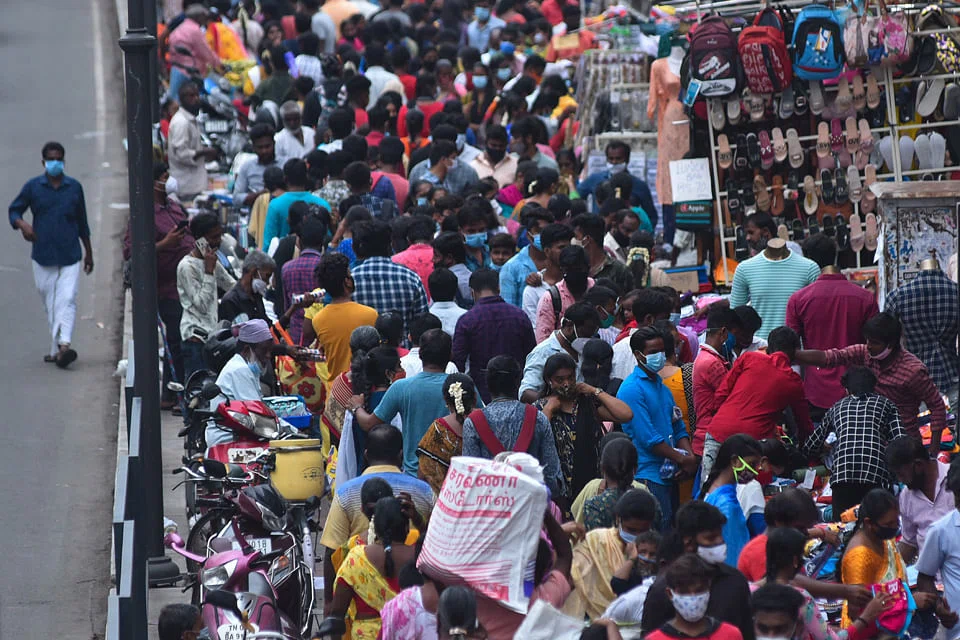
Overall, growing populations are also driving another mega trend too - urbanisation through migration. In 1800, less than 3 per cent of the population lived in cities, yet by the end of 2008, this had risen to more than 50 per cent, and there were 26 mega-cities (cities of 10 million or more inhabitants).
That proportion is expected to increase from around 55 per cent as of 2018 to 68 per cent by 2050 which, combined with the overall growth of the world's population, could add another 2.5 billion people to urban areas by mid-century.
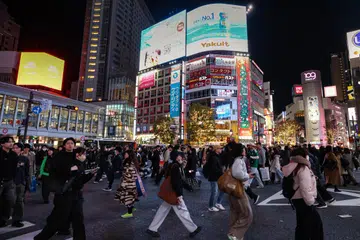
Tokyo is the world's largest city with some 37 million inhabitants as of 2018, followed by New Delhi with 29 million, Shanghai with 26 million, and Mexico City and Sao Paulo, each with around 22 million inhabitants. Cairo, Mumbai, Beijing and Dhaka all have close to 20 million inhabitants. By 2030, the world is projected to have 43 of these megacities of more than 10 million inhabitants.
Despite the economic success of mega-cities, governments are preparing for the growing risks that these massive urban centres pose. It is therefore fitting that one of the discussion points of COP 26 will be the foundations for more sustainable development models for large urban areas, including mega-cities.
Key questions to be addressed include whether it will be possible to continually meet the everyday needs of food, water and health, and also deal with the growing vulnerability of large urban areas, including mega-cities, to environmental stresses exacerbated by the effects of climate change.
There is already cause for some concern, as shown by the heatwave in recent days which saw temperatures reaching 20 degrees higher than normal in parts of the Northwestern US and South-western Canada. Portland - a typically cool, wet US city - reached 46.6 deg C which was hot enough to see highways buckling, and power cables bursting.
This issue highlights the key issue of preparedness. One reason other heat waves, such as the 2003 one in Paris, were so devastating is because both the public and the authorities were unprepared for dealing with such extreme weather conditions, which were exacerbated by building practices, especially the lack of air-conditioning.
As mega-cities continue to grow, demands will thus increase as supplies of food, water and resources for industries and infrastructure require energy for transportation. The associated increased carbon emissions are contributing to global warming.
The main risk for riverine mega-cities on coastal plains is their increasing vulnerability to rising sea levels and river flooding. There will be further episodes such as the one in New Orleans in 2005 when it was hit by Hurricane Katrina, without adequate protection and flood warning systems.
In at-risk countries, such as the Netherlands, researchers are preparing for these types of problems. This includes state-of-the-art early warning and monitoring systems, including the effects of subsidence, to protect coastal communities.
The larger the urban area, the greater the damage that natural hazards can inflict; and increasingly it may be impossible to protect life and property even if there is a good warning system.
As major hurricanes in cities such as Houston have shown, despite the known dangers from combined hazards such as winds and floods, there is now sometimes insufficient time to evacuate some cities safely, even highly developed ones.
So there is a pressing need for cities to develop emergency refuge areas which in some cases may already exist. For instance, Canvey Island in England still keeps its mound in case severe floods like those of 1953 return when significant parts of the East coast were devastated.
In most cases, however, refuges will need to be built from scratch. Thus, engineers and planners are considering how to identify and design such emergency centres, whether outside or within buildings, and how these should be connected to the wider urban system, including transportation.
Training populations to use the centres effectively is also essential. In Bangladesh, refuges have successfully withstood cyclones and floods and, unlike those in some other developing countries, have been used by vulnerable communities.
EMERGENCY ENERGY SUPPLIES
Emergency energy supplies for communities, which are essential for medical emergencies, need to improve in future too. This is especially so using advanced solar power.
Because of the failures to deal with some recent hazards impacting on mega-cities, governments are planning for multiple challenges and developing strategies for managing the range of environmental factors which could emerge.
Several cities are also experimenting with air quality hazard indicators based on complex system models to appraise citizens about how the environment in their cities varies hourly and over the longer term.
What these models need is improved availability of relevant environmental and socio-economic data. Here, international agencies such as the World Meteorological Organization, as well as governments, need to collaborate more and make maximum use of digital technology and media. This will better enable data showing how people experience both rapidly occurring hazards such as tornadoes, and slower, but still deadly, phenomena such as loss of crops from rising sea levels and salt penetration.
Fortunately, mega-cities have a global organisation for information exchange and collaboration called C40 Cities. The future agenda here includes enhanced inter-city cooperation on policies for dealing with hazards, and putting more pressure on national governments to assist, especially with finance and data, and strategic priorities.
- The writer is an associate at LSE IDEAS at the London School of Economics
Decoding Asia newsletter: your guide to navigating Asia in a new global order. Sign up here to get Decoding Asia newsletter. Delivered to your inbox. Free.
Share with us your feedback on BT's products and services