Argy-bargy and the economy of words
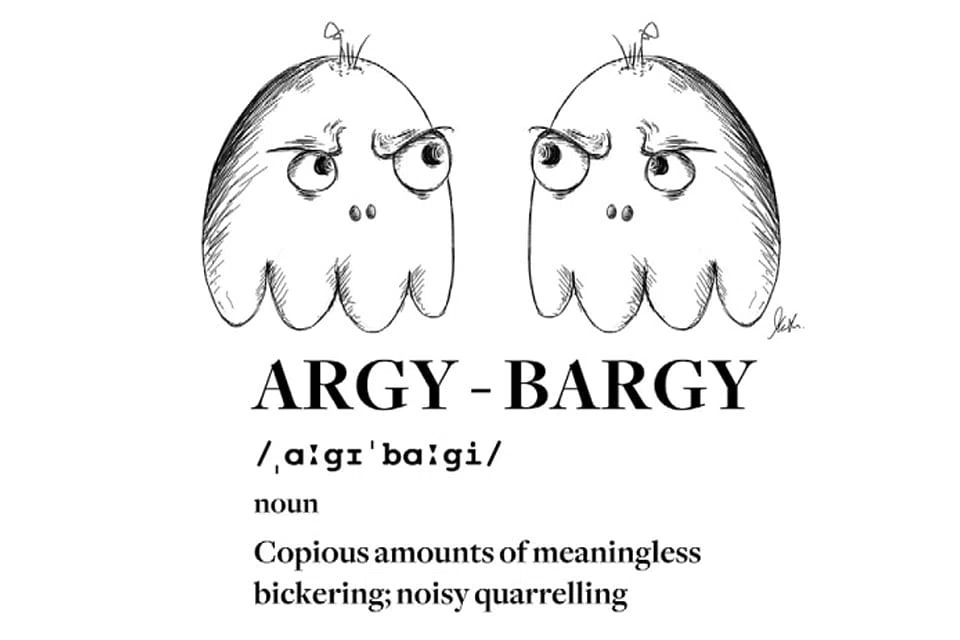
IT'S been a while since I've heard the phrase "argy-bargy". It seems, after all, such an old-timey, British-sounding expression - one you'd expect to read in an Enid Blyton book.
So it was surprising (not to mention amusing) to see it crop up in a government press statement released earlier this week.
On Thursday, the Ministry of National Development (MND) used the phrase to explain why it had gone to court to seek the appointment of independent accountants for the Aljunied-Hougang-Punggol East Town Council (AHPETC).
"This is the only way to depoliticise the issue: AHPETC deals directly with the courts, and not engage in endless argy-bargy with MND," said an MND spokesman.
Given that the ministry would have chosen its words carefully, it's natural to wonder why it picked such an unusual turn of phrase.
First, a word on what "argy-bargy" means, and its origins.
According to the Oxford English Dictionary and other linguistics resources, it's a late-19th century modification of a Scots phrase, "argle-bargle".
The first part of the doublet is an alteration of the word "argue"; the second part means nothing on its own - it was made up to rhyme with "argle".
In short, the phrase refers to copious amounts of meaningless bickering, or noisy quarrelling and wrangling.
Here's an example from Robert Louis Stevenson's 1886 novel, Kidnapped: "Last night ye haggled and argle-bargled like an apple-wife." Heck, there's even an argy-bargy over how the phrase is pronounced. Is the "g" sound said as it is in "doggy" or in "biology"?
Either way, it's not exactly the sort of language one would expect from the Singapore government - yet the rhyming reduplication works well, if it was intended as a put-down. Much like "mumbo-jumbo" or "namby-pamby", "argy-bargy" is undoubtedly pejorative.
Indeed, the ministry's choice of "argy-bargy" is telling: in opting not to use more conventional words like "discourse", "discussion" or even "debate", MND has refused to dignify its exchange with AHPETC.
More than just a verbal barb, however, the expression is apt in explaining the situation. While the months of back-and-forth between the government and AHPETC have certainly been noisy, the squabbling has failed to produce significant results or answers so far.
At the same time, the government seems to be admitting to the limitations in getting AHPETC to comply with various rules. That's not a surprise, since the existing Town Councils Act has been criticised as being without bite.
Practical criticism aside, though, "argy-bargy" should really earn a spot on everyone's list of favourite phrases. Just think of all the applications! Some suggested uses:
Talk about economy of words.
Share with us your feedback on BT's products and services