

Asean must act fast, first to save Rohingya lives and then resettlement
THE plight of the Rohingya appears to become more desperate by the day.
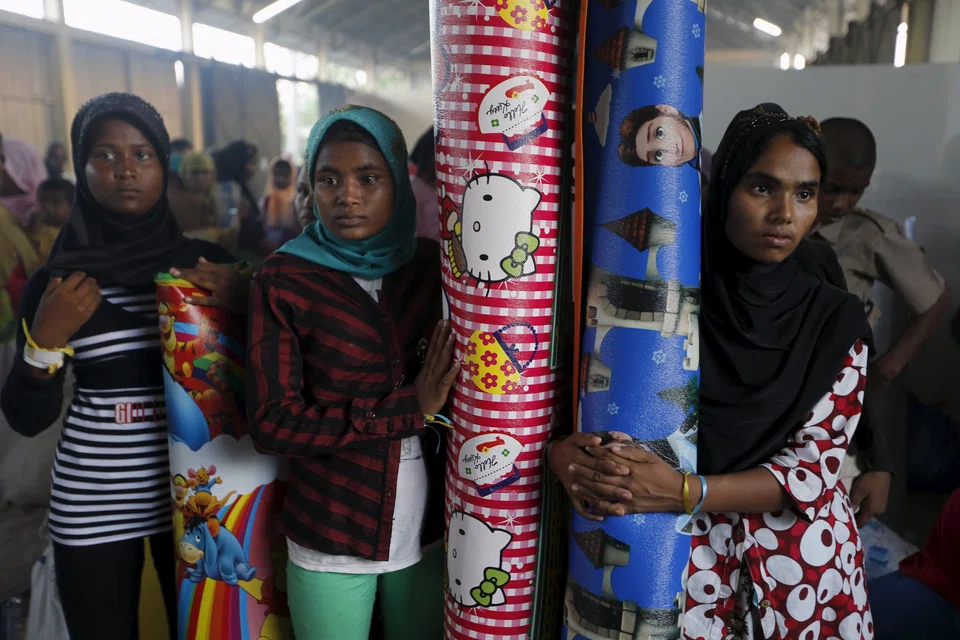
A Muslim minority group in predominantly Buddhist Myanmar, they lead a pitiful existence - stateless, without legal rights, denied citizenship by the Myanmar government, heavily restricted in where they can live and work. More than 1.3 million Rohingya - viewed by the United Nations (UN) as one of the world's most persecuted minorities - live in Myanmar's western Rakhine state. Thousands of Rohingya - some reports put the figure at 8,000 - are now stranded in rickety boats in South-east Asian waters, many without adequate food, water or sanitation. Many of these so-called "boat people" had been abandoned by people smugglers who were affected by Thailand's ongoing crackdown on human trafficking.
They seek asylum in various neighbouring countries, but nobody seems willing to accommodate them, fearful of the burden of having to care for them or the social problems they may cause and diseases they may bring. This effectively condemns them to death at sea due to the simple fact that they do not have anywhere to land. There has been international outrage over the handling of the Rohingya crisis, and rightly so. A solution needs to be found, and fast. What's clear is that Myanmar must take responsibility for the situation, but the government has refused to do so, claiming the group comprises illegal immigrants from Bangladesh.
Malaysia, which is the current chair of the Association of Southeast Asian Nations (Asean), is holding urgent talks with Indonesia and Thailand this week to seek a solution to the crisis in the three countries' shared maritime border. Thailand has called for a regional summit on May 29 to address what it described as an "unprecedented increase" in migrant arrivals, but Myanmar has already said that it would not attend.
Myanmar must prevent the exodus of the Rohingya. That needs to be the top priority at this point, and the rest of the 10-member Asean bloc needs to exert pressure on Myanmar to stop more of these migrants from leaving, and ensure that the country fulfils its obligations according to international humanitarian law.
Myanmar opposition leader Aung San Suu Kyi went so far as to suggest that the Rohingya should be given a fair chance of getting Myanmar citizenship. "If they are not accepted (as citizens), they cannot just be sent onto rivers. Can't be pushed out to sea. They are humans. I just see them as humans who are entitled to human rights," she said .
For the time being, perhaps some of the larger Asean member states could provide these displaced migrants a temporary shelter, if only to ensure that more lives are not lost unnecessarily as a result of being stranded at sea. They could be housed in isolated refugee camps at their point of arrival, where they can receive the basic care needed to survive and slowly rebuild their lives. Only then can the different countries involved start thinking about more permanent resettlement arrangements.
Besides Asean, the UN is probably best-placed to take the lead on international support to find immediate and long term arrangements that are acceptable to all, to save as many people as possible. As this crisis unfolds in the coming weeks and months, how the global community responds and deals with this complex problem will say a lot about the current state of humanity. This is arguably South-east Asia's largest migrant crisis since the end of the Vietnam War, and what's needed most at this time is an urgent regional response, not finger-pointing or apathy.
TRENDING NOW

OCBC mobile, online banking services restored after Friday afternoon disruption

SGX CEO Loh Boon Chye to step down; succession planning under way

Waymo founder predicts ‘landslide’ robotaxi adoption in Singapore, driven by high car costs

Vietnam’s northern provinces, not Hanoi or Ho Chi Minh City, are powering near 10% GDP growth

