At Asean Summit, leaders must tread carefully to deal with worsening Myanmar situation
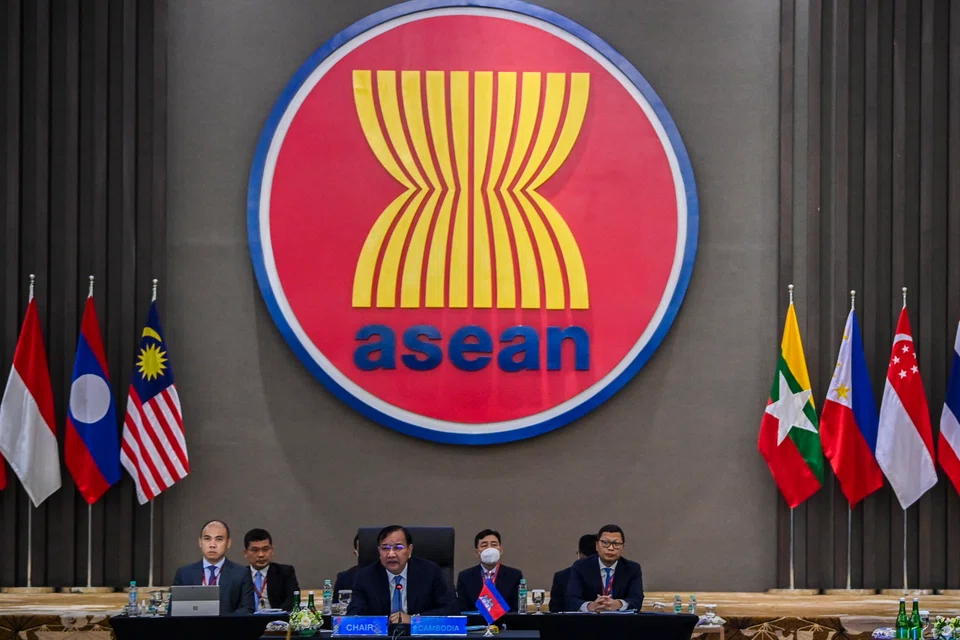
SOUTH-EAST Asia’s leaders are gathering in Phnom Penh later this week for their annual summit, and while there are plenty of pressing issues on the table, it is the ongoing political, human rights and humanitarian crisis in Myanmar that will undoubtedly dominate much of the proceedings.
As things stand, it is unlikely that there will be a significant breakthrough in the discussions given the sensitivity of the matter, and the fact that Myanmar’s rulers have been banned from Asean’s high-level meetings since last year’s military coup that overthrew the elected government of Aung San Suu Kyi. Only “non-political” representatives from the strife-torn country have been invited, but even so the junta has not allowed these people from attending.
Myanmar’s military government warned recently that any pressure from its fellow Asean member states to even attempt to put a time frame on a peace plan would result in “negative implications”.
Cambodia, which holds the rotating chairmanship of the 10-member bloc, has said that Asean should not deviate from the grouping’s founding principles as they seek to find a way to handle the crisis.
Singapore has repeatedly stressed that it is deeply concerned with the dire situation in Myanmar, and the government - and the rest of Asean - has expressed its disappointment with the lack of progress in the implementation of the so-called Five-Point Consensus peace plan.
This plan, which was agreed on about 18 months ago, includes all parties engaging in constructive dialogue, and access to Myanmar for humanitarian aid and a special Asean envoy.
As Singapore’s Foreign Affairs Minister Vivian Balakrishnan said in a Parliament speech earlier this week, Asean’s leaders will have to assess the progress in the implementation of the Five-Point Consensus, and make some difficult decisions to guide Asean’s next steps.
One of the biggest hurdles that Asean as a group needs to address is how close it should stick to its long-standing policy of non-interference in the sovereign affairs of its member states. At this point, there also doesn’t seem to be a common position among the Asean countries, with political analysts noting that countries are split in handling the Myanmar issue.
Perhaps more crucially, the Myanmar junta themselves must demonstrate a genuine effort to build a constructive dialogue within the country, and with fellow Asean member states. A continued lack of positive action on the generals’ part will see the instability worsen, which would inevitably lead to more economic and financial setbacks - not only in Myanmar but throughout the region.
It’s difficult to see Myanmar returning to any form of democratic process in the foreseeable future, or what more needs to be done to move the needle. Asean’s leaders and senior officials are in an unenviable position as they make yet another attempt to resolve the crisis. For Asean to maintain its credibility as an effective mediator, there is some pressure on the bloc to come up with a new strategy that can realistically work.