

Asia may need to brace itself for a prolonged trade war threat
A CONFLUENCE of potent factors - chiefly brewing trade hostilities between the world's biggest economies, a slowing China and tighter financial conditions amid the unwinding of global quantitative easing - is giving emerging markets a torrid time.
The volatility is set to persist as trade friction escalates between Washington and its trading partners. The markets are riddled with trepidation after US President Donald Trump doubled down again on his tariff threat on more Chinese goods; Beijing has vowed to retaliate if the US imposes new tariffs.
At the heart of investors' concerns is this - higher tariffs will hurt exports, investments, consumption and economic activity and, by extension, global growth. Navigating this risk amid a normalisation of monetary policy makes it even more dicey.
Some experts have warned that the heightened trade friction and the imposition of steep tariffs by the US administration led by President Trump could revive a 1930s-like full-scale trade war - then, several protectionist moves in the 1920s culminated in the Smoot-Hawley Tariff Act in the mid-1930s which raised tariffs by 20 per cent on average on over tens of thousands of imported goods.
While the Smoot-Hawley tariff was not the cause of the Great Depression, economists have blamed it for deepening and prolonging the economic crisis. The world is a different place today - tariffs are generally lower and protectionism also involves non-tariff barriers. In addition, world trade now involves international value chains which can put more economies at risk amid the threat of protectionism.
"While a worldwide escalation of tariffs ... might not lead to another Great Depression, it could lead to cumulative trade losses equivalent of those observed in the 2008-2009 crisis," said Indosuez Wealth Management chief economist Marie Owens Thomsen in a note last month.
A full-blown trade war which would act as a supply shock could knock off 2-3 per cent of world gross domestic product in the next few years, say pundits.
The Organisation for Economic Cooperation and Development (OECD) estimates that a 10-percentage point increase in trade costs - due to higher tariffs - would cut global output by 1.5 per cent over the coming years. The tide is slowly shifting in some Asian emerging markets - namely India, Indonesia and the Philippines - that are witnessing a trend of portfolio outflows after enjoying substantial capital inflows until 2017 fuelled by cheap money.
Emerging markets' assets - equities and currencies - have come under selling pressure while the US dollar has rallied by over 7.5 per cent since April this year as the US Federal Reserve quickens its hiking cycle - expectations are for a 25 basis point hike at the upcoming September policy meeting and for another hike in December.
Compounding the risk further for Asia is the contagion fear triggered by the currency crisis in Turkey and Argentina.
Asia has learnt lots from the 1998 Asian Financial Crisis - exchange rate regimes are more flexible, foreign exchange reserves and macro prudential buffers have been built up while most countries run current account surpluses and have moderate external debt, Nomura Research points out.
But none of that offers immunity to the headwinds. The region should brace itself for a potential trade fallout.
Unfortunately, this may be prolonged; if history is anything to go by, the 1930s period demonstrates that escalation of trade hostilities can be a protracted process.
TRENDING NOW
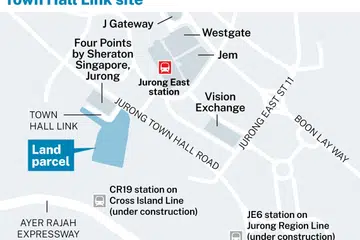
CapitaLand, Far East, Sing Holdings team up for S$1.8 billion bid at S$910 psf ppr for Jurong Lake District site

South-east Asia has lost Nvidia’s best salesman

Taylor Swift has over 300 trademark filings. Why do most SMEs have none?
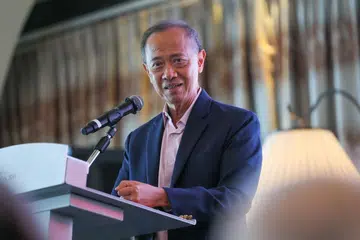
‘If there’s a price to be paid, so be it’: George Yeo says Singapore must safeguard its reputation

