Asia summits shaped by geopolitical angst
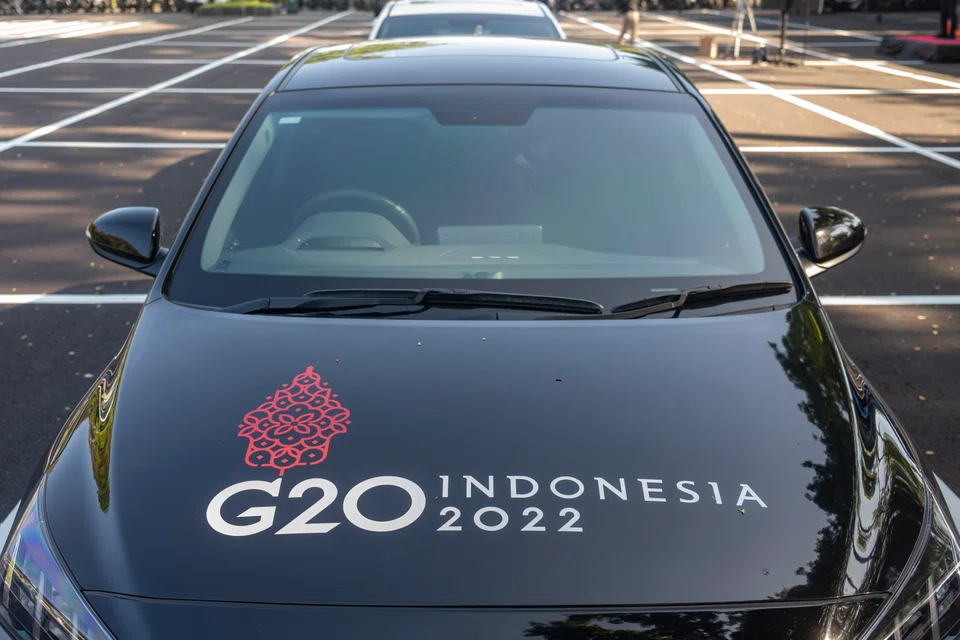
MUCH of the world’s attention this month is on the COP27 climate conference which started Sunday (Nov 6), but there is also an important series of summits taking place in Asia that will help shape the international order into 2023 and beyond.
While the G20 in Indonesia is a global forum that will attract significant publicity, there is also the regional Asean/East Asia summit in Cambodia, and the Asia-Pacific Economic Cooperation (Apec) leadership meeting in Thailand. These events come in a context where the region is still recovering from the pandemic, which last year’s Apec host New Zealand Prime Minister Jacinta Ardern called a “once-in-a-century crisis”, and the biggest economic and political shock since World War II to the regional landscape.
Take the example of Apec’s nearly three billion population, which generates around 60 per cent of global gross domestic product (GDP) across the Pacific Rim from Chile to Russia and Thailand to Australia. Regionally, the pandemic has seen tens of millions of recorded infections, well over one million deaths, and some one million jobs lost.
Small wonder therefore that at the Apec summit in Thailand, which will also be attended by private-sector chief executive officers and executives, the key theme will be rehabilitating economies. The stated goal is deepening economic cooperation, improving the environment for trade and investment, and adapting and sharing innovation.
Yet, as many leaders seek to promote an inclusive, sustainable and resilient recovery from the shock of the pandemic, geopolitical fissures are complicating this. The most recent divisions are from the Ukraine conflict, which has split the region.
Last month, for instance, the United States, Australia, Canada, Japan, South Korea and New Zealand pledged at the Apec finance ministers’ meeting to double down on supporting Ukraine in its struggle against Russia’s invasion and to step up efforts to address food, energy and inflation shocks caused by the conflict. The nations urged Moscow to unconditionally withdraw all its forces, and said they will step up efforts to overcome the food crisis in coordination with international organisations and development partners focusing on supporting affected economies in protecting vulnerable populations from the impact of energy food price shocks and on lifting of export restrictions on food and fertilisers.
Yet, the Ukraine issue is far from the only one to fragment the huge Apec club – which includes not just the US, Australia, Canada, Japan, South Korea and New Zealand, but also China, Russia, Taiwan, Singapore, Brunei, Malaysia, Philippines, Thailand, Mexico, Papua New Guinea, Chile, Russia, Vietnam, Indonesia, and Peru. Collectively, these states account for not only some 60 per cent of global GDP, but also around half of world trade.
Added to the Russia-Ukraine issue is a longer-simmering fissure between the US and China that has been a recurrent point of tension at recent Asia summits where the two nations have been involved. Given that Washington and Beijing are by far the two most powerful states in the world today, this has strained the consensus-driven approach that previously prevailed at Apec and other regional multilateral fora.
Apec was unable to agree any end-of-summit communique in 2018. Meanwhile, efforts to promote a pan-Apec approach at last year’s Apec summit were undercut by other intra-forum squabbles, including between Taiwan and China which have both put in applications to join the Comprehensive and Progressive Trans-Pacific Partnership (CPTPP) trade and investment agreement. Beijing says it will block Taipei’s bid on the basis that the island refuses to accept that it is part of China.
Joining CPTPP has become the latest in a string of tensions between China and Taiwan, which is excluded from many international bodies because of Beijing’s insistence that it is part of “one China” regardless of Taipei’s claim that it is an independent country. These flares escalated earlier this year with the decision of US House of Representatives Speaker Nancy Pelosi to visit the island.
In this context of geopolitical angst, Thailand hopes to be able to conclude some key pieces of business at Apec this month, including a reported four-year action plan to try to deliver the so-called Free Trade Area of the Asia Pacific (FTAAP) agreement. While the FTAAP is an economic proposal, it has a heavy geopolitical bent to it.
The initiative has been under discussion at Apec since at least 2008 and has assumed higher importance for China, in particular, since the inception of CPTPP which was originally the brainchild of the US Obama administration. This even though the subsequent Trump team withdrew US entry into the agreement.
Chinese President Xi Jinping has previously said that the FTAAP does not “go against existing free trade arrangements”, though at the heart of the debate are contrasting visions of the regional order. Beijing’s push for projects such as Belt and Road, alongside initiatives like the Regional Comprehensive Economic Partnership (RCEP), plus its desire for APEC to deliver on FTAAP, provides a model for economic integration conducive to its national interests (not least because it would be explicitly part of the new economic agreements and shape their design, unlike CPTPP).
The Biden team is well aware of this, and is beginning to set out its own stall for shaping regional order building, although some allies are already disappointed that the president himself will skip this year’s Apec event and be replaced by his deputy, Kamala Harris. It is likely that the next 12 months, in advance of the US hosting Apec in 2023, will see more announcements from the White House of its emerging regional strategy to demonstrate commitment to what it calls a free and open Asia-Pacific.
Many US regional allies would dearly welcome Biden developing a comprehensive, well-funded grand strategy to embed US influence, as Obama had intended with CPTPP, at its heart. In the post-war period, the US has undertaken a global institutional-building project to encourage growth of democracy and open markets across the world, including Apec itself.
Yet, with Trump pulling the plug on US participation in CPTPP, and disparaging other institutions such as the World Trade Organization, a vacuum in US influence exists that still has not been fully plugged by Biden. And the danger for Washington is that, unless the US president acts decisively in his remaining period of office, momentum could build for a regional architecture, including RCEP and Belt and Road, which allows Beijing to assume the upper hand, damaging US influence not just with local allies, but potentially in regions beyond too.
The writer is an associate at LSE IDEAS at the London School of Economics.